May 21 is a date that has repeatedly intersected with the course of world history. From the founding of enduring global institutions to tragic assassinations, from pioneering aviation feats to cultural milestones, this date offers a wealth of specific, verifiable events. This article provides a clear, detailed account of what has happened on May 21 in past years across different countries, with a focus on factual precision.
📜 Global Political and Organizational Milestones
🏛️ The First Democratic Party Convention (1832, USA)
On May 21, 1832, a group of delegates supporting President Andrew Jackson convened in Baltimore, Maryland, to conduct the first official convention of the Democratic Party. Held at “The Athenaeum,” the convention nominated Jackson for a second term and Martin Van Buren for vice president. This gathering marked the formal birth of the Democratic Party as a national political organization.
🇳🇿 British Sovereignty Over New Zealand Proclaimed (1840)
Lieutenant-Governor William Hobson proclaimed British sovereignty over all of New Zealand on May 21, 1840. The proclamation covered the North Island based on cession through the Treaty of Waitangi, while the South and Stewart Islands were claimed by “right of discovery”. This act officially established New Zealand as a British colony.
🌍 Founding of FIFA (1904, France)
The Fédération Internationale de Football Association (FIFA) was founded on May 21, 1904, in Paris, France. Representatives from France, Belgium, Denmark, the Netherlands, Spain, Sweden, and Switzerland signed the founding charter at 229 rue Saint-Honoré. Germany also joined via telegram on the same day. This marked the beginning of a unified international governing body for association football.
❤️ Founding of the American Red Cross (1881, USA)
Clara Barton and her associates established the American Red Cross on May 21, 1881, in Washington, D.C.. The organization was created to aid victims of wars and natural disasters, working in conjunction with the International Committee of the Red Cross. Clara Barton became its first president, beginning a legacy of humanitarian service.
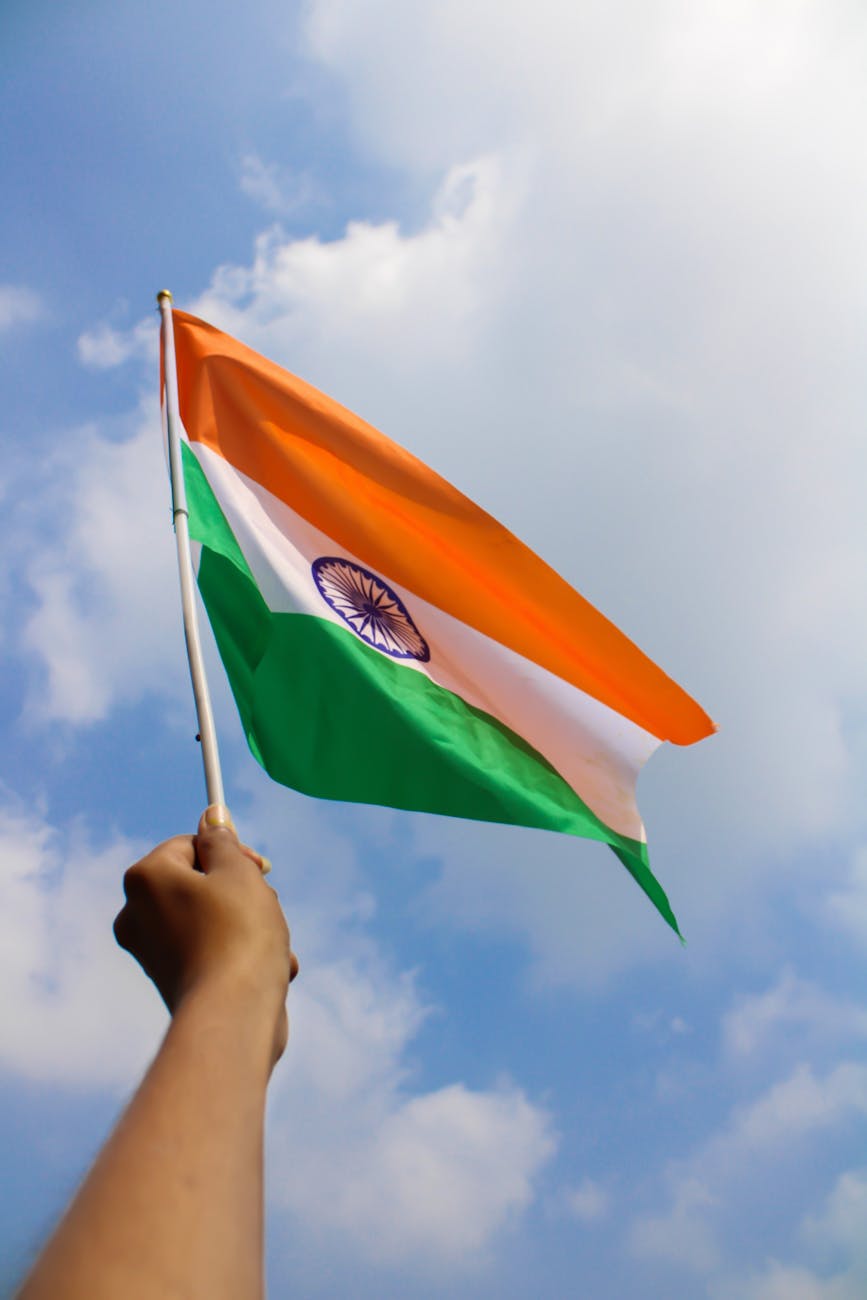
🇮🇳 Assassination of Rajiv Gandhi (1991, India)
Former Indian Prime Minister Rajiv Gandhi was assassinated on May 21, 1991, at Sriperumbudur, near Madras (now Chennai). A female suicide bomber from the Liberation Tigers of Tamil Eelam (LTTE) detonated a powerful bomb hidden in a bouquet of flowers. Up to 20 other people, including three policemen and three women, also died in the blast. India subsequently declared May 21 as National Anti-Terrorism Day in his memory.
✈️ Pioneering Aviation Feats
🥇 Charles Lindbergh: First Solo Nonstop Transatlantic Flight (1927)
On May 21, 1927, 25-year-old Charles A. Lindbergh completed the first solo, nonstop transatlantic flight. Flying his Spirit of St. Louis, he landed at Le Bourget Field near Paris, France, after 33.5 hours and 3,610 miles. He had departed from Roosevelt Field in Long Island, New York, the previous day. This flight won him the $25,000 Orteig Prize and ignited a global aviation boom.
👩✈️ Amelia Earhart: First Woman to Fly Solo Across the Atlantic (1932)
Exactly five years after Lindbergh’s feat, on May 20–21, 1932, Amelia Earhart became the first woman to fly solo across the Atlantic Ocean. Flying a Lockheed Vega 5B, she departed Harbor Grace, Newfoundland, Canada, and landed 15 hours later in a field near Londonderry, Northern Ireland. Her intended destination was Paris, but strong winds and mechanical issues forced the earlier landing. For this achievement, she was awarded the Distinguished Flying Cross by the U.S. Congress.
🌋 Natural Disasters and Human Tragedies
🌊 Mount Unzen Disaster (1792, Japan)
On May 21, 1792, volcanic activity at Mount Unzen on Japan’s Shimabara Peninsula triggered a catastrophic event. Two large earthquakes followed by the collapse of the southern flank of the Mayuyama dome generated a massive tsunami. Approximately 15,000 people were killed, making it one of Japan’s deadliest volcanic disasters.
🧠 Nazi “Euthanasia” Murders (1940, East Prussia)
On May 21, 1940, a Nazi “special unit” began murdering more than 1,500 mentally ill hospital patients in the Soldau district of East Prussia. This was part of the larger Nazi T4 program to exterminate those deemed “unfit” by Nazi ideology. The killings took place over an 18-day period and were reported back to Berlin as a “successful evacuation”.
🇨🇱 Powerful Earthquake in Chile (1960)
A powerful magnitude 8.1 earthquake struck the Bio-Bio region of Chile at 6:02 a.m. local time on May 21, 1960. The epicenter was near the town of Cañete. This was the first major foreshock in a seismic sequence that culminated, 33 hours later, in the magnitude 9.5 Valdivia earthquake – the largest ever recorded in history.
☢️ First Airborne Hydrogen Bomb Test (1956, Bikini Atoll)
The United States conducted the first airborne test of an improved hydrogen bomb on May 21, 1956. Dropped from a B-52 bomber at an altitude of over 50,000 feet, the device exploded over the island of Namu in the Bikini Atoll in the Pacific Ocean. The bomb missed its target by about four miles due to human error. Observers reported that the fireball was at least four miles wide and brighter than 500 suns.
🎭 Cultural and Entertainment Milestones
🎭 Premiere of Pagliacci (1892, Italy)
Ruggero Leoncavallo’s opera Pagliacci premiered at the Teatro Dal Verme in Milan on May 21, 1892. The performance was conducted by the legendary Arturo Toscanini. The opera remains a cornerstone of the verismo style and is frequently performed alongside Mascagni’s Cavalleria rusticana in a double bill known as “Cav and Pag”.
🎵 Opening of Gypsy on Broadway (1959, USA)
The musical Gypsy, starring Ethel Merman, opened at the Broadway Theatre in New York City on May 21, 1959. The production, with music by Jule Styne, lyrics by Stephen Sondheim, and a book by Arthur Laurents, was directed and choreographed by Jerome Robbins. It produced enduring songs such as “Everything’s Coming Up Roses,” “Let Me Entertain You,” and “Rose’s Turn”.
🎬 Release of The Empire Strikes Back (1980, USA)
The second film in the original Star Wars trilogy, The Empire Strikes Back, was released in the United States on May 21, 1980. The highly anticipated sequel became the highest-grossing film of that year, earning approximately $401.5 million worldwide.
🏆 Susan Lucci’s First Daytime Emmy Win (1999, USA)
After 18 consecutive losses, soap opera star Susan Lucci finally won the Daytime Emmy Award for Outstanding Lead Actress in a Drama Series on May 21, 1999. The ceremony, hosted by Oprah Winfrey, was held at The Theater in Madison Square Garden in New York City. Lucci’s win for her role as Erica Kane on All My Children was one of the most memorable moments in Daytime Emmy history.
🎤 David Cook Wins American Idol (2008, USA)
Rocker David Cook was crowned the winner of the seventh season of American Idol on May 21, 2008. The finale, held at the Nokia Theatre in Los Angeles, saw Cook defeat 17-year-old runner-up David Archuleta. Out of a record 97.5 million votes cast, Cook received 56% (12 million more votes than his competitor).
⚽ Significant Sports Events
🏆 Copa Libertadores Final First Leg (1970, Argentina)
The first leg of the 1970 Copa Libertadores final was played on May 21, 1970, at the Estadio Jorge Luis Hirschi in La Plata, Argentina. Argentine club Estudiantes de La Plata defeated Uruguayan club Peñarol 1-0, in front of 40,000 spectators. Estudiantes went on to win the series 1-0 on aggregate, securing their third consecutive Copa Libertadores title.
🎾 Davis Cup Competition (1930, International)
The 1930 International Lawn Tennis Challenge, now known as the Davis Cup, featured notable matches on May 21. The United States defeated Italy in the Inter-Zonal play-off, which was part of the competition’s format that year. Ultimately, France defeated the USA in the Challenge Round to win their fourth straight Davis Cup title.
📅 Notable Births on May 21
| Year | Individual | Claim to Fame |
|---|---|---|
| 427 BCE | Plato | Influential Greek philosopher |
| 1471 | Albrecht Dürer | German painter and engraver |
| 1688 | Alexander Pope | English poet |
| 1780 | Elizabeth Fry | British social reformer and prison reform advocate |
| 1844 | Henri Rousseau | French painter |
| 1860 | Willem Einthoven | Dutch inventor of the electrocardiogram; Nobel laureate (1924) |
| 1921 | Andrei Sakharov | Soviet nuclear physicist and human rights activist; Nobel Peace Prize (1975) |
| 1895 | Lázaro Cárdenas | President of Mexico (1934–1940) |
| 1898 | Armand Hammer | American oil magnate and art collector |
| 1972 | The Notorious B.I.G. | American rapper |
| 1980 | Gotye | Belgian-Australian singer-songwriter |
📅 Notable Deaths on May 21
| Year | Individual | Claim to Fame |
|---|---|---|
| 1471 | King Henry VI of England | English monarch |
| 1542 | Hernando de Soto | Spanish conquistador; first European to reach the Mississippi River |
| 1670 | Niccolò Zucchi | Italian astronomer and physicist |
| 1786 | Carl Wilhelm Scheele | Swedish chemist |
| 1935 | Jane Addams | American social worker and activist; Nobel Peace Prize (1931) |
| 1952 | John Garfield | American actor |
| 1991 | Rajiv Gandhi | Former Prime Minister of India |
| 2000 | John Gielgud | English actor, director, and producer |
| 2000 | Dame Barbara Cartland | Prolific English romance novelist |
| 2006 | Katherine Dunham | American dancer and choreographer |
May 21 stands as a testament to the breadth of human experience, marked by both great achievements and profound tragedies. From the battlefields of politics to the heights of aviation, from the horrors of natural disasters to the joy of cultural triumphs, the events of this single date continue to echo through the years.
Leave a Reply