There are certain dates that seem to attract history like a magnet. June 29 is one of them. Across the centuries, this single day on the calendar has witnessed the destruction of cultural landmarks, the birth of nations, the rewriting of civil rights, world-changing technological breakthroughs, and sporting triumphs that defined generations. From the ashes of Shakespeare’s Globe Theatre to the first iPhone changing how humanity communicates, from the battlefields of Vietnam to the football pitches of Stockholm, June 29 stands as a remarkable crossroads where the threads of global history intertwine.
What follows is a journey through time—a chronicle of the extraordinary events that have occurred on June 29, spanning industries and continents, from the 17th century to the modern era.
The Flames of Creativity: When Shakespeare’s Globe Burned
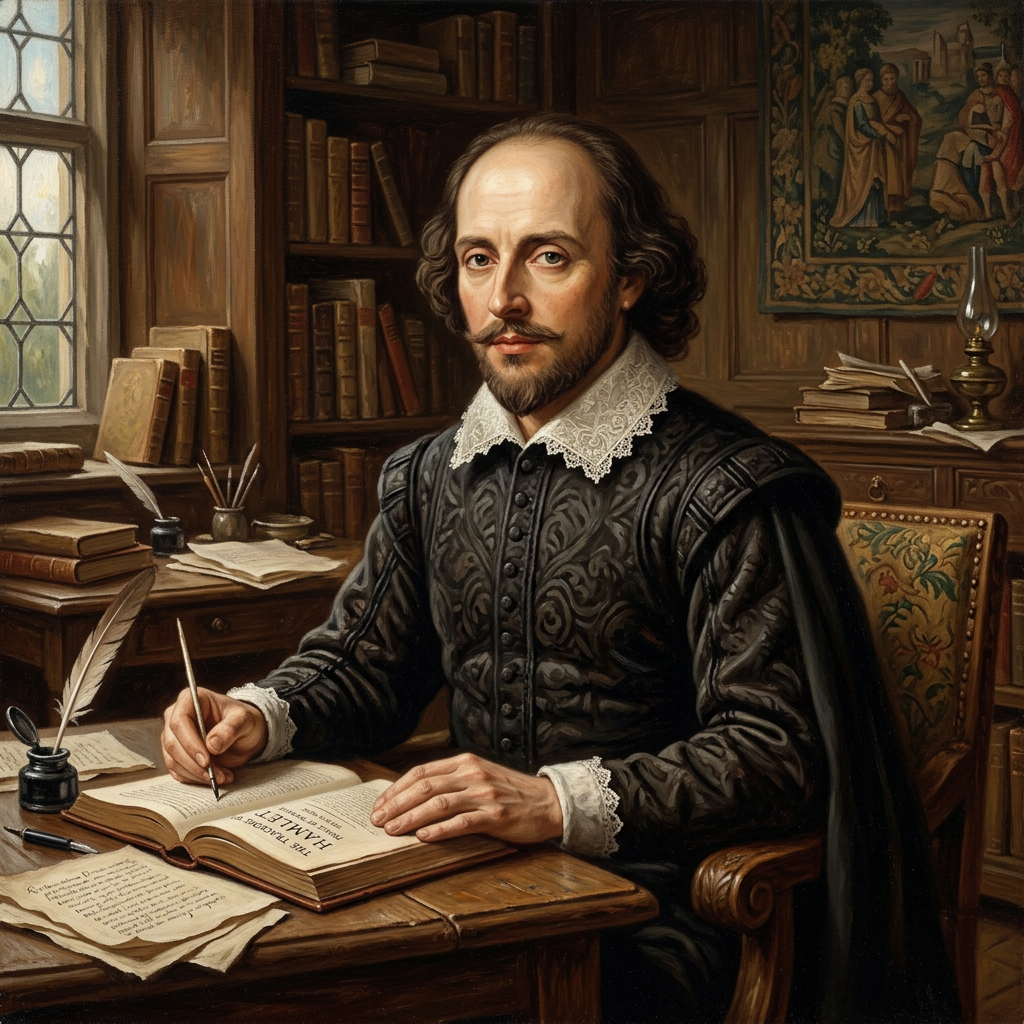
Our story begins in 1613, on a day that would forever link theatre history with catastrophe. On June 29 of that year, London’s original Globe Theatre—the iconic playhouse where William Shakespeare’s greatest works had been performed—was reduced to ashes in a matter of hours.
The cause was as theatrical as it was tragic. During a performance of Shakespeare’s Henry VIII, a cannon shot fired to mark the king’s entrance onstage accidentally ignited the theatre’s thatched roof. Within an hour, the beloved structure was consumed by fire. Remarkably, no lives were lost, but the event marked the end of an era. The Globe would eventually be rebuilt, but the 1613 fire remains one of theatre history’s most dramatic moments—a reminder that even the most enduring cultural institutions are fragile.
Sports Immortality: World Cup Glory and Athletic Firsts
June 29 has been a date of extraordinary sporting achievement, perhaps none more significant than what unfolded in Stockholm in 1958. On that day, Brazil defeated Sweden 5-2 to win the FIFA World Cup, becoming the first team to claim football’s greatest prize outside their home continent. The hero of the hour was a 17-year-old prodigy named Pelé, who scored twice in the final. Coming off a hat-trick in the semifinal against France, the young Brazilian announced himself to the world on the grandest stage. His first goal—controlling the ball with his thigh, flicking it over a defender’s head, and smashing it past the goalkeeper—remains one of the most celebrated moments in World Cup history.
Twenty-eight years later, on June 29, 1986, another World Cup final delivered drama of a different kind. Argentina withstood a furious West German comeback to win 3-2 in Mexico City’s Aztec Stadium. Jorge Valdano gave Argentina a 2-0 lead before Karl-Heinz Rummenigge and Rudi Völler struck twice in seven minutes to level the score in the 81st minute. Then, with four minutes remaining, Jorge Burruchaga scored the winner after a sublime pass from Diego Maradona. It was a final that had everything—and it happened on June 29.
The date also witnessed remarkable athletic firsts. In 1956, Charles Dumas became the first human to clear seven feet in the high jump, achieving 7 feet 5/8 inches at the U.S. Olympic trials in Los Angeles. In 1990, major league baseball history was made when Dave Stewart of the Oakland A’s and Fernando Valenzuela of the Los Angeles Dodgers both pitched no-hitters on the same day—the first and only time two no-hitters were thrown in the two leagues on the same date. And in 1991, Wimbledon witnessed one of tennis’s greatest upsets when Britain’s Nick Brown, ranked 591st in the world, defeated 10th-seeded Goran Ivanišević.
The Fight for Rights and Freedom
If sports provided joy on June 29, politics and civil rights provided profound transformation. Perhaps the most consequential event on this date in American history occurred in 1964, when the Civil Rights Act passed the U.S. Senate after an 83-day filibuster by Southern senators. The legislation, which outlawed discrimination based on race, color, religion, sex, or national origin, represented a seismic shift in American society. It had taken years of struggle, sacrifice, and activism to reach this moment—and June 29, 1964, marked the day the Senate finally said yes to justice.
Three years later, on June 29, 1967, Jerusalem was reunified as Israel removed the barricades separating the Old City from the Israeli sector. It was the first time in two decades that the divided city had been united, following Israel’s victory in the Six-Day War—a moment of profound significance for the Middle East and the world.
On the same day in 1967, tragedy struck the entertainment world when actress Jayne Mansfield, aged 34, was killed in a car crash near New Orleans. Mansfield’s car slammed into the rear of a tractor-trailer on a highway in Slidell, Louisiana. Her boyfriend and driver also died, but remarkably, Mansfield’s three children—including three-year-old Mariska Hargitay, who would grow up to become a celebrated actress—survived the crash.
The struggle for equality continued on June 29 in other parts of the world. In 1949, South Africa began implementing its formal apartheid program by enacting a ban on racially mixed marriages. It was a dark milestone in a system that would cause immense suffering for decades. And in 2006, women in Kuwait cast ballots in parliamentary elections for the first time, exercising voting rights they had won the previous year.
June 29 also marked the birth of new nations. In 1976, Seychelles achieved independence from the United Kingdom, ending its colonial status and beginning a new chapter of self-rule. The Seychellois people had negotiated with Great Britain for their freedom, and June 29 became their Independence Day—a celebration of sovereignty that continues to this day.
War and Conflict: The Long Shadows
The Vietnam War cast a long shadow over several June 29 dates. In 1965, U.S. paratroopers took their first offensive action in South Vietnam, attacking a communist stronghold northeast of Saigon. The following year, on June 29, 1966, American planes bombed North Vietnam’s capital, Hanoi, and the port city of Haiphong for the first time. It was a significant escalation of the conflict.
Then, in 1972, the last U.S. combat brigade left Vietnam. It was not the end of the war, but it marked a turning point—the beginning of the end of America’s direct military involvement in Southeast Asia. Three years of American troop withdrawals had led to this moment, and June 29, 1972, became a date associated with the winding down of one of the 20th century’s most divisive conflicts.
Other conflicts marked the date as well. In 1992, Algerian head of state Mohammed Boudiaf was assassinated as he opened a cultural centre in the eastern Algerian town of Annaba. Boudiaf had been brought back from exile to lead the country through a crisis, and his murder plunged Algeria deeper into its violent civil conflict.
In 2016, terrorism struck Istanbul’s main international airport when three men believed to be Islamic State militants opened fire and then blew themselves up, killing 45 people and wounding more than 230. It was one of Turkey’s deadliest terrorist attacks, and it occurred on June 29.
The Skies Above: Aviation Milestones and Tragedies
Aviation history has also left its mark on June 29. In 1927, U.S. Army Air Corps Lieutenants Lester J. Maitland and Albert F. Hegenberger completed the first transpacific airplane flight, arriving at Wheeler Field in Hawaii after flying 2,400 miles from Oakland, California, in 25 hours and 50 minutes aboard the Bird of Paradise. It was a feat of navigation and endurance that expanded the possibilities of air travel.
In 1939, the first commercial plane flight from the United States to Europe was completed as the Dixie Clipper landed in Lisbon, Portugal. Commercial aviation was still in its infancy, but this flight demonstrated that regular transatlantic air travel was becoming a reality.
But the skies could also bring tragedy. On June 29, 1972, North Central Airlines Flight 290 collided in mid-air with Air Wisconsin Flight 671 over Lake Winnebago in Wisconsin. Both aircraft crashed into the lake, killing all 13 people on board. It was a stark reminder of the dangers that still accompanied air travel.
Technology Transforms the World
Perhaps no June 29 event has had more impact on daily life in the 21st century than what happened in 2007. On that date, Apple released the first iPhone. It went on sale in the United States, and within years, it had revolutionized not just the telecommunications industry but virtually every aspect of modern life. The smartphone era had begun.
Two years earlier, in 2005, another technological milestone was reached when the space shuttle Atlantis linked with the Russian space station Mir in orbit, beginning a historic five-day voyage as a single ship. It was a symbol of post-Cold War cooperation in space—American and Russian spacecraft docking in the heavens.
The world of science also saw progress on June 29. In 1990, chlorofluorocarbons (CFCs) were banned to protect the ozone layer. It was one of the most successful international environmental agreements in history, and June 29 marked a crucial step in that effort. And in 1939, Ford introduced the revolutionary Ford-Ferguson 9N tractor, incorporating Harry Ferguson’s three-point hitch system—an innovation that would transform agriculture.
Culture, Music, and the Arts
The entertainment world has also found its place on June 29. In 1969, the Harlem Cultural Festival began in New York’s Mount Morris Park. Running on weekends from June 29 through August 24, the festival featured performances by Stevie Wonder, Gladys Knight, B.B. King, and dozens of other legendary artists. It was a celebration of Black culture and artistry that, for decades, remained largely overlooked—until the 2021 documentary Summer of Soul brought it the recognition it deserved.
In 1987, the James Bond film The Living Daylights premiered in London, marking Timothy Dalton’s debut as 007. The theme song was performed by a-ha, though the Norwegian band was unable to attend the premiere. Film composer John Barry reportedly called them “Hitler Youth”—a comment that reflected the sometimes tense relationship between the Bond franchise and its pop music collaborators.
In 1985, Mick Jagger and David Bowie recorded “Dancing in the Street” at London’s legendary Abbey Road Studios for the Live Aid charity. They shot the video the same day, creating one of the most memorable pop culture moments of the 1980s.
The date also saw the passing of cultural giants. On June 29, 2003, Katharine Hepburn died at age 96. She had won a record four Best Actress Oscars during a career that spanned much of the 20th century. And in 1940, the Swiss-German painter Paul Klee—one of modern art’s most influential figures—died.
In 2009, another kind of cultural figure met his fate. Bernie Madoff, the American hedge-fund manager who had orchestrated the largest Ponzi scheme in history, was sentenced to 150 years in prison. The sentence, handed down on June 29, brought some measure of justice to the thousands of victims who had lost their savings in his fraud.
The Natural World and Other Curiosities
Even the earth itself has made its presence felt on June 29. In 1869, an earthquake struck the Puget Sound region, felt from Astoria, Oregon, to San Juan Island and perhaps as far as Victoria, British Columbia. In Seattle, the quake was described as “much heavier than any before known in this vicinity,” strong enough to send citizens rushing from their dwellings into the streets and to throw dishes from shelves.
In 1932, a magnitude 6.0 earthquake occurred off the coast of Japan near Miyako. And in 1976, a magnitude 6.1 quake struck south of the Kermadec Islands. The planet, it seems, has its own calendar of significant events.
Politics and Power Shifts
Political history on June 29 is rich with transitions of power. In 1312, German King Henry VII was crowned Holy Roman Emperor in Rome. In 1974, Isabel Perón was sworn in as president of Argentina, taking over from her husband Juan Perón after he fell ill—he died just two days later. She became the first female president in Argentine history, though her tenure would be brief.
In 1980, Iceland elected Vigdís Finnbogadóttir as president, making her Europe’s first democratically elected woman head of state. It was a milestone for gender equality in politics, and Finnbogadóttir would go on to serve for 16 years. And in 2001, UN Secretary-General Kofi Annan was unanimously re-elected to a second term by a 189-member General Assembly.
In 2008, Zimbabwe’s longtime ruler Robert Mugabe was sworn in as president for a sixth term. The election had been widely condemned as fraudulent, and Mugabe’s continued rule would bring further economic collapse and suffering to the country.
The Small Stories That Loom Large
History is not only made by the powerful. On June 29, 1855, the Daily Telegraph was first published in London. It would go on to become one of the world’s most influential newspapers. In 1864, Samuel Crowther was consecrated Bishop of Niger, becoming the first Black Church of England bishop. And in 1905, the Automobile Association was formed in London by 50 motorists to counter what they saw as police hostility towards the motor car.
In 2000, a first printing of the U.S. Declaration of Independence fetched $8.14 million in a Sotheby’s online auction, breaking the record for any sale on the internet. It was a sign of how the digital world was beginning to reshape even the most traditional of markets.
Leave a Reply