Every date on the calendar carries stories that have shaped humanity, but June 25 stands out as a remarkably consequential day. Across centuries, this single day has witnessed pivotal military conflicts, political transformations, groundbreaking cultural achievements, scientific milestones, and moments that continue to influence modern society.
From the plains of Montana to the Korean Peninsula, from the concert halls of Paris to the television screens of hundreds of millions around the globe, June 25 has repeatedly served as a turning point. Some events marked the beginning of wars. Others launched new nations, introduced revolutionary artistic works, or altered the course of civil rights and social movements.
What follows is a journey through some of the most remarkable events that occurred on June 25 in different years, industries, and regions of the world.
The Augsburg Confession and the Foundations of Protestantism (1530)
One of the earliest major events associated with June 25 occurred in 1530 when the Augsburg Confession was formally presented to Holy Roman Emperor Charles V at the Diet of Augsburg. The document outlined the central beliefs of the Lutheran movement and became one of the most important texts of the Protestant Reformation.
The Reformation had already begun to challenge the authority of the Roman Catholic Church across Europe. Martin Luther’s ideas had spread rapidly thanks to the printing press, creating religious divisions that reshaped politics, culture, and governance throughout the continent.
The presentation of the Augsburg Confession represented more than a theological statement. It was a declaration that large portions of Europe were prepared to embrace new religious structures. The document remains a foundational confession for Lutheran churches worldwide nearly five centuries later.
Its influence extended beyond religion, helping shape concepts of individual conscience, religious liberty, and national identity that would emerge in later centuries.
Casimir IV and the Union of Poland and Lithuania (1447)
Another significant June 25 event occurred in 1447 when Casimir IV was crowned King of Poland. Already Grand Duke of Lithuania, his reign strengthened one of Europe’s most influential political unions.
The Polish-Lithuanian partnership would eventually become one of the largest and most powerful states in Europe. It played a major role in diplomacy, trade, and military affairs throughout the late medieval and early modern periods.
The consequences of this coronation reached far beyond the borders of Poland and Lithuania. It contributed to the development of a political entity that served as a major force in Eastern European history for centuries.
Custer’s Last Stand: The Battle of the Little Bighorn (1876)
Among the most famous military events ever associated with June 25 is the Battle of the Little Bighorn, fought on June 25–26, 1876. The clash took place in what is now Montana and involved the U.S. Army’s 7th Cavalry under Lieutenant Colonel George Armstrong Custer facing a coalition of Lakota Sioux, Northern Cheyenne, and Arapaho warriors.
The battle ended in a stunning defeat for Custer and his forces. Often remembered as “Custer’s Last Stand,” the engagement became one of the defining moments of the American frontier era.
For Native American nations, the victory represented a rare and powerful success against U.S. military expansion. Leaders such as Sitting Bull and Crazy Horse became enduring symbols of Indigenous resistance.
The battle has remained deeply embedded in American historical memory. It has inspired countless books, films, academic studies, and public debates about westward expansion, Indigenous rights, and historical interpretation.
More than a century later, the Battle of the Little Bighorn continues to be studied not only as a military encounter but also as a reflection of larger struggles over land, sovereignty, and cultural survival.
The Firebird Revolutionizes Modern Music (1910)
The arts experienced a transformative June 25 moment in 1910 when composer Igor Stravinsky’s ballet The Firebird premiered in Paris. The production immediately established Stravinsky as one of the most important musical innovators of the twentieth century.
Commissioned by Sergei Diaghilev’s Ballets Russes, the work combined Russian folklore with daring orchestration and modern musical ideas. Audiences and critics alike recognized that something extraordinary had arrived.
The success of The Firebird paved the way for later masterpieces such as Petrushka and The Rite of Spring, works that would fundamentally reshape classical music.
Many historians consider the premiere one of the defining moments in modern artistic history. It demonstrated how innovation in music could challenge audiences while simultaneously expanding the possibilities of creative expression.
Labor Rights Advance with the Fair Labor Standards Act (1938)
June 25, 1938, marked a landmark moment in labor history when U.S. President Franklin D. Roosevelt signed the Fair Labor Standards Act into law. The legislation established a federal minimum wage, overtime protections, and restrictions on child labor.
At a time when industrial workers often faced harsh conditions and extremely long hours, the law represented a major shift in the relationship between government, employers, and employees.
The act became one of the pillars of modern labor regulation. Its principles influenced labor legislation not only in the United States but also in other countries seeking to improve workplace standards.
Today, debates about wages, working hours, and employee protections still reference the framework established by this landmark legislation.
World War II’s Turning Point in Europe (1942)
On June 25, 1942, Major General Dwight D. Eisenhower assumed command of U.S. forces in the European theater during World War II. At the time, Eisenhower was relatively unknown to the public, but this appointment would ultimately place him at the center of Allied strategy.
His leadership helped coordinate multinational military efforts that culminated in the liberation of Western Europe and the defeat of Nazi Germany.
Eisenhower later became Supreme Allied Commander and eventually President of the United States. His appointment on June 25 was therefore not only a wartime milestone but also a defining moment in twentieth-century political leadership.
Anne Frank’s Diary Reaches the World (1947)
Few books have had a greater emotional impact than The Diary of a Young Girl, first published on June 25, 1947. The diary chronicled the experiences of Anne Frank and her family while hiding from Nazi persecution during World War II.
Initially published in Dutch under the title Het Achterhuis (“The Secret Annex”), the book gradually reached international audiences and became one of the most widely read works in history.
What made Anne Frank’s diary extraordinary was its deeply personal perspective. Rather than focusing on military campaigns or political leaders, it revealed the human realities of persecution, fear, hope, and resilience.
The diary has been translated into dozens of languages and remains a cornerstone of Holocaust education worldwide. Through Anne’s words, millions of readers have gained a personal connection to one of history’s darkest chapters.
The Korean War Begins (1950)
One of the most consequential geopolitical events of the twentieth century began on June 25, 1950, when North Korean forces crossed the 38th parallel and invaded South Korea. The attack marked the start of the Korean War.
The conflict rapidly evolved into an international struggle involving the United States, China, the Soviet Union, and the United Nations. It became the first major military confrontation of the Cold War.
The war lasted more than three years and resulted in millions of deaths, with civilians accounting for a significant portion of the casualties.
Although an armistice ended active fighting in 1953, no formal peace treaty was signed. The Korean Peninsula remains divided to this day, making the events of June 25, 1950, highly relevant to contemporary international relations.
The Korean War also shaped military doctrine, alliance structures, and geopolitical strategies that continue to influence global affairs.
A Global Television Milestone (1967)
The communications industry experienced a revolutionary moment on June 25, 1967, when the world’s first live international satellite television broadcast, Our World, was transmitted. The program connected audiences across multiple continents in real time.
An estimated 400 million viewers watched the broadcast, an astonishing figure for the era. The event demonstrated the growing power of satellite technology to shrink geographic distances and create shared global experiences.
The highlight for many viewers was a performance by the Beatles, who debuted “All You Need Is Love” during the broadcast. The song quickly became one of the defining cultural statements of the decade.
The broadcast foreshadowed today’s interconnected world of livestreams, global events, and instant communication. In many ways, June 25, 1967, offered a glimpse of the digital future.
The First Rainbow Flag Flies (1978)
Social history gained a powerful symbol on June 25, 1978, when the rainbow flag was flown publicly for the first time during the San Francisco Gay Freedom Day Parade.
Designed by Gilbert Baker, the flag was intended to represent diversity, inclusion, and pride. Over the following decades it became one of the most recognizable symbols of the LGBTQ+ rights movement.
Its influence spread far beyond the United States. Today the rainbow flag appears at public demonstrations, government buildings, sporting events, universities, and businesses around the world.
The first public appearance of the flag on June 25 represented more than a design debut—it marked the emergence of a visual symbol that would help unite a global social movement.
Mozambique’s Independence (1975)
June 25, 1975, marked a defining moment in African history when Mozambique gained independence from Portugal after a lengthy anti-colonial struggle.
The achievement was part of a broader wave of decolonization that transformed Africa during the twentieth century. Independence gave Mozambicans the opportunity to shape their own political future after centuries of colonial rule.
While the country would face significant challenges in the years that followed, June 25 remains one of Mozambique’s most important national holidays and a symbol of self-determination.
India’s Emergency Declaration (1975)
The same day witnessed another historic political event when Prime Minister Indira Gandhi declared a national Emergency in India.
The Emergency period, which lasted until 1977, involved restrictions on civil liberties, press censorship, and the concentration of executive power.
It remains one of the most debated chapters in Indian democratic history. Supporters argued that extraordinary measures were necessary for stability, while critics viewed the period as a serious challenge to democratic institutions.
The declaration made on June 25 continues to shape discussions about constitutional limits, executive authority, and civil rights in the world’s largest democracy.
Women Break Political Barriers (1993)
June 25, 1993, became a milestone for women’s political leadership. On that day, Kim Campbell was sworn in as Canada’s first female prime minister. Around the same time, Tansu Çiller became Turkey’s first female prime minister.
Although their political careers followed different trajectories, both appointments represented important breakthroughs in national politics.
Their rise reflected broader global trends toward greater representation of women in leadership roles. While gender equality in politics remains an ongoing challenge, these milestones demonstrated that longstanding barriers could be overcome.
The Death of Michael Jackson (2009)
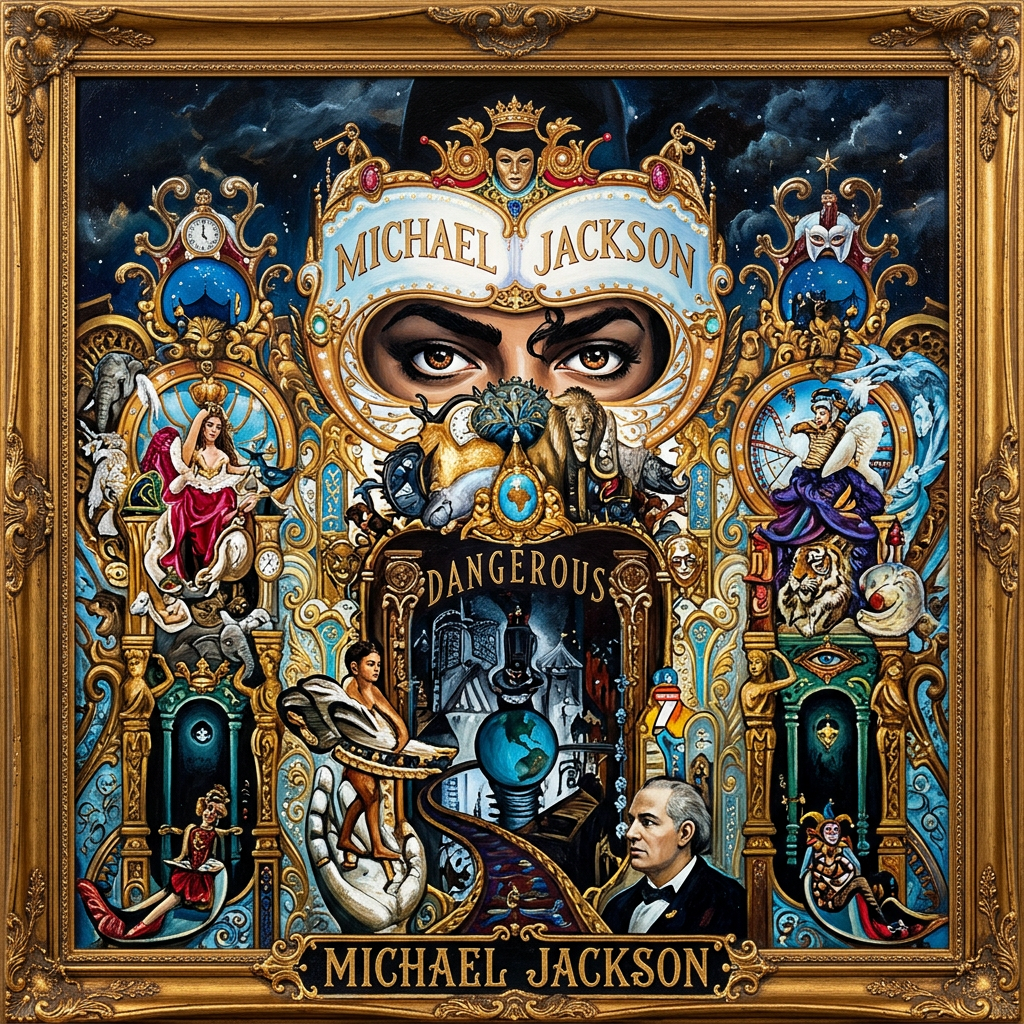
Few celebrity deaths have generated as much worldwide reaction as the passing of Michael Jackson on June 25, 2009. The singer, dancer, songwriter, and entertainer died at age fifty, sending shockwaves through the global music industry.
Jackson’s influence on popular culture was immense. Albums such as Thriller, Bad, and Dangerous transformed music, choreography, fashion, and music videos.
News of his death triggered an unprecedented surge in media coverage and online activity. Fans gathered in cities around the world to celebrate his life and legacy.
Even years later, Michael Jackson remains one of the most commercially successful and culturally influential artists in history.
Farrah Fawcett’s Final Chapter (2009)
On the same day the world learned of Michael Jackson’s death, actress Farrah Fawcett also passed away after a battle with cancer.
Fawcett became a pop culture icon during the 1970s through her role in Charlie’s Angels and one of the most famous celebrity posters ever produced.
Her death reminded audiences of the extraordinary influence television stars could have on fashion, beauty standards, and entertainment culture.
The coincidence of two major celebrity deaths on the same day created one of the most memorable news cycles in modern entertainment history.
Why June 25 Continues to Matter
Looking across centuries, June 25 reveals an extraordinary pattern. It is a date associated with transformation.
Religious movements found defining voices. Nations gained independence. Wars began that altered the geopolitical landscape. Artists introduced works that revolutionized music and culture. New technologies connected humanity in unprecedented ways. Social movements adopted symbols that would become recognized worldwide.
The significance of June 25 lies not in a single event but in the remarkable diversity of milestones attached to it. The date serves as a reminder that history is never shaped by one field alone. Politics, science, warfare, literature, culture, technology, and social progress are all interconnected threads in the larger human story.
From the Augsburg Confession in 1530 to the global cultural shock of Michael Jackson’s death in 2009, June 25 demonstrates how a single day on the calendar can repeatedly become the stage for events that leave lasting marks on civilization.
As future generations look back on history, June 25 will continue to stand as one of those rare dates where the stories of nations, movements, artists, innovators, and ordinary people converge to create an enduring legacy.
Leave a Reply