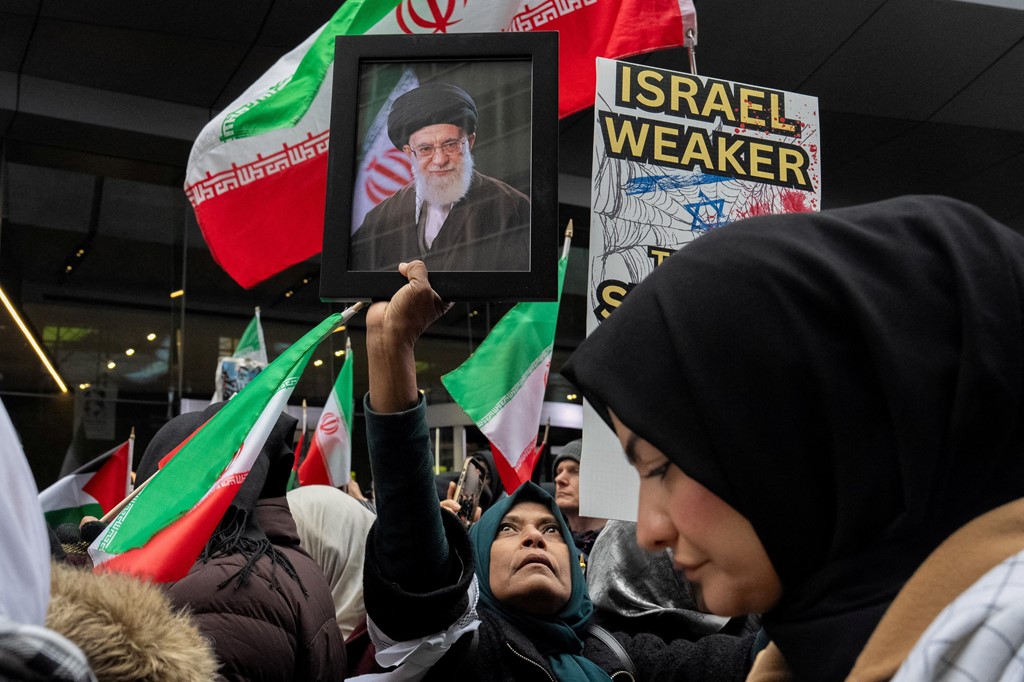
The question “Is Iran the most hated country?” is emotionally charged and difficult to answer definitively. No international organization publishes an official ranking of the world’s “most hated countries,” and public opinion varies significantly by region, political ideology, religion, age, and historical experience.
However, if we examine decades of international polling, diplomatic relations, human rights reports, media coverage, and geopolitical developments, one conclusion emerges clearly: Iran has consistently been among the countries with the most negative international reputations in the world. Whether it is the most disliked country at any given moment is impossible to prove, but it is undeniably one of the most controversial and unpopular states in global public opinion surveys.
This article explores why Iran has acquired that reputation, how perceptions differ between the Iranian people and the Iranian government, and whether the label “most hated country” withstands scrutiny.
Understanding the Question
Before examining Iran specifically, it is important to distinguish between three separate things:
- The Iranian people
- The Iranian government
- The Islamic Republic as a political system
Many surveys show that people around the world often express negative views of the Iranian state while simultaneously admiring aspects of Persian culture, history, science, literature, and the Iranian people themselves.
This distinction matters because countries are often judged internationally by the actions of their governments rather than by the character of their citizens.
When polling organizations ask whether respondents have a favorable or unfavorable opinion of Iran, they are usually measuring perceptions of the country as a political entity, not of ordinary Iranians.
The Historical Roots of Iran’s Image Problem
Iran’s international image did not become negative overnight.
Several major events shaped global perceptions.
The 1979 Iranian Revolution
The overthrow of the Shah and establishment of the Islamic Republic transformed Iran from a pro-Western monarchy into a revolutionary Islamic state.
The subsequent seizure of the U.S. Embassy in Tehran and the 444-day hostage crisis became one of the defining international stories of the late twentieth century.
For many Americans and Western Europeans, the hostage crisis created a lasting association between Iran and anti-Western militancy.
The Iran-Iraq War
The devastating war between Iran and Iraq (1980–1988) killed hundreds of thousands and reinforced Iran’s image as a country locked in regional conflict.
Support for Armed Groups
Over the decades, Iran has supported organizations such as Hezbollah and other regional proxy groups.
Supporters of Iran argue that these relationships are strategic alliances against foreign intervention.
Critics argue that they contribute to instability and violence across the Middle East.
These disagreements have strongly influenced global attitudes toward Iran.
Nuclear Program Controversies
Perhaps no issue has damaged Iran’s international image more than its nuclear program.
For more than two decades, disputes over uranium enrichment, sanctions, inspections, and fears of weaponization dominated international news coverage.
Even among countries opposed to military intervention, concern about Iran’s nuclear ambitions has often remained high.
What Do Global Surveys Actually Show?
The strongest evidence comes from long-running international polling.
Pew Research Findings
For years, surveys by the Pew Research Center found that Iran was viewed unfavorably by majorities in many countries.
One global survey found unfavorable views of Iran across most of the 39 countries studied. Particularly negative opinions appeared in:
- United States
- Canada
- France
- Germany
- United Kingdom
- Israel
- Japan
- South Korea
- Jordan
- Egypt
In many of these countries, majorities reported unfavorable opinions of Iran.
Subsequent surveys in 2014 and 2015 reached similar conclusions, finding that Iran’s image remained largely negative worldwide and that favorable views were limited to a relatively small number of countries. (Pew Research Center)
Advanced Economy Polling
A 2020 analysis covering fourteen advanced economies found that approximately seven in ten respondents held unfavorable views of Iran.
In several countries, Iran ranked among the least popular nations evaluated in the survey.
These findings support the argument that Iran has been one of the world’s most negatively perceived countries for many years.
Is Iran More Disliked Than Russia, China, North Korea, or Israel?
This is where the question becomes complicated.
Different countries experience periods of intense international criticism.
North Korea
North Korea is often viewed extremely negatively due to its authoritarian government, nuclear weapons program, and human rights record.
In many surveys, North Korea receives some of the lowest favorability ratings in the world.
Russia
Since the Russian invasion of Ukraine, international attitudes toward Russia have worsened dramatically in many countries.
China
Concerns over human rights, surveillance, trade disputes, and geopolitical competition have produced increasingly negative views of China in many Western democracies.
Israel
Following recent conflicts in Gaza, international polling has shown significantly worsening perceptions of Israel in many countries. Some surveys have found majority unfavorable views in numerous states.
The key point is that global opinion is fluid.
At different moments, Russia, North Korea, Iran, Israel, China, and other states have all been among the world’s least popular countries in international surveys.
Therefore, claiming that Iran is definitively “the most hated country” overstates what available evidence can support.
Human Rights and International Criticism
One major factor behind Iran’s negative image is its human rights record.
International organizations have repeatedly criticized the Iranian government regarding:
- Restrictions on free speech
- Political imprisonment
- Treatment of protesters
- Women’s rights
- Religious freedom
- Capital punishment
Iran has frequently been among the world’s leading users of the death penalty.
Human rights organizations have argued that executions are sometimes used as tools of political control and repression. Recent reports indicate that Iran remains responsible for a substantial share of known executions worldwide. (New York Post)
These issues significantly shape international perceptions.
The Impact of the “Women, Life, Freedom” Movement
The death of Mahsa Amini in 2022 triggered widespread protests inside Iran.
The movement attracted enormous international attention.
Many observers expressed solidarity with Iranian women protesting mandatory dress codes and government restrictions.
Ironically, these events produced two opposing effects:
- Greater sympathy for ordinary Iranians.
- Greater criticism of the Iranian government.
As a result, many people who strongly opposed the Iranian regime simultaneously expressed admiration for Iranian protesters.
This distinction became increasingly important in international discourse.
What Do Iranians Think?
A discussion about Iran’s reputation would be incomplete without considering Iranian public opinion.
Several surveys and studies suggest substantial dissatisfaction with the current political system among many Iranians.
Some polling projects have reported large majorities favoring significant political reform or systemic change, although methodologies and estimates remain debated among researchers. (New York Post)
At the same time, other polling efforts have found more nuanced opinions, with many Iranians criticizing government performance while holding diverse views about future political arrangements.
The important point is that international criticism of Iran often overlaps with criticism voiced by many Iranians themselves.
Why Some Countries View Iran More Favorably
Despite widespread criticism, Iran is not universally disliked.
Historically, some countries have recorded relatively positive views of Iran, including:
- Pakistan
- Indonesia
- Bangladesh (in some surveys)
Pew surveys found significantly more favorable attitudes in several Muslim-majority countries than in many Western nations. (Pew Research Center)
Several factors explain this:
- Shared religious ties
- Opposition to Western intervention
- Admiration for Iran’s resistance to foreign pressure
- Cultural and historical connections
Thus, perceptions of Iran vary substantially across regions.
Persian Civilization Versus the Islamic Republic
One reason the “most hated country” label is misleading is that many people distinguish between Iran’s government and Iran’s civilization.
Iran is home to one of the world’s oldest continuous civilizations.
Persian contributions include:
- Literature
- Mathematics
- Astronomy
- Architecture
- Philosophy
- Poetry
Figures such as Rumi, Hafez, and Omar Khayyam remain admired globally.
Many people who dislike the Iranian government simultaneously express appreciation for Persian culture and history.
This creates a more complex picture than the phrase “most hated country” suggests.
Media Representation and Public Perception
Media coverage also plays an important role.
International news coverage of Iran frequently focuses on:
- Nuclear negotiations
- Regional conflicts
- Sanctions
- Protests
- Human rights issues
These topics are undeniably important, but they can overshadow other aspects of Iranian society.
As a result, many people encounter Iran primarily through stories involving conflict or controversy.
Countries that receive predominantly negative media coverage often develop negative public images regardless of the daily realities experienced by their citizens.
Geopolitics and the Creation of Enemies
Another factor is geopolitical rivalry.
Iran has been in conflict with various governments, including:
- United States
- Israel
- Saudi Arabia (though relations have improved somewhat at times)
- Certain Gulf states
When countries are engaged in long-term geopolitical disputes, negative perceptions tend to reinforce themselves.
Government narratives, media coverage, sanctions, military tensions, and diplomatic confrontations all contribute to public opinion.
This dynamic is not unique to Iran.
Similar patterns have affected perceptions of Russia, China, Cuba, North Korea, and other states at various points in history.
Is Iran Uniquely Disliked?
The evidence suggests the answer is no.
Iran is:
- Among the most negatively viewed countries internationally.
- Frequently ranked near the bottom in favorability surveys.
- Criticized across multiple regions and political systems.
But Iran is not uniquely disliked.
North Korea, Russia, and other countries often receive similarly negative assessments depending on the survey, location, and time period.
Furthermore, attitudes toward Iran vary considerably among different populations.
A country cannot accurately be called “the most hated” when substantial minorities—and sometimes majorities—in various regions continue to view it positively.
Conclusion
The claim that Iran is the most hated country in the world is not supported by definitive evidence.
What the evidence does show is that Iran has consistently maintained one of the most negative international reputations of any major state for more than a decade. Repeated global surveys have found widespread unfavorable views of Iran across North America, Europe, parts of Asia, and much of the Middle East.
The reasons are complex and include:
- The legacy of the 1979 Revolution
- The hostage crisis
- Nuclear controversies
- Regional conflicts
- Support for proxy groups
- Human rights concerns
- International media coverage
- Geopolitical rivalries
Yet reducing Iran to “the world’s most hated country” oversimplifies reality.
Many people distinguish between the Iranian government and the Iranian people. Persian culture continues to be admired globally. Significant numbers of people around the world hold neutral or even favorable views of Iran, depending on their political beliefs, religious affiliations, and national backgrounds.
The most accurate conclusion is therefore this:
Iran is not demonstrably the most hated country in the world, but it is unquestionably one of the most controversial and least favorably viewed countries in modern international public opinion.
Leave a Reply