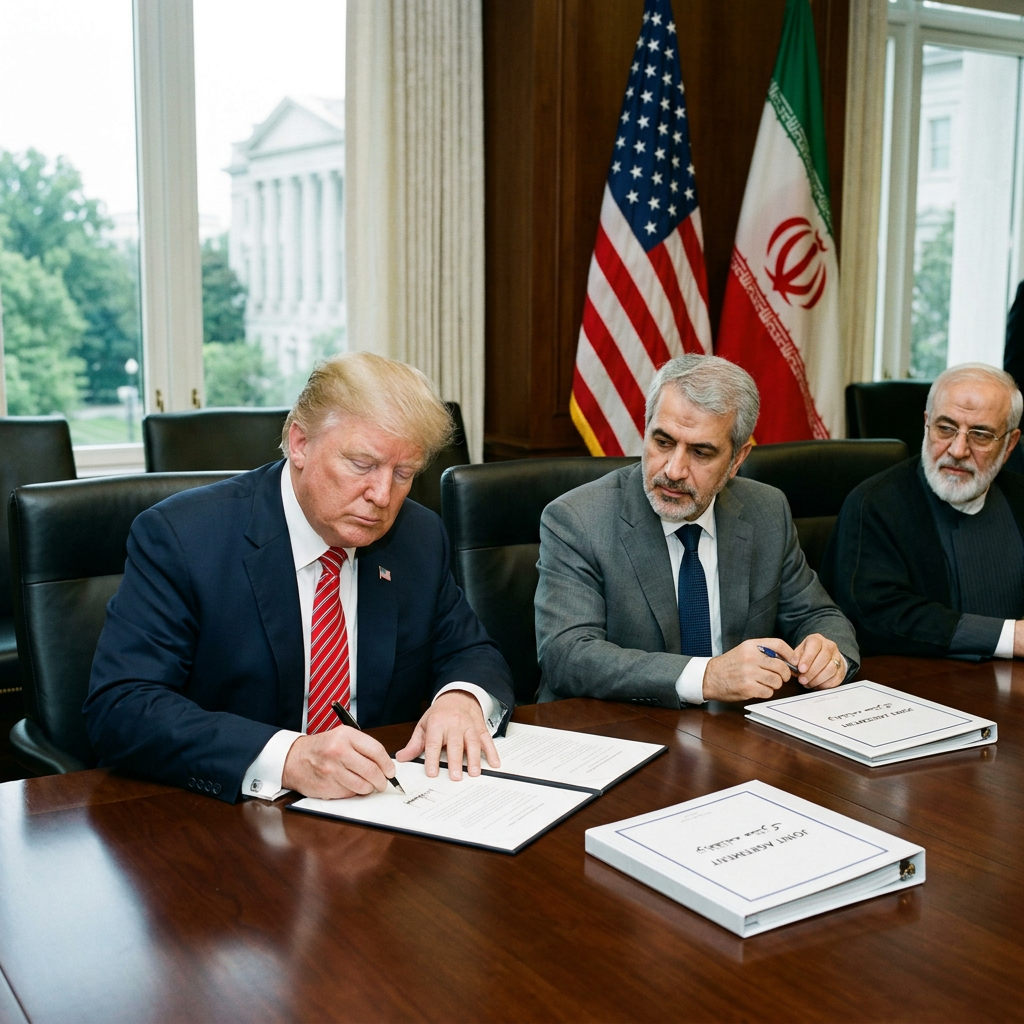
Diplomacy Dominates Front Pages as Tehran Pursues Post-Conflict Negotiations
Iranian newspapers today remained heavily focused on the diplomatic process that has followed the recent conflict involving Iran, the United States, and Israel. Reformist, centrist, and conservative publications alike devoted extensive coverage to negotiations taking place in Switzerland, where Iranian officials continue discussions on sanctions relief, regional security arrangements, and future nuclear oversight mechanisms.
Across multiple publications, Foreign Minister Abbas Araghchi’s assessment that negotiations had achieved “major progress” received prominent treatment. Iranian media emphasized Tehran’s insistence that sanctions relief must produce tangible economic benefits rather than symbolic gestures. Coverage also highlighted Iran’s continued rejection of any arrangement that would legitimize a long-term Israeli military presence in southern Lebanon.
Several newspapers portrayed the talks as evidence that Iran had forced its adversaries to negotiate from a position of respect. Conservative outlets argued that military resistance and national unity had strengthened Tehran’s bargaining position. Reform-oriented newspapers, meanwhile, stressed the importance of converting diplomatic momentum into economic recovery and greater international engagement.
One recurring theme was the possibility of a broader agreement within the next sixty days. Iranian commentators noted that discussions now extend beyond military de-escalation to include reconstruction funding, sanctions waivers, oil exports, and regional security mechanisms.
Economic Anxiety Continues Despite Diplomatic Progress
While state officials have presented the interim agreement as a strategic success, economic concerns remain a dominant theme throughout the Iranian press.
Economic newspapers and business sections focused on inflation, currency pressures, unemployment, and the uncertain pace of sanctions relief. Analysts interviewed by Iranian publications warned that ordinary citizens are unlikely to experience immediate improvements in living standards even if negotiations continue successfully.
Public sentiment reflected in interviews and field reports remains cautious. Citizens quoted in recent reporting expressed skepticism about whether diplomatic agreements would significantly improve daily life. One resident interviewed about current conditions remarked that people are focused primarily on “survival” rather than political declarations of victory. Others said years of sanctions and conflict had reduced confidence that any agreement would quickly translate into lower prices or better employment opportunities.
Business commentators argued that restoring investor confidence will require more than temporary sanctions waivers. They emphasized the need for banking normalization, improved trade channels, and long-term policy stability.
Several economic writers also examined the government’s reconstruction agenda. Reports discussed proposals for large-scale infrastructure investment, industrial modernization, and support for businesses damaged during recent hostilities. The question raised by many commentators was whether promised international financing and sanctions relief would materialize quickly enough to support recovery efforts.
Strait of Hormuz Policy Sparks Debate
A significant topic in today’s newspapers was Tehran’s plan to introduce maritime transit fees for vessels passing through the Strait of Hormuz.
Government-aligned publications portrayed the proposal as a legitimate assertion of national sovereignty and a means of generating additional revenue while strengthening Iran’s strategic position in global energy markets. Officials argued that the country bears substantial responsibilities for maintaining security in one of the world’s most important maritime corridors.
Economic analysts interviewed by several newspapers offered mixed reactions. Some viewed the policy as an innovative method of generating state revenue without increasing domestic taxation. Others warned that international shipping companies might seek alternative routes or demand compensatory arrangements.
Foreign policy commentators emphasized that the proposal reflects Tehran’s confidence following recent diplomatic developments. Newspapers noted that Iran rejected external naval escort proposals and instead promoted a vision in which regional states manage their own security arrangements.
Conservative Newspapers Highlight National Resilience
Conservative newspapers continued to frame recent events through the lens of resistance and national endurance.
Editorials argued that Iran had successfully withstood external pressure and emerged with enhanced regional influence. Writers praised the armed forces, diplomatic corps, and political leadership for maintaining national cohesion during a period of severe external threats.
Coverage frequently emphasized themes of self-reliance, technological advancement, and strategic independence. Commentators argued that domestic industries, including defense manufacturing, had demonstrated their resilience under sanctions.
In interviews cited by conservative publications, security analysts maintained that Iran’s indigenous technological capabilities had become an important source of national strength. One analyst argued that Iranian military technologies developed under sanctions had attracted global attention and demonstrated the country’s capacity for innovation despite economic restrictions.
Editorials also criticized Western interpretations of recent events, accusing foreign media of underestimating Iran’s strategic achievements while exaggerating economic difficulties.
Reformist Voices Call for International Engagement
Reformist newspapers adopted a noticeably different tone, emphasizing diplomacy and economic normalization.
Opinion writers argued that recent developments present a rare opportunity to reduce international isolation and rebuild economic confidence. Commentators stressed that long-term stability depends on expanding constructive relations with regional and global actors.
Several analysts interviewed by reform-oriented publications argued that military deterrence alone cannot guarantee national security. Instead, they called for broader diplomatic engagement, stronger economic partnerships, and improved relations with neighboring states.
Writers also emphasized the importance of addressing domestic concerns. Rising living costs, youth unemployment, housing affordability, and access to global markets were repeatedly identified as issues requiring urgent attention.
A number of editorials suggested that successful diplomacy should ultimately be measured by improvements in everyday life rather than geopolitical symbolism. This perspective has gained visibility as citizens continue to confront economic challenges despite political declarations of success.
Cultural Openings Receive Extensive Coverage
Beyond politics and economics, cultural developments in Tehran received substantial attention in several newspapers.
Reports highlighted a noticeable increase in concerts, artistic performances, and public cultural activities. The return of prominent musicians and the appearance of new entertainment venues were widely discussed as signs of a changing social atmosphere.
One of the most widely covered stories involved a major rock performance in Tehran by musician King Raam. Newspapers described the concert as symbolically important because it represented one of the most prominent public performances since the recent conflict.
Interviews with artists reflected cautious optimism. Some performers described renewed opportunities for cultural expression, while also acknowledging uncertainty about how long the current atmosphere might last. According to reports, musicians and cultural figures emphasized the importance of reconnecting with younger generations and restoring public morale after months of conflict and economic stress.
Coverage also noted increased visibility of mixed-gender social gatherings, live music events, and other forms of cultural activity that had previously faced greater restrictions. Reformist newspapers generally welcomed these developments as evidence of social adaptation, while conservative publications treated them more cautiously.
Public Opinion Reflects Hope Mixed With Skepticism
A recurring feature across today’s press was the publication of interviews and street-level reporting designed to capture public sentiment.
Many citizens expressed relief that large-scale hostilities had subsided. However, newspapers also reported widespread uncertainty regarding the future.
Interviewees frequently cited inflation, employment insecurity, and housing costs as their primary concerns. Some respondents said diplomatic achievements would only gain meaning if they produced measurable improvements in economic conditions.
One resident quoted in coverage of public reactions suggested that political agreements often generate optimism initially but fail to produce lasting changes in ordinary people’s lives. Another interviewee emphasized that families remain focused on financial survival and rebuilding after months of instability.
The contrast between official optimism and public caution emerged as one of the defining themes of today’s reporting.
Regional Security Remains Central to Political Debate
Middle East developments continued to receive extensive analysis throughout the Iranian press.
Commentators examined the ongoing situation in Lebanon, where negotiations continue regarding ceasefire arrangements and future security structures. Iranian newspapers generally portrayed Tehran as an indispensable participant in any sustainable regional settlement.
Reports highlighted discussions surrounding proposed coordination mechanisms intended to prevent renewed military escalation. Iranian officials were quoted stressing that durable peace requires addressing broader political grievances rather than relying solely on military deterrence.
Strategic analysts also discussed Iran’s relationships with regional powers including Saudi Arabia, Qatar, and the United Arab Emirates. Newspapers debated whether recent diplomacy could accelerate regional reconciliation efforts or merely produce a temporary reduction in tensions.
Media Focus on the Path Ahead
Editorial pages across the political spectrum converged on one central question: what comes next?
Conservative commentators argued that Iran must safeguard its strategic gains while remaining vigilant against external pressure. Reformist writers urged policymakers to seize the opportunity for economic and diplomatic transformation.
Economic analysts called for concrete policy measures capable of restoring confidence among businesses and consumers. Cultural commentators emphasized the importance of preserving newly emerging social openings.
Despite ideological differences, today’s newspapers largely agreed on one point: the coming weeks may prove decisive for determining whether recent diplomatic progress evolves into lasting political and economic change.
The Iranian press therefore presents a nation standing at a crossroads—celebrating the reduction of immediate external threats while confronting profound questions about economic recovery, social reform, regional diplomacy, and the future direction of the Islamic Republic.
Leave a Reply