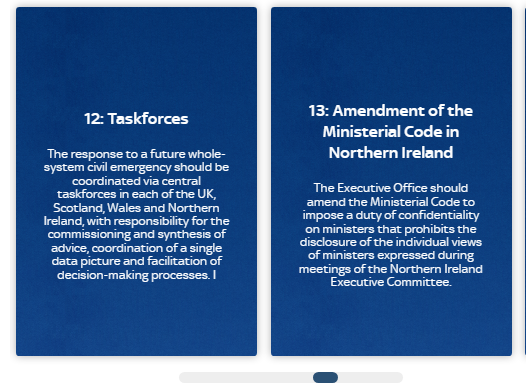
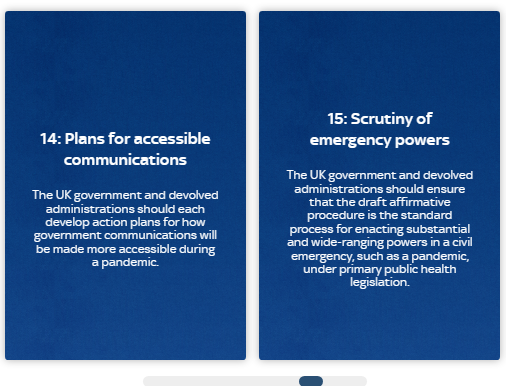
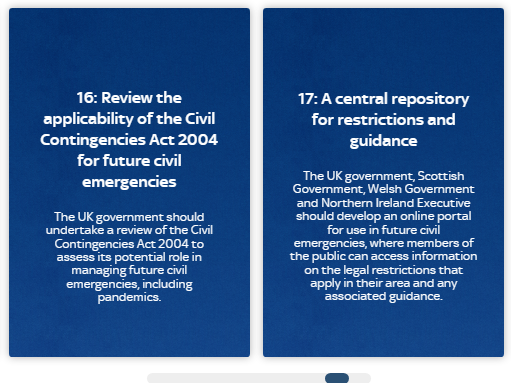
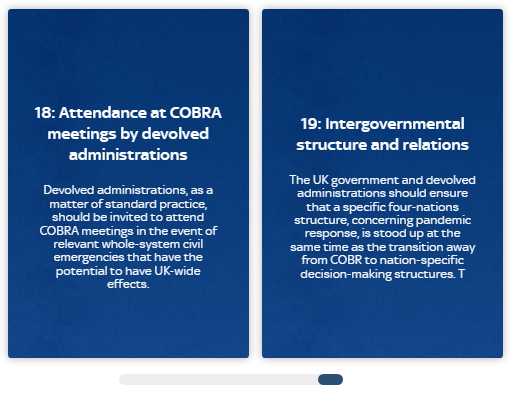
The inquiry has identified several key lessons “to inform the response to a future pandemic” and made 19 recommendations that, if followed, “will better protect the UK in any future pandemic and improve decision-making in a crisis”.
Baroness Heather Hallett, the chair of the inquiry, says she expects that recommendations are acted upon and implemented “within the time frames set out in the recommendations”.
It also says the inquiry “will be monitoring the implementation of the recommendations during its lifetime”.
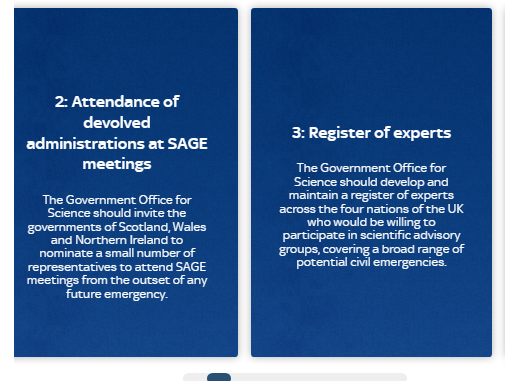
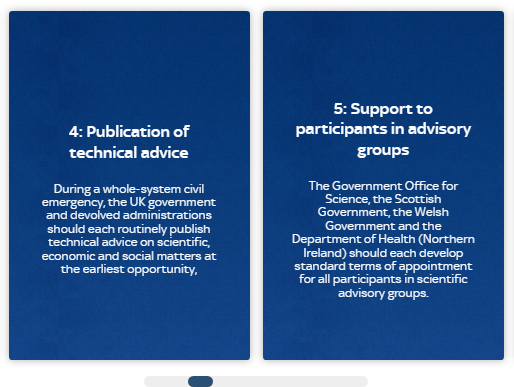
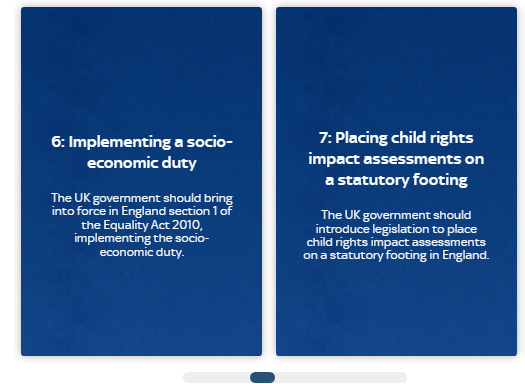
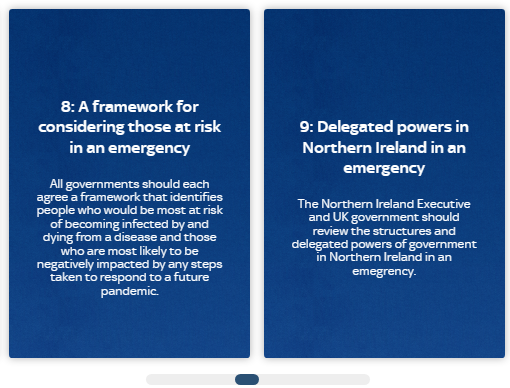
Among the recommendations are for governments to establish formal arrangements for covering the roles of Prime Minister and First Minister during a whole-system civil emergency, should the incumbent be unable to undertake their duties.
Baroness Hallett also recommends reconstituting the role of the Chief Medical Officer for Northern Ireland as an independent advisory role.
Here they are in full…


Inquiry chair: Governments did not appreciate level of ‘risk and calamity’ facing the UK
In a statement following the publication of today’s report, Baroness Heather Hallett says there was a “serious failure” by all four governments to appreciate the level of “risk and calamity” facing the UK.
She says: “The tempo of the response should have been increased. It was not. February 2020 was a lost month.”
Baroness Hallett says the inquiry does not advocate for national lockdowns, which she said should have been avoided if at all possible.
“But to avoid them, governments must take timely and decisive action to control a spreading virus. The four governments of the UK did not.”
She says none of the governments were adequately prepared for the challenges and risks that a lockdown presented, and that many of the same failings were repeated later in 2020, which she says was “inexcusable”.
“Each government had ample warning that the prevalence of the virus was increasing and would continue to do so into the winter months. Yet again, there was a failure to take timely and effective action.”

‘Warning signs were there’ as government relied on ‘misleading assurances’
Baroness Hallett says all four UK governments “failed to appreciate the scale of the threat or the urgency of response it demanded” in the early part of 2020.
Hallett says the government relied, in part, on “misleading assurances that the UK was properly prepared for a pandemic”.
“Once the scientific community and the scientific advisers for each nation had become aware that the virus was causing substantially more cases of moderate or severe respiratory illness in China than was being officially reported, and that it had spread from China, the warning signs were there,” she says.
She describes February in 2020 as being a “lost month”, adding “the tempo of the response should have been increased, it was not”.
Top civil servant, along with claims from Matt Hancock, ‘obscured reality and need for more action’
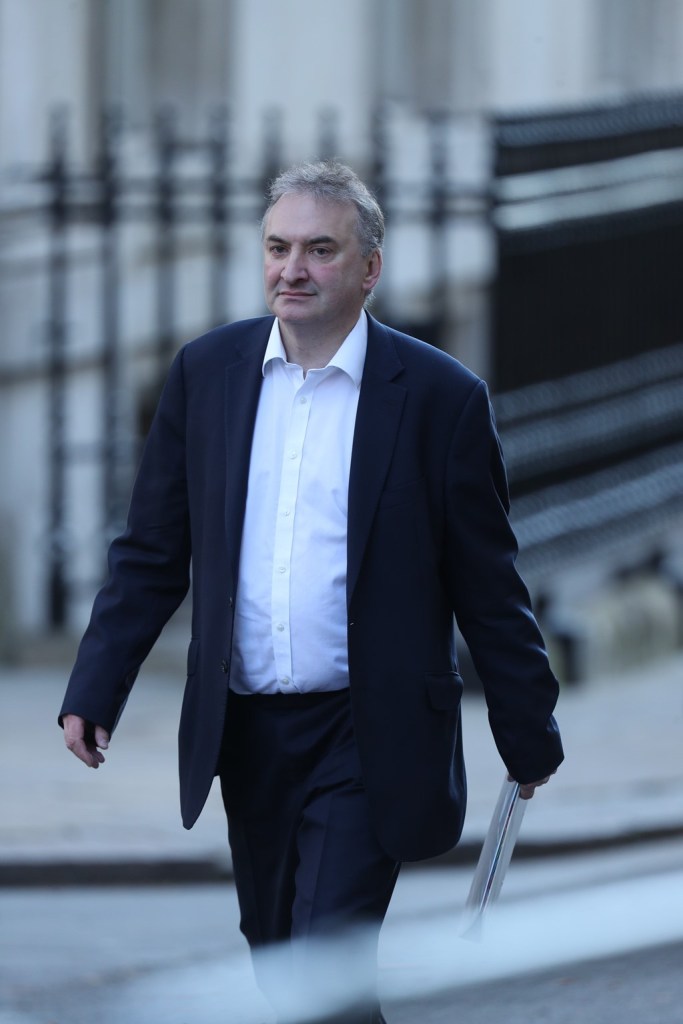
The inquiry has criticised Sir Christopher Wormald for a lack of “action” during the pandemic, and raised “concerns about [his] leadership”.
You’ve probably not heard of Wormald before – but he is an important character in the story of the UK’s response to the pandemic.
He was the most senior civil servant in the Department of Health and Social Care during the pandemic, in charge of advising and supporting health secretary Matt Hancock, as well as implementing the government’s plans.
Since those days, he’s risen even higher – becoming the head of the civil service, in his role as cabinet secretary.
But the report’s findings around him are damning.
Baroness Hallett’s inquiry concludes that it was Wormald’s “responsibility to rectify the overenthusiastic impression Mr Hancock had given to 10 Downing Street and the Cabinet Office about the ability of the Department of Health and Social Care to cope with its role in the pandemic response”.
She wrote that both areas needed to “understand the challenges” the department faces and how these could be addressed.
It says the senior civil servant was “aware of the assurances” Hancock was providing to Boris Johnson, and it adds that there were”some concerns that these assurances were misleading”.
But it states: “The Inquiry has seen no evidence that Sir Christopher Wormald took such action.
“His failure to do so gave rise to additional concerns at the centre of the UK government about the effectiveness of Sir Christopher Wormald’s leadership at the Department of Health and Social Care.”
In a further criticism, it adds that Hancock’s “unjustified assurances” to Johnson and the Cabinet Office that the department was “managing the crisis effectively” was compounded by Wormald’s “failure to rectify these assurances”.
In total, the inquiry has found that this lack of action from him, along with Hancock’s “unjustified” claims, “obscured the reality and the need for more action”.
Leave a Reply