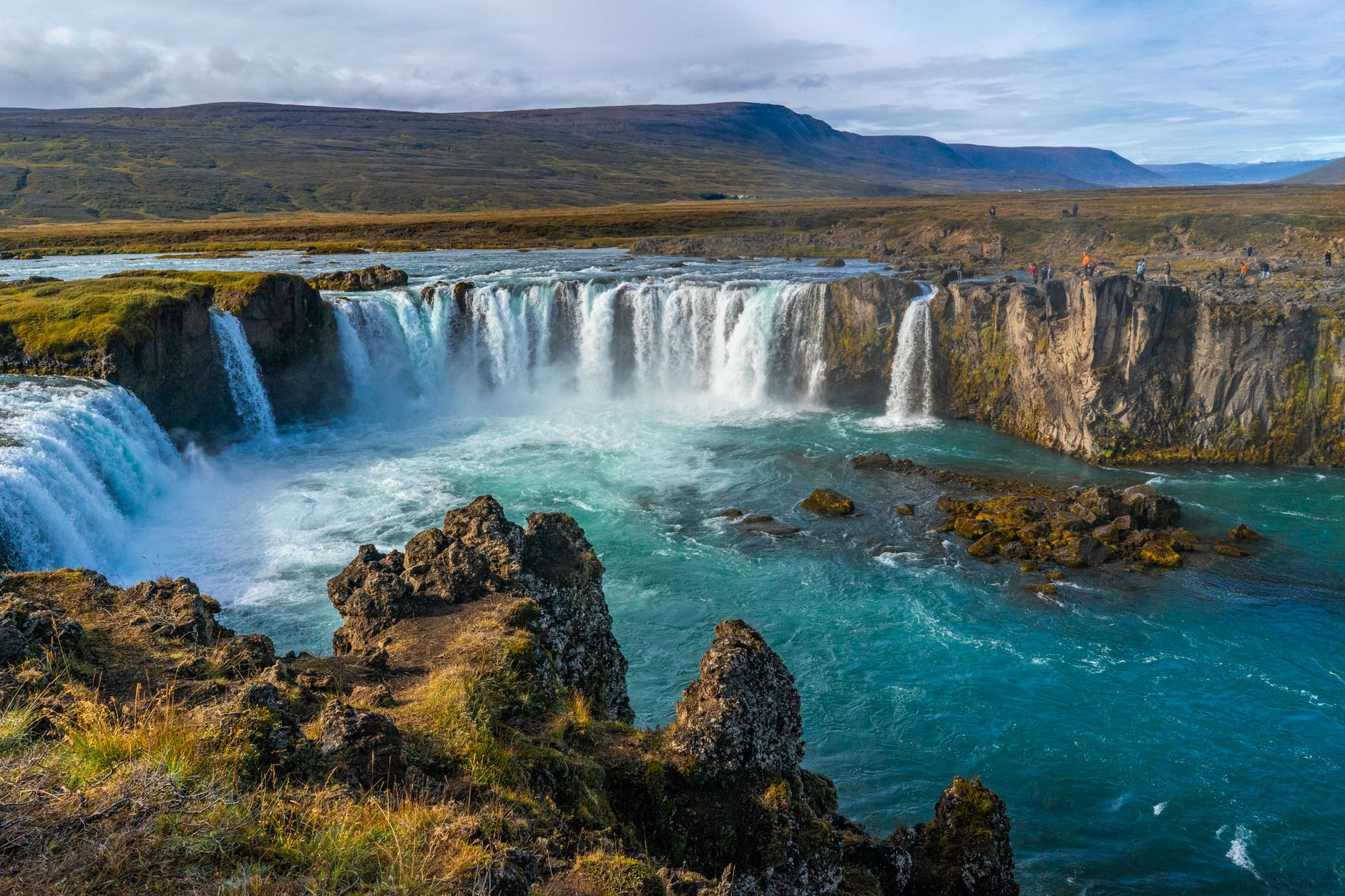
Few countries have a closer relationship with the heat beneath their feet than Iceland.
Surrounded by cold North Atlantic waters and famous for glaciers, snow and long winter nights, Iceland might seem like a place where keeping warm would be a constant challenge. Instead, the country has turned one of its most powerful natural features—geothermal heat—into a cornerstone of everyday life.
Hot water from underground reservoirs heats homes, warms swimming pools, supports greenhouses and helps generate electricity. In fact, about 90% of the energy used for domestic heating in Iceland comes from geothermal sources, according to Iceland’s energy authorities.
Here’s how Iceland’s remarkable thermal-energy system works and why it has become a global example of renewable energy use.
What is thermal energy?
Thermal energy is essentially energy associated with heat.
In Iceland, much of that heat comes from deep inside the Earth. The country’s location on the Mid-Atlantic Ridge means it sits in a highly active geological environment, where heat from the Earth’s interior is relatively accessible.
Rain and snowmelt seep into the ground and can circulate deep underground. As the water encounters hot rocks, it heats up. In some areas, it returns naturally to the surface as hot springs or steam. Elsewhere, wells are drilled to access the underground reservoirs.
This natural system provides Iceland with something extraordinarily valuable: a renewable source of heat available throughout the year.
Why does Iceland have so much geothermal energy?
The answer lies beneath the country’s spectacular landscape.
Iceland sits on the boundary between the North American and Eurasian tectonic plates. The island is also located above a mantle plume, creating an unusually active combination of volcanism and geothermal activity.
That geological setting produces areas where underground water can become extremely hot.
The result is a landscape filled with:
- Hot springs
- Geysers
- Fumaroles
- Volcanic areas
- Geothermal reservoirs
- Steam fields
What looks like a spectacular natural phenomenon is also an enormous energy resource.
Heating homes with Earth’s natural heat
Perhaps the most impressive part of Iceland’s geothermal story is how ordinary the technology has become.
For most Icelanders, geothermal energy isn’t an exotic concept associated only with power stations or tourist attractions. It is part of everyday household life.
Geothermal district-heating systems pump hot water through networks of pipes to homes and businesses. The heat is transferred into buildings, providing hot water and space heating.
Iceland’s district-heating systems supply hot water to approximately 95% of the country’s population, according to the National Energy Authority. Around 200 smaller geothermal sources also serve more scattered communities.
In other words, geothermal energy isn’t merely producing electricity somewhere on the horizon. It is literally flowing through people’s homes.
Reykjavík’s hot-water revolution
The development of geothermal heating transformed Iceland over the course of the 20th century.
Early experiments with geothermal heating date back to 1908, when hot spring water was used to heat a home in what is now Mosfellsbær. Large-scale public district heating began developing later, including a major project in Reykjavík in 1930.
The impact was enormous.
Iceland had previously depended heavily on imported fuels for heating. Gradually replacing those fuels with domestic geothermal resources made heating more affordable and reduced dependence on imported fossil fuels.
What began as an engineering challenge eventually became a defining feature of Icelandic infrastructure.
Geothermal energy isn’t just for heating
It would be easy to think of geothermal energy as simply a giant natural radiator.
But Iceland uses underground heat in many different ways.
Electricity generation
Geothermal steam and hot water can be used to produce electricity.
At a geothermal power plant, underground heat produces steam or heats a working fluid. That thermal energy drives turbines connected to generators.
According to Iceland’s energy authorities, geothermal power currently accounts for roughly 31% of Iceland’s electricity production.
Hydropower supplies much of the rest, making Iceland’s electricity system unusually dependent on domestic renewable resources.
Current official data list geothermal electricity production at about 5,916 GWh, alongside approximately 14,195 GWh from hydropower.
Swimming pools
Geothermal energy has also shaped Icelandic culture.
Iceland’s swimming pools are much more than places for exercise. They are social gathering places where people relax, talk and spend time outdoors even when temperatures are low.
Warm geothermal water makes this possible.
For visitors, sitting in a hot outdoor pool while cold air surrounds you can feel surreal. For Icelanders, it is simply part of everyday life.
Greenhouses
Iceland’s geothermal resources can also help agriculture overcome the country’s challenging climate.
Greenhouses can use geothermal heat to maintain temperatures suitable for growing plants. This makes it possible to cultivate crops that would otherwise be difficult to produce in Iceland’s cool environment.
In this way, geothermal energy doesn’t simply heat buildings—it helps create controlled environments for food production.
The Hellisheiði example
One of Iceland’s best-known geothermal facilities is the Hellisheiði power station near Reykjavík.
It sits in a high-temperature geothermal area and produces both electricity and hot water.
The hot water is transported toward the capital region, where it contributes to domestic heating. Iceland’s Orkuveitan describes the system as effectively using water to carry heat from the Earth’s interior into people’s homes.
It is an excellent example of Iceland’s broader approach: extract as much useful energy as possible from the same natural resource.
Is geothermal energy completely clean?
Not quite.
Geothermal energy has major environmental advantages compared with fossil fuels, but calling it entirely impact-free would be misleading.
Geothermal fluids can contain dissolved gases and minerals. Geothermal power plants can also affect local landscapes, water chemistry and underground reservoirs if resources are poorly managed.
There is another important consideration: sustainability.
A geothermal field can be overexploited if hot fluids are removed faster than the reservoir can naturally replenish them. Iceland’s energy authorities explicitly recognize that excessive production can be sustained only for a limited period.
That means geothermal energy has to be managed as a natural resource—not treated as an unlimited underground battery.
Reinjection: putting water back underground
One technique used to improve the long-term sustainability of geothermal operations is reinjection.
After geothermal fluids have given up some of their heat, treated water can be pumped back into the underground reservoir.
The goal is to help maintain pressure and support the long-term productivity of the geothermal system.
This illustrates an important principle of renewable energy: renewable does not necessarily mean limitless. Good resource management still matters.
Why Iceland is such an interesting model
Iceland’s success with geothermal energy isn’t simply the result of having volcanoes.
Several factors came together:
- Exceptional geological resources provide accessible underground heat.
- A relatively small population makes nationwide infrastructure easier to develop.
- Long-term investment created extensive district-heating networks.
- Engineering expertise allowed Iceland to exploit increasingly complex geothermal resources.
- Public infrastructure connected geothermal resources to homes and businesses.
- Hydropower complements geothermal power, giving Iceland a highly renewable electricity system.
The result is unusual on a global scale.
Iceland has managed to transform an invisible geological process deep beneath the surface into something people encounter every day.
What can other countries learn?
Not every country can replicate Iceland’s geothermal system.
A country without accessible high-temperature geothermal resources cannot simply drill a hole and expect Iceland-style hot water to appear.
However, Iceland demonstrates a broader lesson: local energy resources can sometimes be used far more extensively than conventional assumptions suggest.
Countries with suitable geothermal conditions can potentially use underground heat for district heating, industrial processes, agriculture and electricity generation.
And even where geothermal resources are less accessible, technologies such as ground-source heat pumps can extract relatively low-temperature heat from the ground.
The future of Iceland’s thermal energy
Iceland’s geothermal story is far from finished.
Researchers and energy companies continue to investigate deeper and hotter resources, improve drilling technology and explore ways to extract more useful energy while limiting environmental impacts.
The country is also thinking about how its renewable electricity and thermal resources can support new industries and the broader transition away from fossil fuels.
The challenge will be balancing increased energy demand with responsible management of Iceland’s natural resources.
A country heated from below
Iceland is often described as the land of fire and ice.
Its glaciers and volcanoes make that nickname easy to understand. But there is another side to the country’s relationship with the Earth: the enormous amount of heat stored beneath its surface.
That heat warms homes, supplies hot water, powers electricity generation, supports agriculture and fills swimming pools.
For Iceland, geothermal energy isn’t just an alternative energy source.
It is part of the country’s infrastructure, economy and culture.
And perhaps that’s the most remarkable thing about Iceland’s thermal-energy revolution: something that begins thousands of meters underground ends up being as familiar as turning on a tap.
Leave a Reply