
In 2015, Tesla Motors partnered with Quatrics to design and implement innovative HR strategies that significantly increased organisational performance and profits against New York Times’ 2013 “controversial” review on Tesla Model S (Campbell., 2013; Carr., 2015) which led to huge financial losses (Muller., 2013). Series of webinars were also organized to enhance recruitment, talent development, leadership, and employee engagement processes. To achieve sustainability, Tesla’s core business strategy aimed at developing exceptional people and leaders, and actively engaging every employee—including provision of satisfactory customer experience which is one of the key drivers (Fritsch & Changoluisa., 2017).
Figure 3: Tesla360 inquiry on Team Engagement
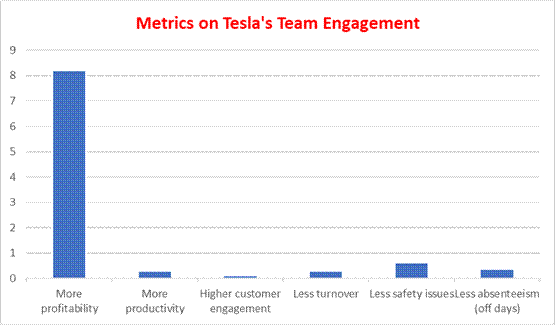
Using result findings from Tesla360, company leaders Louis Efron and Juliana Bednarski outlines the following as their proven HR strategies:
- Enthusiastic leadership: Successful leaders must be innovative, visionary and charismatic in order to easily gain support at every level of the organization. Tesla got everyone on board through a top-down management approach (Holweg et al., 2018).
- Good Communication: There must be responsive inter-departmental channels of communication, and suggestions or criticisms from stakeholders (customers, interest groups, host communities, NGOs etc) should positively influence decision-making. Tesla’s HR team constantly held pre-shift and general meetings with engineers at the manufacturing plants.
- Creativity: Tesla’s HR business partner suggested moderated communication between departments/groups, by the HR team were excited to include extra action-planning sessions which ensured that shortcomings from the original plan were eliminated. Efron and Bednarki’s follow-up action plan was to prepare training documents and visuals that supported managers’ creativeness (Matthias et al., 2017).
- Team Work: After collating Tesla360 results, managers did not report findings to the employees. Rather, they held discussions to identify the company’s strengths, weaknesses, opportunities and threats (SWOT)—from the workers’ perspective. This led to the development of new action plans which improved competitiveness (Schrunder et al., 1994).
Conclusion: Efron acknowledged that caring for people (employees) “is the right thing to do” because it positively influences business results.
Leave a Reply