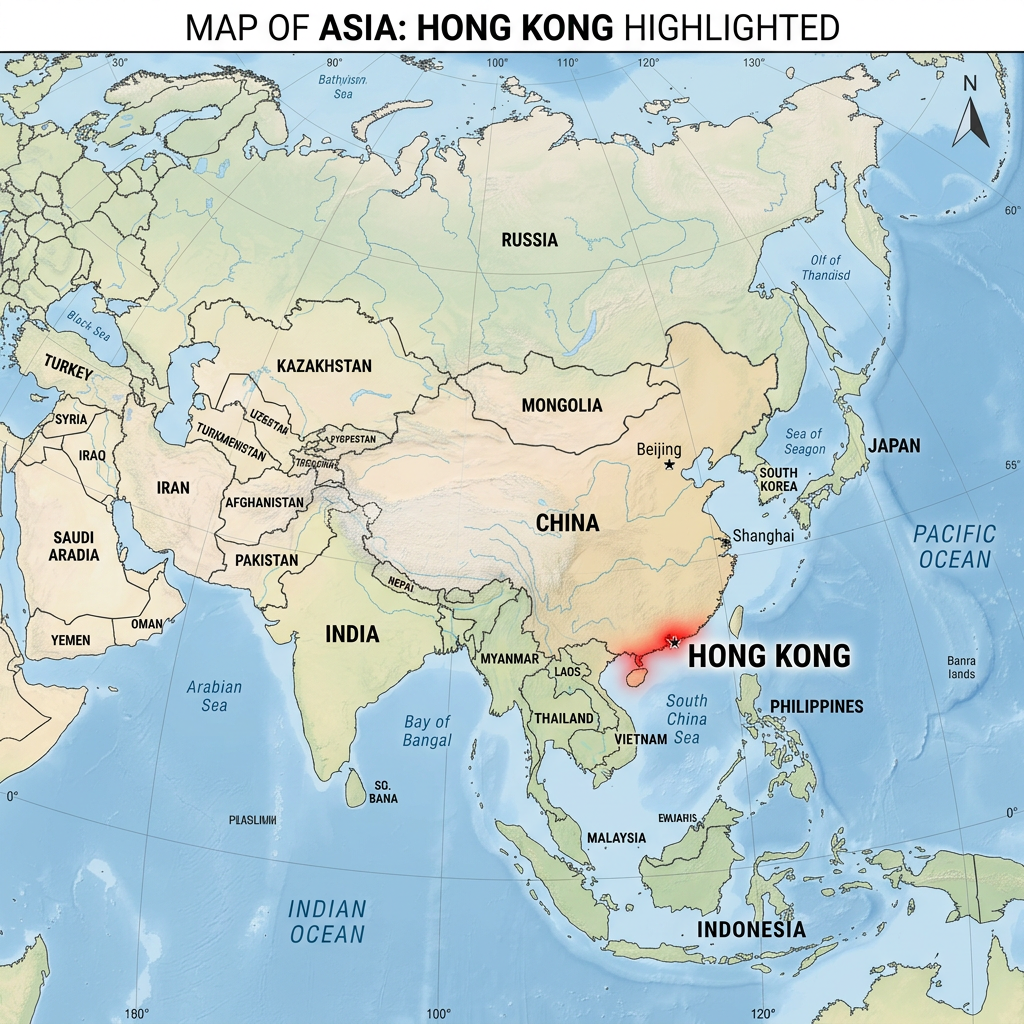
Chan Yuk-tong had hoped to live out his remaining years in the small blue-brick houses where he was born and raised, but the 71-year-old’s village home in Hong Kong will soon be demolished to clear the way for a sprawling technology hub. An area covering roughly one-third of Hong Kong—encompassing villages, natural wetlands and farmland—is being transformed into the “Northern Metropolis”, an ambitious undertaking designed to deepen integration with mainland China, diversify the economy and create new housing.
“I can’t bear to leave… If not for the government developing this area, I would likely spend the rest of my life here. After all, I belong here,” Chan told AFP as he packed up belongings in his yard.
Promoted as a “new economic engine” capable of accommodating about 2.5 million residents and generating 650,000 jobs, the project will link Hong Kong more closely with Macau and nine mainland Chinese cities that form the Greater Bay Area. However, environmental and social groups have cautioned that the government’s vision for a Silicon Valley-style high-tech hub will come at a considerable cost to the city’s wildlife, local communities and public finances.
“If you build a new city in a place that was well preserved before, it would inevitably be very destructive, no matter how you mitigate it,” said Brian Wong of Liber Research Community, an NGO focused on land issues. “Do we need to build it so big? Is it too ambitious?” he added.
The Northern Metropolis project, announced five years ago, will eventually span 30,000 hectares. Liber said at least 25 villages will be demolished to make way for it. Government departments told AFP they aim to integrate rural areas into the development project, but that Chan’s ancestral houses were not culturally significant enough to preserve.
Plans to integrate Hong Kong with mainland China have long faced opposition in the former British colony, where critics warn such moves would erode the city’s autonomy. But a sweeping national security law imposed by Beijing on Hong Kong in 2020 after huge protests has stymied dissent in the financial hub. It “effectively put an end to the ‘one country, two systems’ framework that allowed Hong Kong a ‘high degree of autonomy’, so greater integration with the Greater Bay Area would logically follow,” Steve Tsang, director of the SOAS China Institute, told AFP.
The government says the Northern Metropolis will cost at least HK$224 billion (US$28.6 billion), while global ratings agency S&P estimates it could top HK$360 billion. Authorities have promised a return on investment, citing bank estimates and a rough 20-year timeline indicating the project will account for 13 per cent of Hong Kong’s gross domestic product.
Tech hubs across the border in mainland China, such as Alibaba’s hometown of Hangzhou, are expanding far faster, spurred by AI investors such as Deepseek and Unitree Robotics. Hong Kong is “less relevant for China’s national tech ambitions” than mainland powerhouses like Shenzhen, said Gary Ng, a senior economist at Natixis. But it can nevertheless provide what they cannot: international connections, university research and deep capital markets.
Last month, the first large-scale land sale in the Northern Metropolis was awarded to a consortium of six companies, including Chinese state-owned enterprises and e-commerce giant JD.com, to build housing and a logistics centre in Chan’s area. Hannah Jeong of commercial real estate firm CBRE told AFP that policy support will first attract mainland Chinese companies wanting to build research centres and take advantage of its lower taxes and talent, data and capital flows. “With that flow, more manpower coming in, talent coming in… foreign companies will also gradually (invest),” Jeong said.
The biggest hurdle to the Northern Metropolis’ success is “how to maintain an efficient cross-border flow, and at the same time maintaining the confidence that the international community has in Hong Kong’s uniqueness”, said Wilson Chan, co-founder of the Pagoda Institute think tank.
In her village, Niki So had watched helplessly as her neighbours’ homes were torn down, waiting for the bulldozers to reach the house where her family lived for three generations. The 42-year-old received a public housing flat in compensation, but told AFP she will miss the village where neighbours are like family. In July, So opened her gate to dozens of lands department officials and police, who declared the area government property.
“I hope the development here will go well, that it will thrive,” So said. “If it doesn’t turn out as expected then I think the sacrifice of this village would be quite unfortunate”.
Leave a Reply