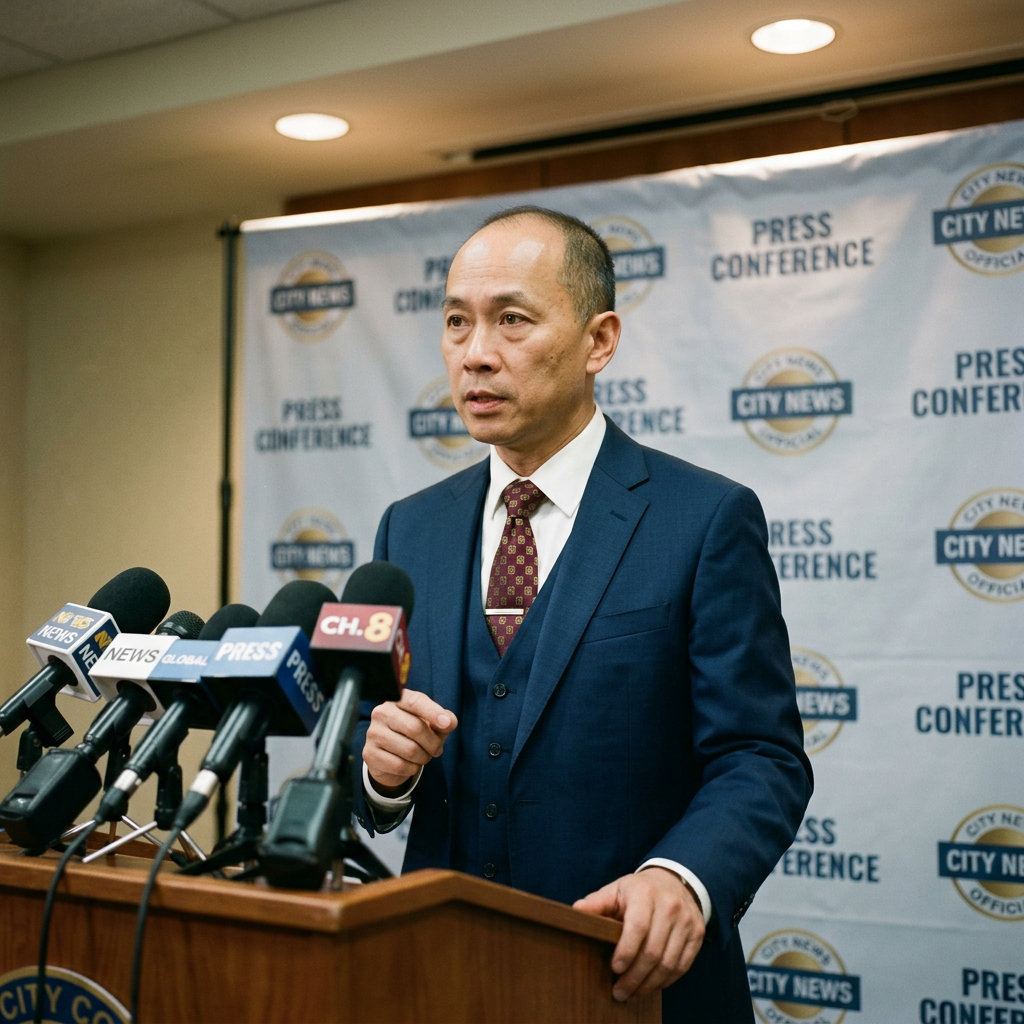
Hong Kong Launches Historic First Five-Year Development Plan
Hong Kong newspapers today continued extensive coverage of the government’s decision to begin public consultation on the city’s first formal five-year development blueprint, a move widely viewed as one of the most significant shifts in governance strategy since the handover.
The consultation process seeks public input on priorities for the period from 2026 to 2030. Government officials described the initiative as an effort to provide longer-term policy direction while preserving Hong Kong’s market-oriented economic model. The plan is designed to align more closely with mainland China’s national development framework while maintaining Hong Kong’s role as an international financial and commercial center.
Secretary for Constitutional and Mainland Affairs Janice Tse was quoted in coverage explaining that strategic planning would not replace market forces. Instead, she argued that a clearer policy framework could create greater certainty for businesses and investors. Her comments reflected the administration’s effort to reassure the business community that Hong Kong’s traditional economic strengths would remain intact even as government planning becomes more prominent.
Commentary pieces published alongside the news coverage focused on whether the city’s longstanding challenges can finally be addressed through a more coordinated policy framework. Analysts highlighted persistent concerns over housing shortages, elderly care, talent retention, urban renewal, social mobility and the management of ageing buildings.
In one widely discussed opinion article, policy expert Jane Lee argued that Hong Kong is not lacking ideas or research. Rather, she suggested that the central challenge lies in building sufficient government capacity and political determination to turn proposals into tangible results. Her remarks were prominently cited in discussions surrounding the consultation exercise.
Business groups interviewed by local newspapers generally welcomed the prospect of greater policy certainty, particularly regarding infrastructure investment, innovation development and cross-border integration within the Greater Bay Area. However, some observers questioned how much influence public consultation would ultimately have over the final document.
Chief Executive John Lee Keeps Political Future Open
Political coverage remained heavily focused on Chief Executive John Lee following his recent interview with local media, in which he declined to commit to seeking a second term in office.
Rather than addressing election speculation directly, Lee emphasized his intention to focus on completing policy initiatives during the final year of his current term. He remarked that “a year is a long time in politics,” a phrase that generated considerable discussion across newspaper editorials and political analysis columns.
Reports highlighted Lee’s argument that continuity in governance should take precedence over political calculations. He pointed to the upcoming five-year development plan as a major milestone for his administration and suggested that long-term policy implementation remains his primary concern.
Political commentators interviewed by newspapers offered varying interpretations. Some viewed Lee’s comments as a standard effort to avoid early election speculation, while others argued that the remarks leave open multiple possibilities regarding leadership arrangements after 2027.
Several analysts noted that Hong Kong’s political environment has become increasingly focused on administrative performance and policy delivery. In that context, they suggested that future leadership discussions are likely to revolve around economic outcomes, housing development, technological innovation and regional integration rather than traditional electoral campaigning.
Editorial discussions also examined the administration’s response to major governance challenges over the past year, including economic recovery efforts and post-disaster management issues. The debate underscored the extent to which public perceptions of government competence may shape future political developments.
Economic Recovery Continues to Strengthen
Economic coverage across Hong Kong newspapers remained broadly optimistic, supported by recent growth figures and positive assessments from financial institutions.
Reports noted that Hong Kong’s economy expanded by 5.9 percent year-on-year during the first quarter of 2026, significantly faster than the pace recorded during much of the previous year. Growth was driven by stronger exports, recovering domestic consumption and increased tourism activity.
Government officials cited continued demand for advanced electronics and artificial intelligence-related products as important drivers of export performance. At the same time, financial activity linked to mainland China and increased visitor arrivals have supported service-sector growth.
Business leaders interviewed by local publications expressed cautious optimism regarding the remainder of the year. Many pointed to improved sentiment in financial markets, increased cross-border commercial activity and signs of stabilization in consumer spending.
However, newspapers also highlighted concerns about inflationary pressures and uncertainties in the global economy. The government recently revised upward its inflation forecasts, reflecting expectations of stronger economic activity and higher costs.
Economic commentators stressed that sustained recovery will require continued investment in innovation, technology and infrastructure. They argued that Hong Kong’s competitiveness increasingly depends on its ability to serve as both a global financial center and a gateway to emerging industries in southern China.
Coverage also noted recent international assessments that ranked Hong Kong among the world’s most competitive economies, reinforcing the government’s narrative that the city remains resilient despite geopolitical and economic challenges.
Northern Metropolis Development Remains Central to Future Growth
One recurring theme throughout today’s reporting was the strategic importance of the Northern Metropolis project.
Government officials repeatedly referenced the development zone during discussions about the five-year plan, describing it as a key engine for future economic growth. The project aims to transform areas near the Shenzhen border into a major hub for technology, research, education and advanced industry.
Urban planning experts interviewed by newspapers argued that the Northern Metropolis represents a rare opportunity to reshape Hong Kong’s economic geography. Rather than relying primarily on traditional commercial districts, they said the city could develop new innovation clusters that attract both international and mainland enterprises.
Some business representatives highlighted the project’s potential to address talent shortages by creating integrated living and working environments designed for researchers, engineers and technology entrepreneurs.
Others warned that execution will be critical. They emphasized the need for efficient land development, transportation infrastructure and coordination among government departments if the project is to meet expectations.
Governance and Administrative Reform Under Scrutiny
Governance reform emerged as another prominent topic in editorial pages and policy discussions.
Many articles examined whether Hong Kong’s administrative system is equipped to deliver increasingly ambitious development goals. The launch of the five-year plan has intensified debate over bureaucratic efficiency, interdepartmental coordination and long-term policy implementation.
Experts interviewed by newspapers argued that strategic planning alone cannot guarantee successful outcomes. They stressed the importance of measurable targets, accountability mechanisms and regular performance reviews.
Several commentators suggested that Hong Kong’s future competitiveness may depend less on policy design and more on the government’s ability to execute complex projects efficiently. Housing supply, urban redevelopment and healthcare reform were frequently cited as examples of areas where implementation challenges have historically slowed progress.
Business leaders echoed similar concerns. While generally supportive of longer-term planning, they called for clearer timelines, improved communication and more predictable regulatory processes.
Editorial writers argued that public trust in government institutions is increasingly tied to visible results rather than policy announcements. Consequently, the success of the administration’s current agenda may ultimately be judged by concrete improvements in living standards and economic opportunities.
Tourism and Regional Connectivity Gain Momentum
Tourism and regional engagement featured prominently in business and economic reporting.
Newspapers highlighted growing visitor numbers and increasing cross-border activity as important contributors to the city’s recovery. Industry representatives interviewed by local media reported stronger demand from mainland tourists and a gradual return of international travelers.
Coverage also focused on Hong Kong’s efforts to expand its economic relationships beyond traditional markets. Recent government outreach to Central Asian countries received attention as part of a broader strategy to strengthen trade and investment connections.
Officials involved in these initiatives described Hong Kong as a bridge linking Chinese businesses with overseas opportunities. Reports emphasized opportunities in professional services, finance, logistics and infrastructure development.
Tourism operators interviewed by newspapers welcomed government efforts to diversify visitor sources and promote new attractions. Many argued that sustained growth will require both large-scale events and improved visitor experiences.
Industry representatives also stressed the importance of maintaining efficient transport links and streamlined travel procedures to support continued expansion in the sector.
Technology, Artificial Intelligence and Innovation Policy Advance
Technology policy remained a significant area of interest across today’s reporting.
Newspapers carried discussions about Hong Kong’s ambition to position itself as a regional center for innovation, particularly in artificial intelligence and advanced technologies.
Officials and industry experts emphasized the need to develop research capabilities while establishing clear standards for safe and responsible AI deployment. Coverage referenced ongoing efforts to strengthen collaboration between universities, research institutions and private-sector companies.
Academic leaders interviewed by local media argued that Hong Kong possesses important advantages, including strong universities, international connectivity and access to mainland innovation ecosystems.
Business executives noted growing demand for AI-related products and services, which has already contributed to stronger export performance. They suggested that sustained investment in technology could become an increasingly important source of economic growth during the coming decade.
At the same time, policymakers emphasized the importance of balancing innovation with appropriate safeguards. Discussions surrounding AI governance reflected broader international debates about ethics, security and competitiveness.
Legislative and Security Developments Continue to Draw Attention
Political reporting also covered ongoing legislative work related to national security regulations.
Recent discussions within the Legislative Council have focused on amendments and procedural arrangements connected to existing national security legislation. Reports indicated that lawmakers have established mechanisms to review and examine proposed changes.
Government supporters interviewed by newspapers argued that legal clarity remains essential for maintaining stability and investor confidence. They emphasized that security measures form part of the broader governance framework supporting economic development.
Legal commentators noted that national security legislation continues to shape Hong Kong’s political landscape and remains a subject of international attention. Coverage reflected differing perspectives regarding the relationship between security, governance and economic competitiveness.
Editorial discussions suggested that future debates will increasingly focus on how Hong Kong balances security considerations with its ambition to remain an open international city.
Universities, Talent and Competitiveness in the Spotlight
Education and talent development emerged as another recurring theme.
Reports highlighted growing recognition of Hong Kong universities on the global stage, reinforcing the city’s reputation as an educational hub. Newspapers noted that higher education institutions are expected to play an increasingly important role in supporting innovation, research and economic diversification.
University leaders interviewed by local publications stressed the importance of attracting international students and researchers. They argued that talent mobility will remain essential to maintaining Hong Kong’s competitiveness.
Business groups echoed these concerns, warning that demographic pressures and global competition for skilled workers could become major constraints on future growth.
Several experts interviewed in policy discussions advocated expanded efforts to attract overseas professionals, improve workforce training and strengthen cooperation between universities and industry.
These debates are expected to become a central component of the new five-year development strategy, particularly as Hong Kong seeks to expand its role in technology, finance and advanced services.
Leave a Reply