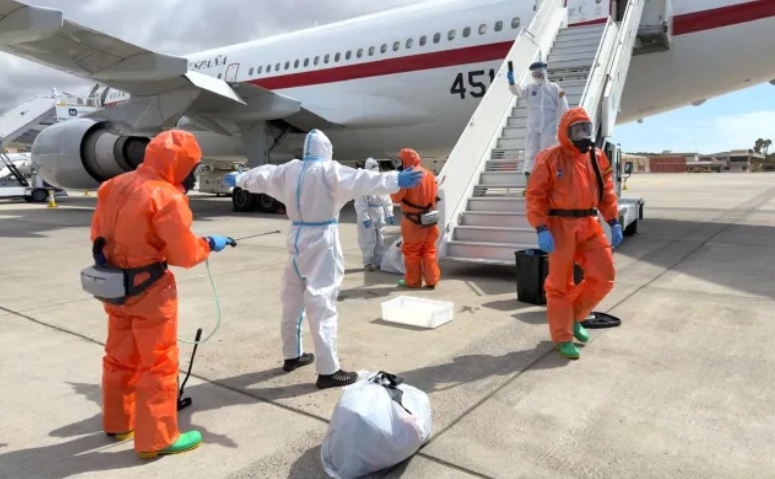
The world’s collective pandemic radar is on high alert after a rare and deadly outbreak of hantavirus aboard an expedition cruise ship in the Atlantic Ocean killed three people and sickened at least eight others, prompting urgent international contact tracing and raising a pressing question for global health: Could hantavirus be the next pandemic?
A modern “perfect storm” at sea
In early May 2026, the World Health Organization (WHO) confirmed an outbreak of hantavirus on the MV Hondius, a Dutch-flagged expedition vessel that had departed from Ushuaia, Argentina on April 1 carrying 147 passengers and crew from at least 23 different countries. The ship, which had been marketed to adventurous tourists promising “maximum contact with nature and wildlife,” soon found itself at the center of a public health emergency as passengers began falling severely ill.
By May 13, 2026, WHO reported 11 cases linked to the cluster, including three deaths, for a case fatality ratio of 27 percent. Investigators determined that the outbreak involved the Andes strain (ANDV) of hantavirus, a particularly aggressive variant found primarily in South America that is notorious for causing Hantavirus Pulmonary Syndrome (HPS)—a rapidly progressing respiratory illness.
Because several passengers had disembarked before the outbreak was identified, health authorities in multiple countries—including France, the Netherlands, Switzerland, Singapore, Spain, and the United States—initiated widespread contact tracing efforts to identify and monitor potentially exposed individuals. In France, all 26 contacts were placed in isolation, though initially none showed symptoms.
Dr. Peter Chin-Hong, an infectious-diseases expert at UC San Francisco, described the episode as “both” a freak occurrence and a worrying harbinger. “The hantavirus in the cruise ship is unprecedented, and reflects kind of like a perfect storm of the expedition cruise through a remote area, environmental exposure potentially during a short excursion, and the hantavirus—this particular Andes virus—being capable of human-to-human transmission,” he said.
Why hantavirus is far more dangerous—but far less contagious—than COVID
To understand why experts are not reaching for pandemic alarm bells, it helps to first understand what hantavirus is and how it behaves.
Hantavirus refers to a family of viruses primarily carried by wild rodents, including deer mice, cotton rats, and rice rats, depending on the geographic region. Humans typically become infected by inhaling aerosolized particles from rodent urine, droppings, or saliva—for example, while cleaning a rodent-infested cabin or working in areas with active rodent populations. Over 20 known strains can cause disease in humans, with clinical outcomes falling into two broad categories: Hantavirus Pulmonary Syndrome (HPS), most common in the Americas, and Hemorrhagic Fever with Renal Syndrome (HFRS), which predominates in Europe and Asia.
The mortality rates are stark. For HPS—the form caused by the Andes and Sin Nombre viruses—fatality ranges from approximately 30 to 50 percent, depending on the strain and outbreak. In the United States, the CDC has documented that approximately 38 percent of HPS cases are fatal. To put that in perspective: the case fatality rate for COVID-19 during the early pandemic was around 2-3 percent by most estimates; seasonal influenza kills less than 0.1 percent of symptomatic cases.
“Rare as it is, hantavirus is not something to take lightly; its fatality rate is much higher than more common viruses such as influenza and COVID-19,” a Stanford Medicine expert noted. “Thirty-five percent of hantavirus cases in the U.S. in recent decades have led to death.”
But lethality alone does not a pandemic make. The key factor that has consistently prevented hantavirus from sparking a global outbreak is its limited transmissibility. Most hantavirus strains do not spread from person to person at all—infected humans are effectively “dead-end hosts”. The Andes virus, however, is the major exception.
The Andes strain: a rare but limited ability to spread
The Andes virus, first identified in Argentina and Chile during the mid-1990s, is the only hantavirus strain for which human-to-human transmission has been clearly documented. This is precisely why the cruise ship outbreak drew such intense scrutiny. Yet even Andes transmission has critical limitations that distinguish it from airborne viruses like SARS-CoV-2 or influenza.
Transmission of the Andes virus requires “prolonged, close contact with infected individuals,” often involving exposure to bodily fluids, and typically occurs in enclosed settings such as households or, as in this case, a cruise ship’s shared indoor spaces. The 2018-2019 outbreak in Epuyén, Argentina—which infected 34 people and caused 11 deaths—was driven primarily by three symptomatic “super-spreaders” during social gatherings, with transmission closely tied to higher viral loads and markers of liver injury rather than any genetic adaptation of the virus itself. Notably, even in that outbreak, sustained human transmission chains remained “extremely rare”.
This epidemiological profile yields a very different pattern from COVID-19. Dr. Maria Van Kerkhove, Director of the Department of Epidemic and Pandemic Preparedness and Prevention at WHO, was unequivocal in her assessment: “I want to be unequivocal here: this is not SARS-CoV-2. This is not the same situation we were in six years ago.” She emphasized that hantavirus transmission requires “very close contact” in ways that SARS-CoV-2, with its efficient aerosol spread, does not.
Infectious disease physician Matthew Pullen put a more precise number on it: “The last estimate I saw had an R0 of about 1.2, meaning not every case even propagates to another case.” By contrast, the original SARS-CoV-2 strain had an estimated R0 of approximately 2.5 to 3, with later variants substantially higher.
What leading experts are saying about pandemic potential
Across the board, infectious disease specialists, virologists, and global health agencies have reached a strong consensus: the risk of a hantavirus pandemic is extremely low.
- World Health Organization: WHO continues to assess “the risk to the global population as low” and has stated that the current situation is “not comparable to the early stages of the COVID-19 pandemic”. WHO officials noted that no new deaths had been reported since May 2, 2026, and that the agency remains in close contact with experts from all involved countries.
- Professor Emma Thomson, MRC Centre for Virus Research, University of Glasgow: “It will be very, very unlikely that hantavirus will be akin to the Covid-19 pandemic.” Thomson noted that even if one or two positive cases were identified in the UK, that scenario would be “in keeping with other countries and what they have seen. I would expect that that could be managed very easily with the existing facilities we have.”
- Dr. Shahid Jameel, virologist and Oxford University research fellow: “This is not a new virus. Hantavirus has been causing periodic outbreaks for decades in regions where it is endemic.” Jameel stressed that the post-COVID context has heightened public awareness, but the fundamental biology of hantavirus has not changed. “If we started seeing infections occurring in open environments, among people without known contact histories, then I would be much more concerned. But if the only positive cases are among known contacts of earlier patients, then I do not think there is reason for alarm.”
- Dr. Matthew Pullen, infectious disease physician: “I would say the likelihood is very, very, very low.” Pullen explained that highly lethal diseases often struggle to sustain widespread transmission. “It’s a little grim, but diseases with high case fatality rates like Ebola often burn out in a population because they kill so efficiently that they run out of hosts to jump to.”
- Dr. Jorge Salinas, Stanford Medicine: Asked whether people should be worried or put summer travel plans on hold, Salinas responded: “No, I wouldn’t be worried. If you’re going on a plane or a cruise this summer, I would say your risk of getting hantavirus is very close to zero.”
What the outbreak does—and does not—tell us about pandemic preparedness
Even as experts downplay the likelihood of a hantavirus pandemic, many have pointed to the episode as a revealing stress test for global health systems. The MV Hondius outbreak unfolded as the United States had formally withdrawn from WHO membership, a fact that public health experts noted with concern. “Public experts have said that not being a member of WHO limits American planning and preparedness moving ahead,” USA TODAY reported, noting that the US nonetheless caught the outbreak through WHO’s early warning system.
Dr. Chin-Hong at UCSF pointed to deeper structural trends. “The broader pattern is definitely not random—more expedition tourism visiting remote areas.” He added that climate change is also expanding the geographic range of many infectious diseases.
Dr. Peter Hotez, dean of Baylor College of Medicine’s National School of Tropical Medicine, placed the outbreak in a broader context of increasing zoonotic spillover events. “We have to be aware of the fact that zoonotic spillover epidemics are increasing with frequency and overall in severity. And this won’t be the last one,” he told USA TODAY. Hotez attributed this trend to humans increasingly interacting with wildlife and their habitats through urbanization and deforestation, combined with climate-driven shifts that are making environmental conditions more hospitable for pathogens.
Dr. Shahid Jameel echoed this concern, noting that the episode “highlights global gaps in surveillance and the need for sustained preparedness.” He emphasized that while the response to the current outbreak appears appropriate, the underlying vulnerabilities remain.
Should you be worried? The practical bottom line
For the general public, the risk of hantavirus infection remains vanishingly small. Unlike COVID-19 or influenza, hantavirus does not circulate in community settings; it is almost exclusively acquired through direct or indirect contact with infected wild rodents in specific geographic regions.
The CDC recommends eliminating contact with rodents in homes or workplaces, sealing entry points where rodents may enter, and wearing protective gear when cleaning rodent-infested areas. These are common-sense measures that apply regardless of headline-grabbing outbreaks.
The more significant takeaway from the MV Hondius episode may not be about hantavirus itself, but about the broader landscape of emerging infectious diseases. The outbreak revealed how quickly zoonotic pathogens can be carried across borders by international travel, how difficult contact tracing becomes once passengers disperse to multiple countries, and how much of global pandemic preparedness still depends on shared surveillance infrastructure.
Crucially, however, the episode also demonstrated how well that infrastructure worked. WHO’s early warning systems identified the cluster within days of the first deaths. The European Centre for Disease Prevention and Control (ECDC) activated its Early Warning and Response System to alert public health authorities across Europe. Countries from France to Australia to Vietnam implemented monitoring protocols for repatriated passengers.
The final verdict
Could hantavirus be the next pandemic? Based on the overwhelming consensus of global health experts, the answer is no. The virus is too difficult to transmit between humans, its lethality paradoxically limits its spread, and it lacks the airborne efficiency that made SARS-CoV-2 so formidable. WHO has called the situation “not the next COVID,” and infectious disease specialists across the world have described pandemic fears as “scientifically unsupported”.
But that does not mean the outbreak is irrelevant. The MV Hondius cluster is a reminder that zoonotic spillover events are not only continuing but, by many measures, accelerating. It is a warning about the risks of expedition tourism in remote ecosystems, a demonstration of how global travel can rapidly internationalize local outbreaks, and a testament to the continued importance of public health surveillance even in an era of pandemic fatigue.
For now, the Andes virus will likely remain what it has always been: a rare, extraordinarily dangerous pathogen that occasionally erupts in limited clusters, mostly contained by the very features that make it so deadly. The next pandemic, if it comes, will almost certainly look very different.
This article by MEZIESBLOG is based on information available as of May 2026. For the latest updates, refer to WHO, CDC, and ECDC official communications.
Leave a Reply