An incident involving two helicopters two helicopters lead to the deaths of six Ukrainian servicemen earlier this week.
They were killed while “carrying out missions” in a Russian-held area near Bakhmut, the Ukrainian military said.
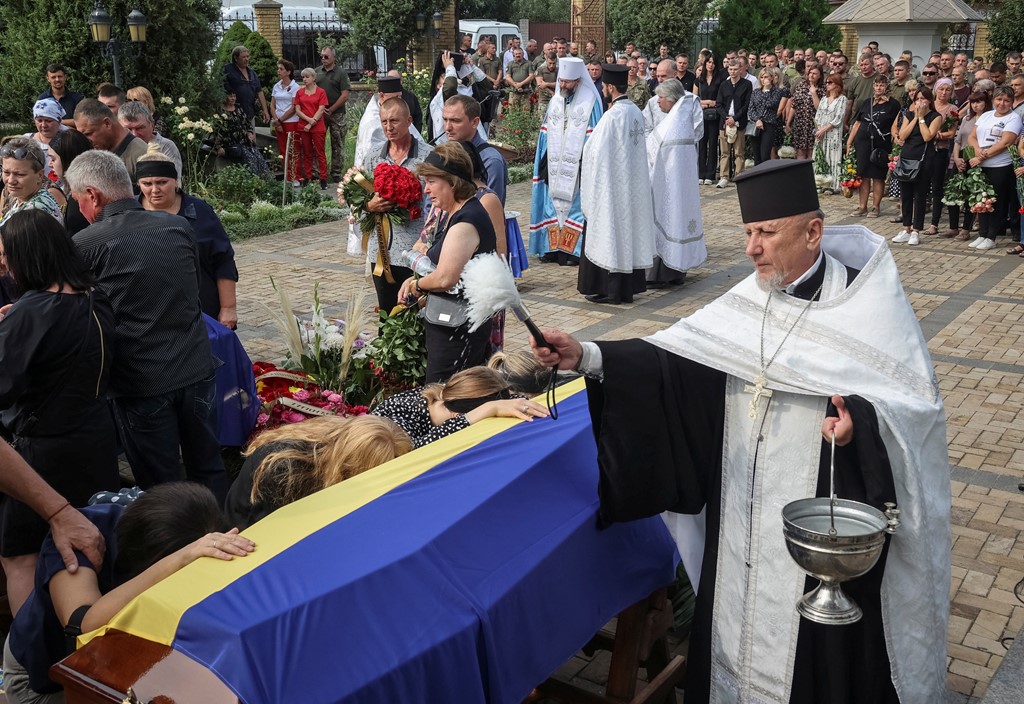
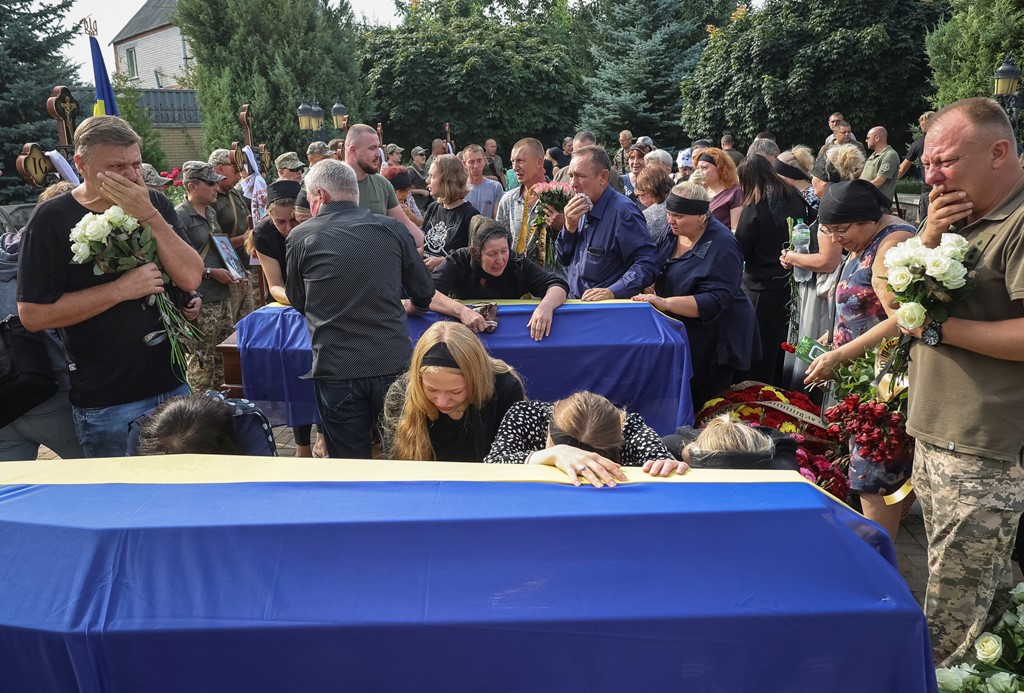
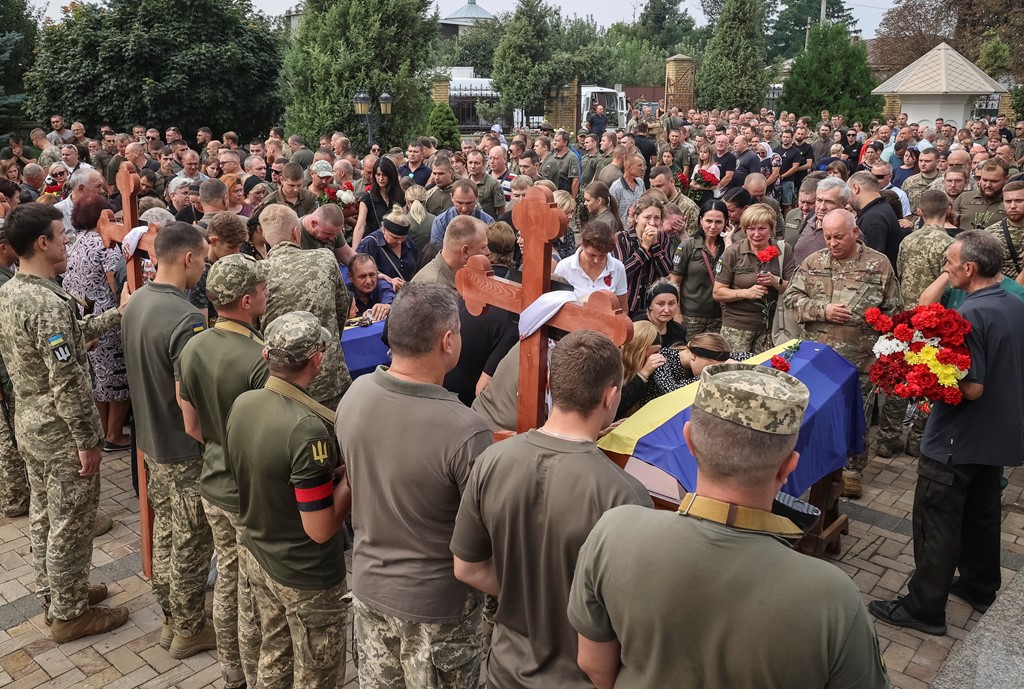
Today, funerals for those killed in the crash were laid to rest, and funeral services held.
Family members were invited to Poltava, in central Ukraine, to attend the ceremonies.
The Ukraine conflict is as much an information war as it is a physical one.
Major events are often disputed by one side or both – and it sometimes feels difficult to cut through the claims and counter-claims.
What happened this week at the Pskov airfield in west Russia is a prime example of this – here, we take a deeper look.
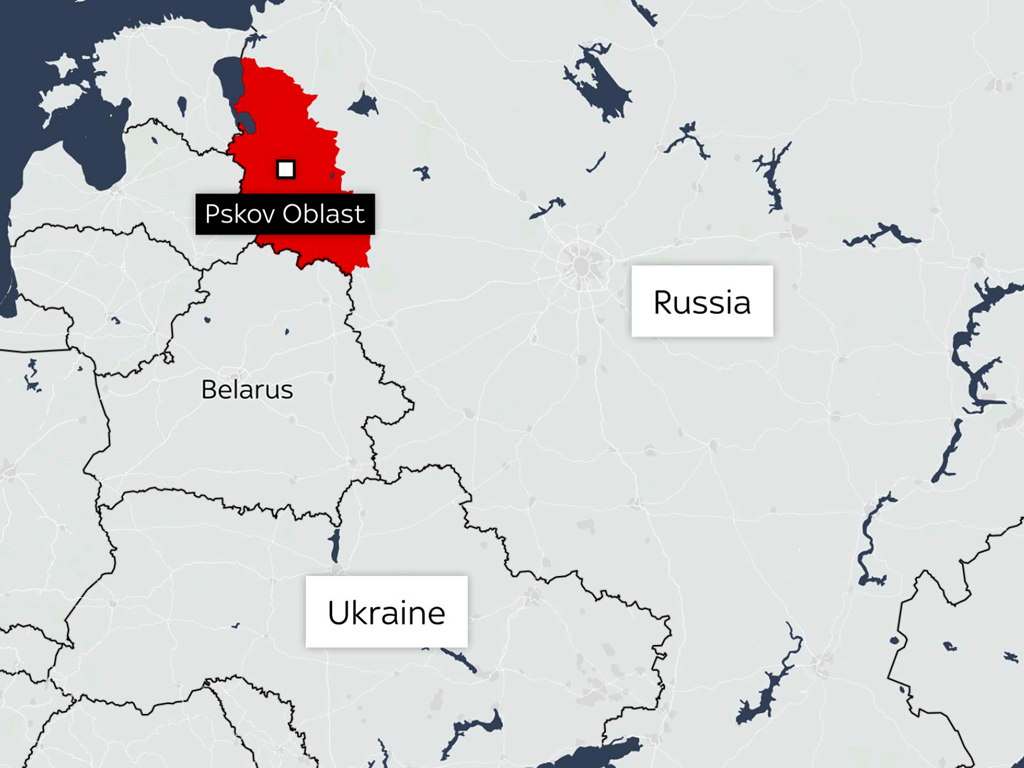
On Tuesday night, Mikhail Vedernikov, the Pskov governor, reported a Ukrainian drone attack, with witnesses claiming to have seen between 10-20 drones striking an airfield in the Russian border region, close to Estonia.
Video shows a large fire at the airfield.
On Wednesday morning, Ukraine claimed to have completely destroyed four aircraft and damaged others, with security officials saying today that the attack was launched from inside Russian territory (see 1.15pm post).
“Yes, four IL-76 transport planes were destroyed in Pskov at an airfield, they are beyond repair. Also, several other of those [aircraft] are damaged,” Andriy Yusov, a spokesman for Ukraine’s GUR military service, said on Wednesday.
Russian sources contradicted this, saying four aircraft had been damaged.
“As a result of the drone attack, four IL-76 aircraft were damaged. A fire started, two aircraft were engulfed in fire,” Russian state media quoted emergency services as saying.
A UK intelligence update was inconclusive, saying it believed “several aircraft” had been struck and “damaged”, though gave no exact numbers.
Why do the numbers matter? IL-76 planes are extremely important to the Russian war effort – used to resupply troops on the ground in occupied Ukraine – and every aircraft counts.
Sky News has obtained satellite imagery from the airfield, taken on Wednesday at 12.51pm GMT – two days after the drone attacks.
It shows two aircraft with dark marks on them – which could be interpreted as damage, though the images are not conclusive.
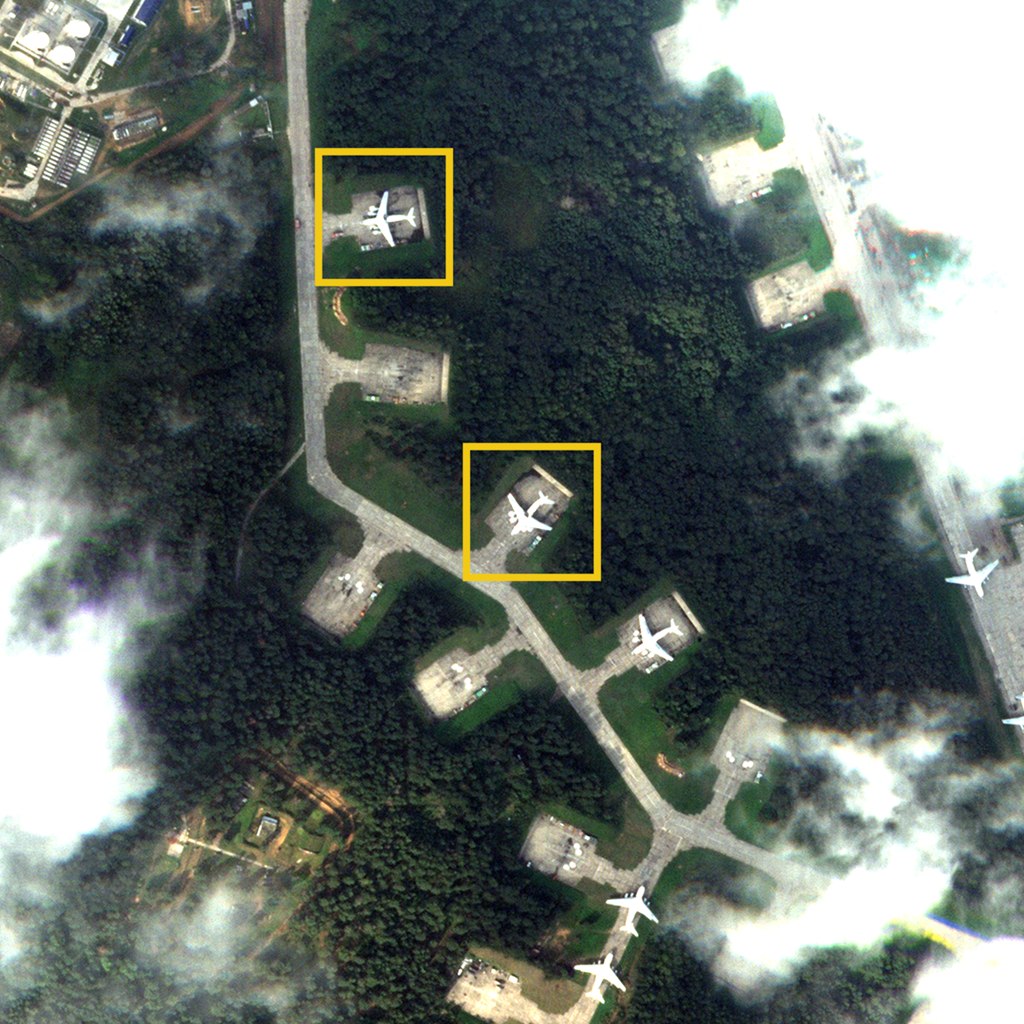
Military analyst and former fighter pilot Sean Bell noted “some unusual shading near the wing root”, adding it was “not clear whether this is oil residue from reverse thrust or (very limited) evidence of fire damage”.
The apparent small level of damage (if that is what the marks are) in the images contradicts what we saw in video from the scene – which showed a massive fire at the airfield.
Sky News has now obtained satellite imagery from yesterday, which clearly shows two destroyed aircraft – but no sign of the two planes with dark marks in the imagery from Wednesday.
Bell offered a potential explanation as to why the planes with the marks were not visible a day later.
“Mindful that Russia would not want evidence of any Ukrainian success to expose its military failures, it is very possible that, once the fires were brought under control, the damaged aircraft were removed from the airfield or hidden away in one of the large hangars.”
While claims from Russia and Ukraine contradict each other, what is clear is that Ukraine was able to hit a Russian airfield hundreds of miles behind its border, and take a number of strategically important aircraft out of active service.
Leave a Reply