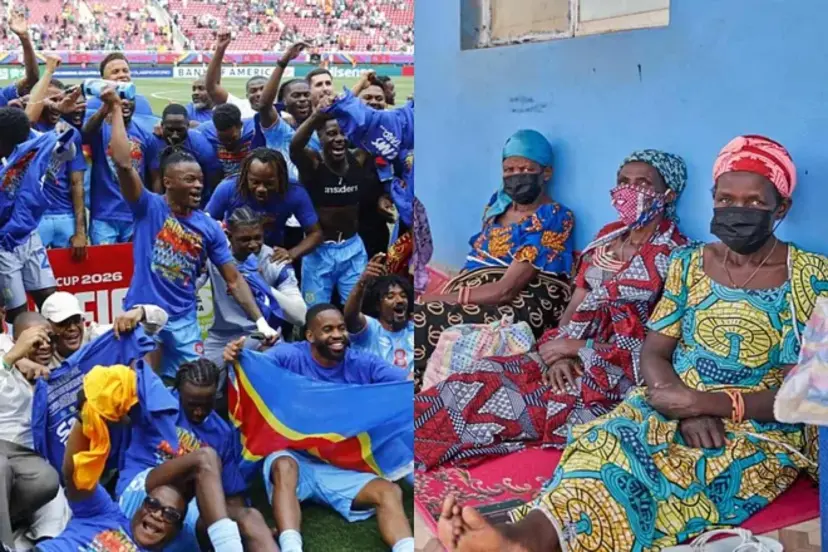
The excitement surrounding the historic qualification of the Democratic Republic of Congo (DRC) for the 2026 World Cup has suddenly turned into serious international health concern.
The African nation, which was preparing for its first-ever appearance at football’s biggest stage, now finds itself at the center of a medical emergency that is worrying not only its own authorities, but also FIFA and the organizing committees in the United States, Mexico, and Canada.
According to an exclusive report published by A24, the resurgence of a severe Ebola outbreak in Congolese territory has immediately triggered global epidemiological alerts. Until a few weeks ago, the country’s plans were focused solely on sporting logistics; however, the reappearance of this deadly disease — considered endemic in parts of Central Africa — has forced an urgent shift in priorities ahead of the tournament.
WHO declares an international health emergency
The situation reached maximum institutional gravity after intervention from the United Nations. Through an official statement, the World Health Organization (WHO) declared the Ebola outbreak in the Democratic Republic of Congo and neighboring Uganda a “Public Health Emergency of International Concern.”
This drastic measure responds to a worrying rise in cases, cross-border spread, and uncertainty about the true scale of transmission. African health authorities report dozens of deaths and hundreds of suspected cases, warning the real numbers could be even higher.
Why Ebola is such a dangerous threat
To understand the global concern, it is important to recall the origins of the virus. First discovered in 1976 near the Ebola River in Congo, it is a zoonotic disease carried by fruit bats and transmitted to humans through contact with infected animals.
Once in humans, it spreads rapidly through body fluids such as blood, saliva, sweat, or semen, as well as contaminated objects. This makes outbreaks extremely dangerous in community settings.
There is still no definitive cure. While treatments and monoclonal antibodies can help if administered early, their effectiveness is limited. The current outbreak involves the Bundibugyo strain, which complicates response efforts because existing vaccines were primarily developed for the Zaire variant.
The virus attacks white blood cells, weakens the immune system, and causes severe internal bleeding, with mortality rates historically reaching 60% to 80%.
Impact on the 2026 World Cup
The outbreak has sparked immediate concern within FIFA. The organization, led by Gianni Infantino, is closely monitoring the situation alongside WHO and UN experts, evaluating risks tied to mass travel during the tournament.
A key issue is the expected influx of thousands of Congolese fans traveling to North America — raising fears of potential international spread or imported cases into host cities.
The DRC has been drawn into Group K, alongside Portugal, Colombia, and Uzbekistan. Their matches are scheduled to take place in Houston, Dallas, and Seattle. The high-profile clash against Portugal in Houston is expected to draw massive crowds, further intensifying concerns.
Strict recommendations from the UN
In response to the crisis, the United Nations has issued strict guidelines for travelers and teams involved in the tournament. These include avoiding contact with symptomatic individuals, body fluids, and wild animals that may carry the virus.
Meanwhile, the United States, Mexico, and Canada are designing contingency health measures, including enhanced airport screenings and stronger epidemiological monitoring for travelers arriving from affected regions.
A logistical challenge with no drastic measures yet
Despite the seriousness of the situation, authorities are not currently considering extreme measures such as banning the Congolese team or closing borders. However, they acknowledge the enormous logistical challenge involved.
Players and staff from Congo are expected to undergo strict biosecurity protocols before entering tournament venues. Experts note that while Ebola does not spread through the air, large gatherings significantly increase the need for vigilance.
A broader health context
This crisis adds to an already complex global health environment. The 2026 World Cup — the largest ever, with 48 teams — is taking place amid multiple health alerts across the Americas, with organizations urging strengthened vaccination programs due to other circulating viruses.
What was meant to be a historic sporting celebration for Congo has now become a race against time for global health authorities, determined to ensure that football’s biggest event does not turn into a worldwide health crisis
Leave a Reply