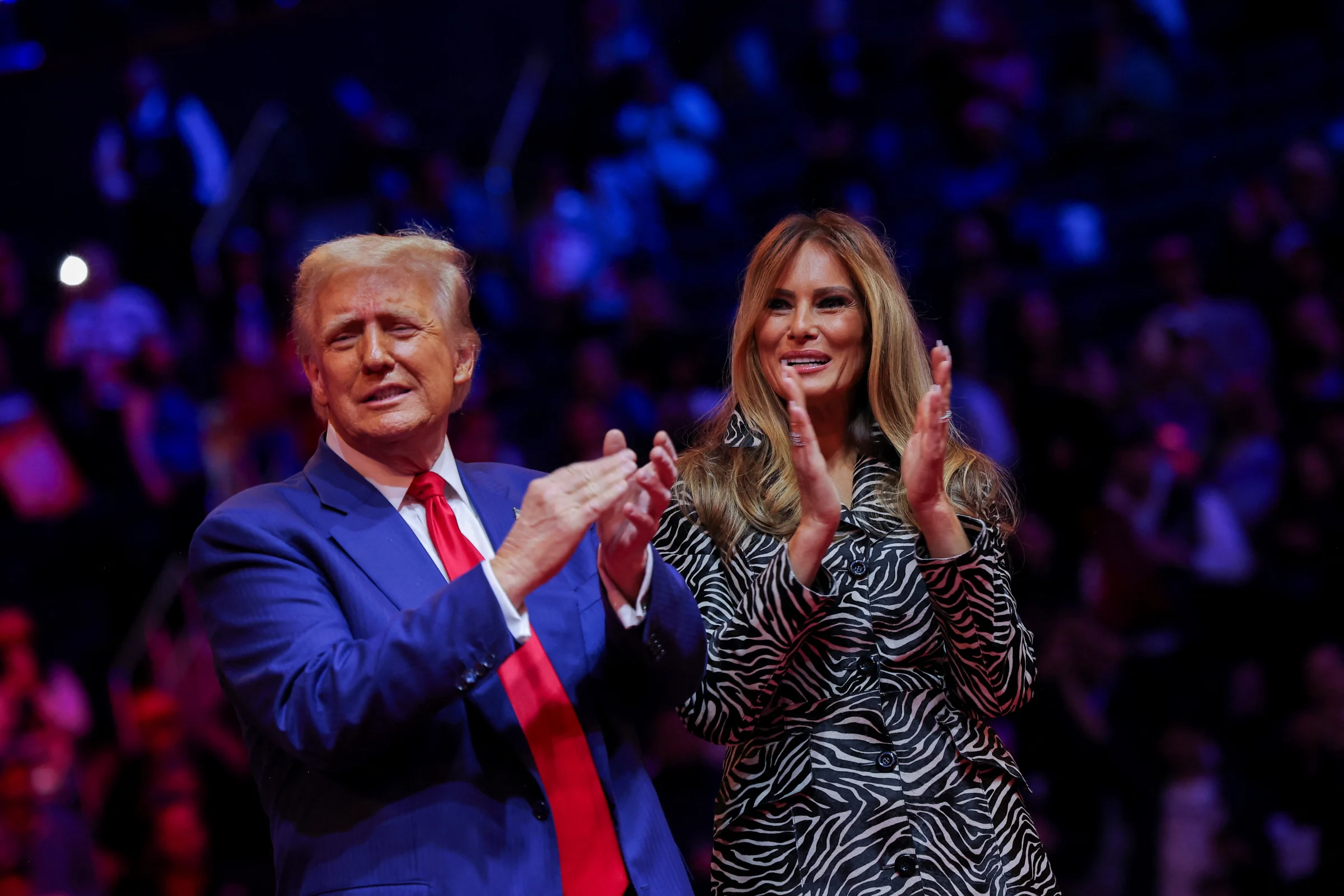
It was another record-setting day on Wall Street as investors shrugged off President-elect Donald Trump’s threat to impose new tariffs on China, Canada, and Mexico.
Both the S&P 500 (^GSPC) and Dow Jones Industrial Average (^DJI) secured record closing highs, with all three major indexes finishing the session in the green.
The benchmark S&P 500 rose nearly 0.6%, while the tech-heavy Nasdaq Composite (^IXIC) also jumped about 0.6%. The Dow Jones Industrial Average (^DJI) reversed earlier losses to finish the day up around 0.3%.
Americans are feeling better about the labor market
After several months of downbeat data to end the summer left workers feeling sour about the prospect of finding a new job, consumers’ feelings about the labor market may be rounding a corner.
On Tuesday, fresh data from the Conference Board’s Consumer Confidence survey for the month showed the difference between respondents who believe jobs are “plentiful” and those saying jobs are “hard to get” rose for the second straight month. The metric, known as the labor market differential, ticked up to a reading of 18.2% in November, an increase from the cycle low of 12.7% seen in September.
“This slightly improved read on the jobs market is certainly boosting confidence and if it weren’t an election year, it would be the sole focus of consumers,” Wells Fargo senior economist Tim Quinlan wrote in a note to clients on Tuesday.
Overall, the upbeat labor market outlook helped propel consumer confidence to a reading of 111.7 in November, above the 109.6 seen in October and the highest level in more than a year. “November’s increase was mainly driven by more positive consumer assessments of the present situation, particularly regarding the labor market,” said Dana Peterson, chief economist at The Conference Board. “Compared to October, consumers were also substantially more optimistic about future job availability, which reached its highest level in almost three years.”
Fed officials see gradual interest rate cuts with a pause possible if ‘inflation remained elevated’
Minutes from the Federal Reserve’s November meeting released on Tuesday showed officials prefer a “gradual” interest rate-cutting cycle if the economy continues on its current trajectory.
“Participants anticipated that if the data came in about as expected, with inflation continuing to move down sustainably to 2 percent and the economy remaining near maximum employment, it would likely be appropriate to move gradually toward a more neutral stance of policy over time,” the minutes read.
But recent sticky inflation prints have caught officials’ attention. In a recent speech, Fed Governor Michelle Bowman highlighted that the Fed’s progress toward its 2% goal has “stalled” in the past few months as measures of inflation, excluding gas and autos, have largely moved sideways. Should that trend continue, the central bank may opt to pause interest rate cuts.
“Some participants noted that the Committee could pause its easing of the policy rate and hold it at a restrictive level if inflation remained elevated, and some remarked that policy easing could be accelerated if the labor market turned down or economic activity faltered,” the minutes read.
Leave a Reply