Chinese newspapers and state-affiliated news platforms on Wednesday focused heavily on the opening of the 2026 Summer Davos forum in Dalian, the country’s technological ambitions, evolving trade relationships with Europe and the wider world, and ongoing efforts to sustain economic growth amid a changing global environment.
Premier Li Promotes “China Opportunity 2.0” at Summer Davos
The most prominent story across Chinese media was Premier Li Qiang’s keynote address at the World Economic Forum’s Annual Meeting of the New Champions, commonly known as Summer Davos, in Dalian.
According to reports carried by Xinhua, China Daily, and other state media, Li presented China as a continuing engine of global growth and innovation. The premier argued that the country’s development model remains capable of creating new opportunities for international businesses despite growing geopolitical uncertainty and trade tensions.
A major theme of the speech was the rejection of accusations that Chinese technological success is primarily the result of state subsidies. Li highlighted advances in artificial intelligence, electric vehicles, semiconductors and quantum technologies, arguing that innovation, research investment and entrepreneurship are the primary drivers behind China’s progress.
Li specifically referenced the experience of Huawei as an example of resilience under external restrictions. While not naming specific countries, he criticized attempts to suppress technological development through sanctions and export controls, suggesting that such measures often encourage greater innovation rather than slowing it.
Chinese newspapers emphasized the premier’s message that China remains committed to opening its economy and expanding cooperation with international partners. Coverage also stressed his remarks supporting international coordination on emerging technologies such as artificial intelligence, which he described as requiring shared governance frameworks.
Innovation and Technology Take Center Stage
Technology remained one of the dominant subjects across major Chinese publications.
China Daily highlighted reports on Beijing’s emergence as a leading artificial intelligence hub, citing the rapid growth of research institutions, startup ecosystems and industrial applications. The newspaper argued that AI is increasingly moving beyond laboratories into real-world industrial and commercial use.
The publication also featured commentary describing how innovation is being translated into practical economic gains. An opinion article stressed the need for stronger links between scientific research and industrial deployment, arguing that technological breakthroughs must be integrated into manufacturing and services to maximize economic impact.
Business coverage similarly emphasized China’s progress in advanced manufacturing. Analysts interviewed by China Daily Asia suggested the country is steadily moving away from labor-intensive production toward technology-driven industries.
One expert, Stephen Ngai, described the transition in these terms:
“China is progressing from labor-intensive manufacturing into high-tech manufacturing.”
He added:
“We are exporting not only hard goods, but also our methodologies and processes.”
Such comments reflect a broader narrative visible throughout Chinese media: the belief that future economic growth will depend increasingly on innovation, intellectual property, engineering expertise and technological self-reliance.
Advanced Manufacturing Seen as Economic Stabilizer
Several reports focused on the role of advanced manufacturing in supporting growth amid softer domestic demand.
China’s Ministry of Industry and Information Technology recently urged local officials to look beyond headline economic indicators when assessing conditions on the ground. While industrial output has remained relatively resilient, policymakers are increasingly aware of pressures affecting investment and consumption.
Coverage highlighted the growing importance of sectors benefiting from global demand linked to artificial intelligence, cloud computing and digital infrastructure. Demand for electronics and advanced components has helped offset weakness elsewhere in the economy.
Chinese newspapers framed these developments as evidence that industrial upgrading is beginning to produce tangible economic benefits. Reports stressed that maintaining stable industrial production and ensuring reliable supply chains remain key priorities for policymakers.
Consumption Remains a Policy Priority
Alongside manufacturing, domestic consumption continued to receive significant attention.
China Daily reported that policymakers view the automotive sector as an important driver of consumer spending. Coverage highlighted efforts to encourage vehicle purchases, particularly in the new-energy vehicle segment where Chinese manufacturers have established strong market positions.
Business reports also pointed to rising spending during recent holiday periods and signs that service industries are becoming increasingly important contributors to economic growth. State media emphasized the role of tourism, cultural activities and retail consumption in supporting broader economic objectives.
Nevertheless, the underlying message across economic reporting suggested that authorities remain focused on stimulating household demand while continuing the transition toward higher-value industrial production.
Trade Relations with Europe Face Fresh Scrutiny
Another major topic in Chinese newspapers involved trade relations with the European Union.
Recent reports indicate that Chinese Commerce Minister Wang Wentao is scheduled to meet European Trade Commissioner Maros Sefcovic in Brussels later this month. The discussions are expected to address a range of trade issues that have become increasingly contentious.
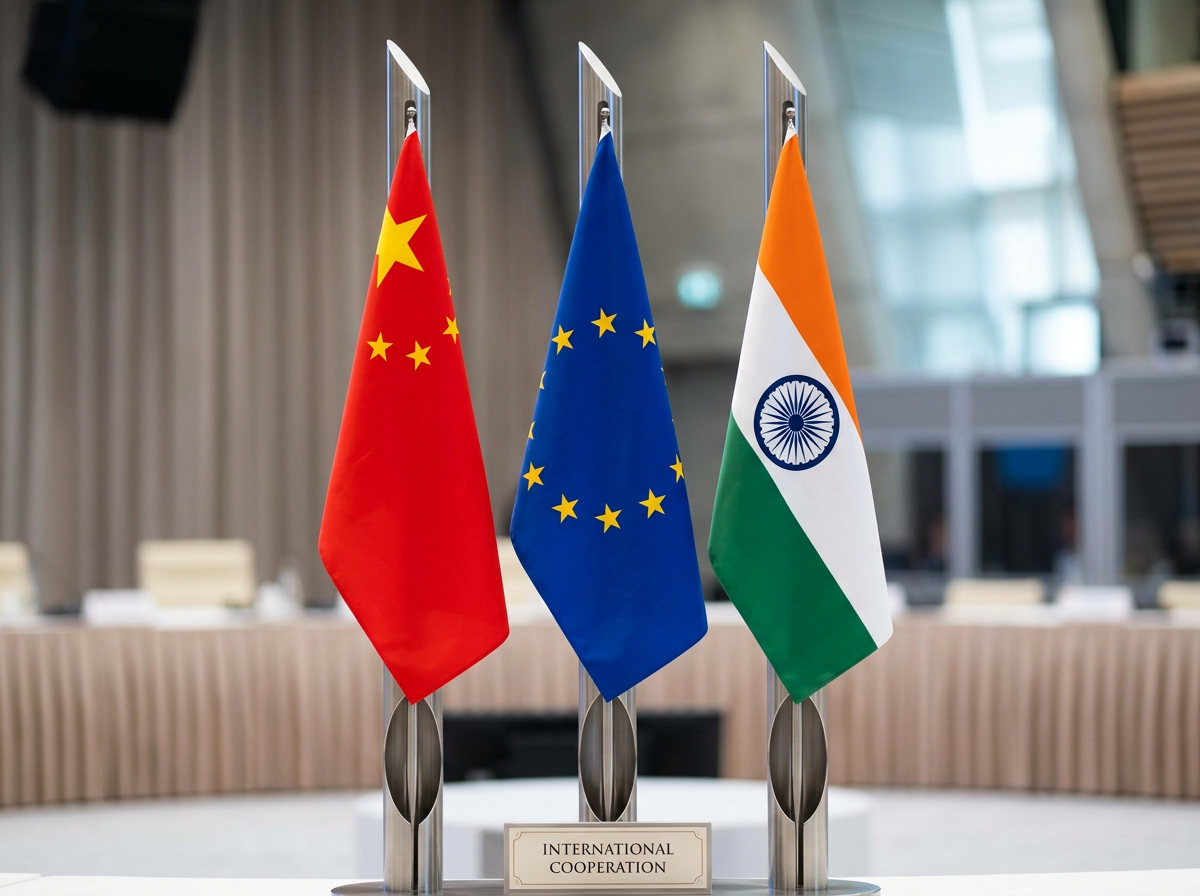
Chinese coverage generally emphasized dialogue and cooperation while portraying China as a supporter of open markets. At the same time, European concerns over trade imbalances and industrial competition continue to grow. The EU’s trade deficit with China has expanded significantly in recent years, creating political pressure for stronger defensive measures.
Summer Davos discussions reflected these tensions. International observers have increasingly raised questions about Chinese industrial capacity, export growth and the impact of Chinese products on foreign industries. Premier Li pushed back strongly against these concerns, arguing that China’s competitiveness is rooted in innovation rather than unfair support mechanisms.
Chinese media coverage largely portrayed the debate as part of a broader struggle over technological leadership and industrial transformation.
Rare Earths and Critical Minerals Remain Strategic Issues
Chinese newspapers also continued monitoring international reactions to Beijing’s export-control policies for critical minerals.
Foreign Ministry officials defended the measures as consistent with international practice and necessary for national security and non-proliferation objectives. Chinese reporting portrayed criticism from some G7 countries as politically motivated and counterproductive.
The issue has become increasingly significant because China remains a dominant supplier of many rare-earth materials and permanent magnets used in advanced manufacturing, electric vehicles and defense technologies. Recent restrictions have intensified efforts by Western governments to diversify supply chains and reduce dependence on Chinese sources.
Chinese media emphasized that export controls are not intended to disrupt global trade but rather to ensure responsible management of strategically important resources.
Diplomatic Activity Accelerates Across Multiple Fronts
Foreign affairs coverage remained active throughout Chinese newspapers.
Xinhua highlighted meetings involving senior Chinese diplomats and officials from several countries, including India and the United Arab Emirates. Reports stressed themes of multilateralism, regional stability and economic cooperation.
Coverage also focused on discussions among BRICS countries, with Chinese officials advocating a larger role for the grouping in maintaining international order and supporting developing economies. Chinese media portrayed BRICS expansion as evidence of growing support for multipolar governance structures.
At the same time, newspapers continued reporting on China’s broader efforts to strengthen partnerships across Asia, Africa and the Global South. Stories highlighted infrastructure cooperation, investment initiatives and educational exchanges designed to deepen long-term relationships.
Ethnic Unity and National Development Receive Attention
Domestic political coverage featured extensive reporting on ethnic affairs and national integration.
China Daily published several articles emphasizing policies aimed at promoting unity among ethnic groups while supporting economic development in autonomous regions. Officials argued that these efforts contribute both to social stability and modernization.
One report cited officials who stated that ethnic work practices are helping advance national unity and economic progress. Coverage stressed bilingual education, cultural preservation and infrastructure development as important components of government policy.
Related articles highlighted economic growth in autonomous regions and presented these areas as beneficiaries of broader national development strategies.
Regional Development and Infrastructure Projects Expand
Chinese newspapers carried numerous reports on regional development initiatives.
Coverage included stories about expanded shipping connections, telecommunications approvals and investment projects designed to strengthen economic integration across different provinces.
Several reports focused on China’s value-added telecommunications sector, where authorities recently approved additional foreign-invested enterprises. Business commentators suggested that these approvals demonstrate continued efforts to attract international participation in selected service industries.
Infrastructure stories also highlighted transportation projects, logistics improvements and industrial parks aimed at supporting long-term economic modernization.
Environmental and Rural Development Stories Remain Prominent
Environmental protection and rural revitalization remained recurring themes.
China Daily featured stories on desert-control initiatives that combine ecological restoration with agricultural development. Reports described how cash crops and sustainable land-management practices are being used to combat desertification while generating local income.
Other coverage highlighted biodiversity protection efforts, wildlife conservation projects and environmentally focused tourism initiatives. Such stories continue to play an important role in Chinese media narratives about sustainable development.
Rural revitalization reporting also showcased local industries, cultural heritage projects and tourism destinations that authorities hope will create new economic opportunities outside major urban centers.
Global Economic Uncertainty Shapes Chinese Commentary
Editorial and opinion sections devoted significant attention to international instability.
Writers pointed to ongoing geopolitical conflicts, inflation pressures and trade disputes as risks facing the global economy. Several commentaries argued that cooperation rather than confrontation is needed to sustain growth.
Summer Davos discussions reinforced this theme. Chinese officials and commentators repeatedly portrayed China as a force for stability in an increasingly fragmented international environment. Reports emphasized support for globalization, open trade and international collaboration in science and technology.
At the same time, Chinese media acknowledged the challenges posed by slowing global demand, geopolitical competition and uncertainty surrounding future trade rules. The overall tone suggested confidence in China’s long-term prospects while recognizing the increasingly complex external environment.
Looking Ahead: Innovation, Openness and Industrial Upgrading
Across today’s Chinese newspaper coverage, three themes stood out above all others: technological innovation, economic modernization and international engagement.
Whether discussing artificial intelligence, advanced manufacturing, trade negotiations or diplomatic outreach, Chinese publications consistently emphasized the country’s ambition to move higher up the global value chain while maintaining openness to foreign investment and cooperation.
The prominence of Summer Davos coverage underscored Beijing’s effort to project confidence at a time when questions persist about global growth, technological competition and the future structure of international trade. Chinese newspapers presented the forum as an opportunity to demonstrate that the country’s next stage of development will be driven not only by manufacturing scale, but increasingly by innovation, research and high-value industries.
Leave a Reply