PLA Navy Highlights Long-Range Operational Readiness as Liaoning Carrier Returns After Extended Deployment
Chinese newspapers widely report on the return of the aircraft carrier Liaoning after more than 40 days of continuous exercises across the South China Sea and western Pacific, marking one of the longest sustained deployments by the vessel in recent years.
State media coverage emphasizes that the drills included multi-ship formations, carrier-based flight operations, and coordinated air-sea maneuvers designed to test long-range strike readiness and joint operational capability.
A defense analyst quoted in a Beijing-based commentary notes that the exercises reflect “a transition from coastal defense to far-seas protection capability,” adding that the navy is increasingly focused on “real combat conditions rather than scripted drills.”
Military commentators writing in Chinese-language outlets highlight that the timing of the deployment is significant, coming amid rising regional naval activity by multiple powers in the Indo-Pacific.
One retired PLA officer interviewed by a Shanghai newspaper said:
“These drills are not about showing strength alone. They are about building confidence in sustained operations far from home ports. The navy must learn to operate as a system, not as individual fleets.”
The coverage also stresses logistics integration, particularly replenishment-at-sea operations and coordination between carrier strike groups and submarine units.
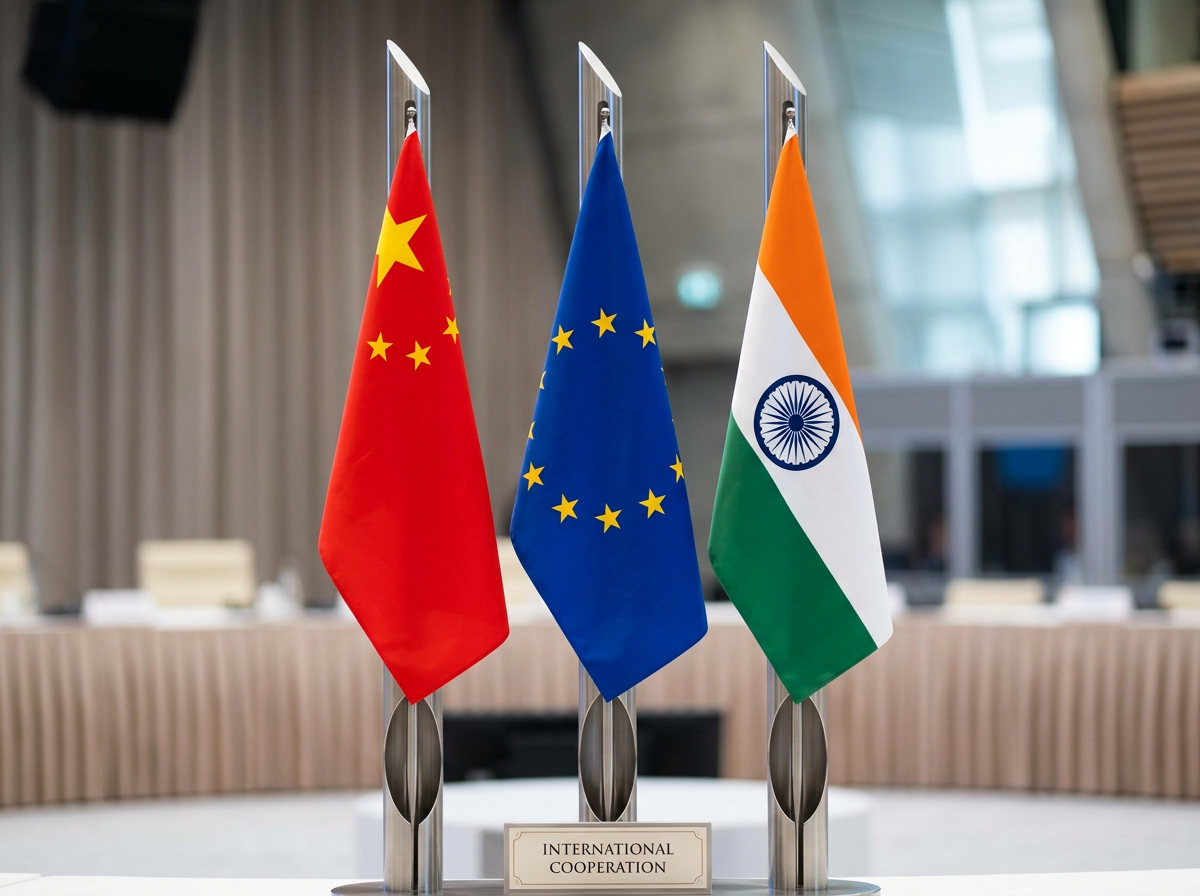
China–India Engagement Signals Diplomatic Stabilization Efforts Amid BRICS Security Talks
Chinese and Indian newspapers report cautiously optimistic diplomatic language following a high-level meeting between India’s National Security Adviser Ajit Doval and Chinese Foreign Minister Wang Yi in New Delhi during a BRICS-related security dialogue.
Reports emphasize that both sides described relations as “gradually normalizing,” with a focus on restoring dialogue mechanisms that had been stalled during earlier border tensions.
A Chinese foreign affairs commentator quoted in a state-affiliated publication writes that the meeting “represents a pragmatic return to structured engagement rather than symbolic confrontation.”
Indian commentary cited in parallel coverage highlights the importance of maintaining “predictable communication channels” to prevent escalation in border regions.
A Beijing-based South Asia expert interviewed by a national newspaper stated:
“Neither side is seeking rapid breakthroughs. The emphasis is on stability management—avoiding surprises and ensuring military-to-military communication remains open.”
Analysts also point out that BRICS continues to serve as a diplomatic buffer space where both countries can engage without the pressure of bilateral summit optics.
EU–China Trade Relations Under Strain as Rare Earth Controls and Surplus Figures Intensify Scrutiny
Financial and economic newspapers in China are heavily focused on upcoming trade discussions between Chinese Commerce Minister Wang Wentao and EU Trade Commissioner Maros Sefcovic scheduled for later this month in Brussels.
Coverage highlights rising tensions over trade imbalances and China’s export controls on critical rare earth materials, which European industries rely on for electronics, electric vehicles, and renewable energy infrastructure.
Chinese economic commentary stresses that trade friction is “structural rather than cyclical,” driven by diverging industrial policies and global supply chain realignment.
An economist quoted in a Shanghai financial newspaper argues:
“The EU is attempting to reduce dependency, but complete decoupling from China’s manufacturing ecosystem is economically unrealistic in the short term.”
European concerns are also cited in Chinese coverage, particularly regarding the EU’s internal discussions on supply chain diversification laws and industrial security frameworks.
Meanwhile, state economic analysts suggest that China’s leverage in processed minerals remains a key strategic asset, but warn that overuse of export restrictions could accelerate long-term diversification away from Chinese suppliers.
Export Controls Expanded as China Adds U.S.-Linked Firms to Restricted Trade List
Chinese business newspapers report on the expansion of export control measures, including the addition of several U.S.-linked companies to China’s restricted trade list.
The move is described as a response to what Chinese officials characterize as “unfair technological containment measures” and previous restrictions imposed by Western governments on Chinese tech firms.
Editorial commentary in a Beijing financial daily frames the decision as part of a broader “reciprocity-based trade defense strategy,” arguing that China is aligning its export governance with global norms used by major economies.
A policy researcher quoted in the article says:
“Export controls are no longer exceptional tools. They are becoming standard instruments of industrial policy competition.”
However, other voices within academic circles caution that escalating reciprocal restrictions may increase volatility in global supply chains, particularly in high-tech manufacturing and critical minerals.
Southern Flood Season Begins as Authorities Increase Monitoring in Risk-Prone Provinces
Domestic newspapers report that China has entered its annual flood season, with heavy rainfall expected across southern provinces through late June and July.
Hydrology and emergency management agencies are deploying early warning systems, reservoir monitoring protocols, and disaster response teams in anticipation of potential river swelling and landslides.
Local reporting from Guangdong and Guangxi highlights heightened preparedness in urban drainage systems, with municipal authorities conducting inspections of dams and flood barriers.
An official from the Ministry of Water Resources, quoted in a regional newspaper, stated:
“Prevention is the priority. We are shifting from reactive response to predictive management based on real-time meteorological data.”
Agricultural analysts also warn of potential crop disruption if rainfall intensity exceeds seasonal norms, particularly for rice-growing regions in the south.
Naval Strategy Commentary Reflects Growing Emphasis on Blue-Water Capability Expansion
Military-focused newspapers are publishing analytical pieces on China’s evolving naval doctrine following the Liaoning deployment.
The tone of commentary suggests a broader strategic transition toward blue-water operations, with emphasis on sustained presence in distant waters and integrated carrier group operations.
A defense academic interviewed in a Guangzhou military journal explains:
“The key question is not whether China can deploy forces, but whether it can sustain them. Logistics, coordination, and command integration are now the core challenges.”
Articles also highlight advancements in carrier-based aircraft training, electromagnetic coordination systems, and joint operational planning across services.
Cultural Industry Reports Emphasize Soft Power Expansion Through International Exhibitions and Creative Exports
Cultural newspapers report continued expansion of Chinese cultural exports, including exhibitions abroad and participation in global arts festivals.
Coverage highlights efforts to strengthen cultural diplomacy through film, visual arts, and digital media platforms targeting international audiences.
A cultural policy researcher quoted in a Beijing arts journal notes:
“Soft power is increasingly being built through consistent cultural presence rather than single landmark events. The strategy is cumulative visibility.”
The reporting also references growing participation of Chinese design and animation studios in global production networks, particularly in Southeast Asia and Europe.
Technology and Industrial Policy Commentary Focuses on Innovation-Driven Growth Model
Technology-focused newspapers continue to emphasize China’s shift toward “high-quality development,” with coverage centered on semiconductors, electric vehicles, and industrial AI applications.
Analysts describe ongoing efforts to reduce reliance on imported core technologies while scaling domestic innovation ecosystems.
An industrial policy expert cited in a Shenzhen-based publication states:
“The goal is not just substitution, but iteration—moving from catching up to setting benchmarks.”
Articles also highlight the role of regional innovation hubs in the Yangtze River Delta and Greater Bay Area, where private firms and state-backed research institutes collaborate on advanced manufacturing systems.
Domestic Governance Reporting Focuses on Administrative Efficiency and Legal Reform
Chinese domestic newspapers feature ongoing discussions about governance modernization, including improvements in regulatory transparency and administrative streamlining.
Reports emphasize efforts to digitize public services and improve responsiveness in local governance structures.
A legal scholar interviewed in a Beijing university-affiliated newspaper remarks:
“The direction of reform is toward procedural clarity. Citizens expect not only outcomes, but understandable processes.”
Coverage also includes discussion of anti-corruption enforcement mechanisms and judicial reform pilot programs in select provinces.
Leave a Reply