Jimmy Carter was born Oct. 1, 1924, in a small local hospital in the southwest Georgia town of Plains.
He was the first U.S. president born in a hospital.
Carter was the first child of James Earl Carter, a World War I veteran and an industrious peanut farmer, and Lillian Carter, a nurse. He would become known as the “man from Plains,” but he actually grew up in a place called Archery, 2.5 miles west of Plains. This was Carter’s term for it: not a town or a village, but a “place.” Archery “was never quite a real town,” Carter wrote. It’s no longer even on any maps. But “it’s where I grew up,” he said.
There was no running water in Carter’s home until he was 9 years old, and he and his family would relieve themselves either in one of the “slop jars” that were in each of the three bedrooms or out back in the outdoor privy. They did not have toilet paper. When his father bought a small windmill in 1935, it powered a toilet, a sink and a rudimentary shower. The showerhead was a can with holes poked in it. Electricity would not arrive on most farms until President Franklin D. Roosevelt’s Rural Electrification Administration made headway, so artificial light came from kerosene lamps.
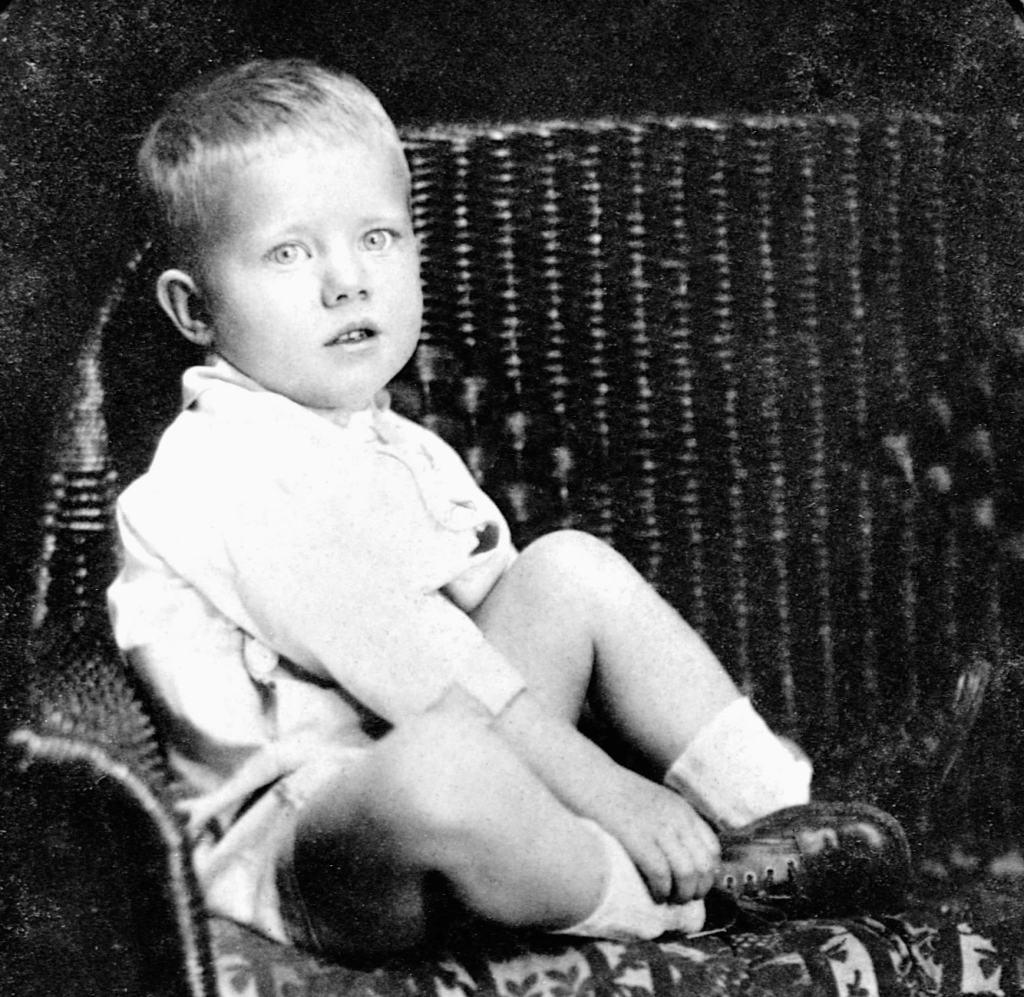
And until the 1940s, the farming process in the Deep South was largely the same as during colonial times nearly 200 years before. Tractors or any form of mechanized power were rare, so plowing was done with mules. Harvesting was done by hand and depended on manual labor, usually from Black tenant workers who lived in shacks on the farm property in exchange for a job, and who had little prospect of ever earning much money. The Southern farm population actually grew from 1930 to 1935, as city workers lost jobs and moved to places like Archery.
Carter’s father, Earl, owned 350 acres. It was a good-sized farm, especially since many other family estates were in a multi-decade process of being subdivided by descendants of Southern plantation owners after the Civil War. And Earl made the most of it. He was smart, thrifty, and a good businessman.
Earl could be stoic and restrained, and was sometimes severe. The family did not speak at the dinner table, although they were allowed to bring books to read while they ate. Jimmy strove to please his father and rarely felt he succeeded. But he had a happy childhood, roaming through creeks and forests with friends, shirtless and shoeless. But he also engaged in demanding physical labor from a young age. He picked cotton alongside field hands. He learned how to guide the mules in plowing the fields. He had two younger sisters, Gloria and Ruth. His only brother, Billy, was not born until Jimmy was 12 years old.
Earl Carter’s politics were segregationist and white supremacist, as were most white Georgians’ at the time. But Jimmy’s mother, Lillian, was a progressive on racial questions from a young age. Earl “was tolerant if not supportive of Lillian’s views,” Carter wrote in “Turning Point,” his 1992 memoir of growing up in Georgia. Earl was “above all, a Talmadge man,” meaning he was a devoted supporter of Eugene Talmadge, the arch-segregationist governor of Georgia in the 1930s and ’40s.

When Earl died in 1953, Jimmy was a naval officer stationed in Schenectady, N.Y., on a track that would have put him in position to potentially take command of a nuclear submarine in the near future. But he abandoned his naval career to come home and take over his parents’ farm, overriding Rosalynn’s strong opposition to the move.
He ran for state Senate in 1962. A corrupt local official stood in a polling place telling residents how to vote, intimidating Carter supporters and stuffing the ballot box. Yet Carter mounted a drive to have the vote recounted and the corruption investigated. He succeeded, largely thanks to a series of articles in the Atlanta Journal, and was seated in the legislature.
When his church, the First Baptist Church in Plains, voted in the summer of 1964 to formalize its practice of preventing Black worshippers from attending services, Carter stood and spoke against the resolution. Many in the congregation abstained from voting out of fear, but of those who did vote, only Carter’s family and one other farmer opposed the proposal. It passed 54 to 6. He was not outspoken on some racial hot-button issues. But he pointedly refused to join the segregationist White Citizens Council, despite threats and intimidation.
Carter ran for governor in 1966 but came in third in the Democratic primary, behind former Gov. Ellis Arnall and Lester Maddox, a committed segregationist who won a runoff with Arnall and then the governorship in the fall.
Carter turned his attention quickly to running for governor again in 1970. He also experienced an existential crisis at the age of 42, questioning the direction and meaning of his life. He began reading the Bible more closely and questioning how his faith applied to modern life and to politics.
During this time, Carter discovered Niebuhr. He traveled with three other men to Lock Haven, Pa., a coal-mining town in the center of the state, to proselytize for a new Southern Baptist church that was coming to the town. He spent 10 days knocking on doors. At each home, Carter or another man would talk about their personal faith in Jesus Christ and invite anyone interested to nightly services that they organized at the local YMCA. Carter later described his time in Lock Haven as a “miracle.” It was, he said, “where I first experienced in a personal and intense way the presence of the Holy Spirit in my life.” This was an early precursor to the “born again” dynamic of Christians in the 1970s whose revivals created the “Jesus movement.”
In his 1970 campaign against former Gov. Carl Sanders, Carter sought the support of African American pastors and had the endorsement of Martin Luther King Jr. But his campaign also made covert appeals to white bigotry. Campaign aides distributed fliers with a photo of Sanders, a part owner of the Atlanta Hawks, celebrating a victory with a Black player, Lou Hudson.
Carter also made numerous overtures to supporters of Alabama Gov. George Wallace, one of the staunchest defenders of segregation, and attracted the support of the most notorious white supremacists in Georgia. “I never made a racist statement,” Carter told me in a 2015 interview. “But I did get the more conservative country votes there in Georgia because I never did anything to alienate them.”
In his inaugural speech in 1971, Carter recast himself once again as a racial progressive. “I say to you quite frankly that the time for racial discrimination is over,” he said. To the Black leaders in Georgia he promised, “You’re going to like me as governor.”
Carter’s main achievement as governor was a major reorganization of the state government, to consolidate agencies and introduce more efficiency. But his limitations as an executive were already clear during his time in Atlanta. He had no use or appreciation for the human and relational side of politics, which is crucial to working with a legislature. “He had very few personal relationships, in my opinion,” said Bert Lance, a friend and adviser who ran Georgia’s powerful transportation department under Carter. “I like people. I like to be around them. I try to be cordial to them. Not that he doesn’t, but he’d just rather be by himself.”
E. Stanly Godbold noted in his biography of Carter that during his time as governor, “Apart from Rosalynn, he saw as few people as possible. … Usually he ate lunch alone in his office, ordering the food from the cafeteria. … In the afternoons he studied serious academic books about politics and society.”
The first recorded instance of Carter discussing the presidency was in the summer of 1971, less than a year after he was elected governor. By the fall of 1972, he and his close circle of advisers had begun to openly talk about it and began planning for a run in 1976. Few took him seriously. When Carter first raised the topic of running for president with his mother, Lillian, she responded, “President of what?” But even before Watergate, Carter and his advisers discussed the need for “moral leadership” in the country in the wake of the Vietnam War’s divisive effect. A national leader was needed, they thought, who would be more transparent and open with the country and say things that might be unpopular.
Adviser Ham Jordan argued that a Carter candidacy should “encompass and expand on the Wallace constituency and ‘populist’ philosophy by being a better qualified and more responsible alternative.” Carter would represent a “New South” and could help the Democrats hold on to their fracturing coalition, which included large swaths of the South along with big-city machines across the Rust Belt, organized labor and minorities.
Carter pioneered a new approach to primaries, campaigning hard in every state, aided by young advisers who had closely studied the way the nominating system had changed, and who also understood the growing importance of television as a way to project an image that superseded political ideology.
He benefited from an organized effort by Democratic activists in Florida who lobbied and pressured other Democrats to stay out of the state’s primary in 1976 to give Carter a clean one-on-one matchup against Wallace, who was running for president a fourth time and had won the primary in Florida in 1972 with 41% of the vote.
Carter is remembered as an inept communicator, but in person, he converted followers with the success — and the methods — of a traveling preacher. “A strange calm came over the audience as he talked of America’s basic goodness,” Jules Witcover, a reporter for the Washington Post, observed early in the campaign. “His speeches are mostly received with a strange quietness,” Charles Mohr wrote in the New York Times.
Carter said the nation’s decency had only been “temporarily obscured by the debasings perpetuated by [former President Richard] Nixon.” “I want a government that is as good, and honest, and decent, and truthful, and fair, and competent, and idealistic, and compassionate, and as filled with love as are the American people,” he said, over and over. Witcover, who compared Carter to Christian evangelist Billy Graham, called this phrase Carter’s “personal rosary” and noted that “in crowd after crowd, it worked.”
The country was not only disillusioned by Nixon and Watergate. Americans were disquieted and made anxious by the rise of inflation in the early ’70s, by the energy crisis of 1973 that created lines of cars at gas stations and by a slowing economy. Wages were flatlining. Jobs were disappearing. The cost of living was going up. People may have wanted someone to redeem the country, but they also wanted someone who could restore their confidence and ease their economic pain.
There were no themes to Carter’s candidacy except “faith in Jimmy Carter and the sense of hope he sought to inspire in the American people,” wrote Carter adviser Peter Bourne. Witcover picked up on this as well. “He asked of voters the same ‘leap of faith’ that is at the core of religious belief,” he wrote. The electorate was ripe for this approach, as Carter pollster Pat Caddell had discovered. Voters wanted “non ideological change and the restoration of values.”
He came out of nowhere to win the Iowa caucuses, and by the time he defeated Wallace in Florida, Carter had a head of steam that carried him to the nomination. He narrowly defeated President Gerald Ford in the popular vote, 40.8 million votes to 39.1 million, and in the Electoral College, 297 to 240. It was the smallest margin of victory in electoral votes for a president since 1916. In addition, the negative tone of the campaign had taken a toll. The election saw the lowest voter turnout for a presidential race in 28 years, at only 54%.
Carter entered Washington as an outsider, and the presidency without much of a mandate. He was the first presidential candidate to win control of the government while running against government. Barry Goldwater had attempted it in 1964 and was crushed. Carter told audiences in 1976 that “our government in Washington now is a horrible bureaucratic mess. It is disorganized, wasteful, has no purpose, and its policies — when they exist — are incomprehensible or devised by special interest groups with little regard for the welfare of the average American citizen.”
Carter was not a part of the Washington establishment, and he was proud of it. But his outsider status left him exposed when events began to undermine him. He didn’t understand the presidency or have the help of anyone who did.
Leave a Reply