June 14th is more than just a date on the calendar—it’s a vibrant thread woven into the fabric of our global history. While 2026 will bring its own stories, this day has already witnessed a breathtaking array of pivotal, record-breaking, and culturally seismic events across the globe. From the founding of iconic cities to the birth of rock festivals, from political turmoil to sporting triumphs, June 14th is a day when the world has consistently paused to make history.
🏛️ The Founding of Flags and Frontiers
Our journey begins with the foundation of nations and symbols. Perhaps the most iconic American tradition, Flag Day, traces its roots to June 14, 1777, when the Continental Congress adopted the Stars and Stripes as the official flag of the newly formed United States. This day wasn’t just about a piece of cloth; it was a declaration of identity for a nation in its infancy.
That same revolutionary spirit was formalized just two years earlier, on June 14, 1775, when the Continental Congress authorized the creation of what would become the United States Army, marking the official birth of the nation’s armed forces.
However, the day’s historical significance stretches far beyond the shores of America. Travel back to 1158, and you’ll find Henry the Lion laying the foundations for the German city of Munich, a city that would rise to become a global hub of culture, technology, and finance.
In a darker chapter of modern warfare, the German Army marched into Paris on June 14, 1940, a moment of profound shock and occupation that marked a turning point in World War II. Yet, on the same day in 1951, the world took a step toward a new future when the U.S. Census Bureau dedicated UNIVAC, the first programmable electronic digital computer for civilian use, ushering in the dawn of the information age.
🚀 Innovation Reaches for the Skies and Stars
June 14th has consistently pushed the boundaries of human knowledge and ambition. In an early step towards space exploration, a rhesus macaque monkey named Albert II became the first mammal in space in 1949, launched from New Mexico in a V-2 rocket. While his journey ended tragically in a crash-landing, his flight proved that living beings could survive the rigors of space travel.
This day also saw the echoes of exploration from centuries past. In 1615, Dutch mariner Jacques Le Maire set sail on a daring expedition to find a new route to the Pacific and the fabled southern continent, embodying the spirit of discovery that defined the Age of Sail. And in 1822, Charles Babbage, the “father of the computer,” proposed the Difference Engine, a groundbreaking concept for a mechanical computer that laid the groundwork for modern computing.
🎸 The Soundtrack of a Generation
The world of music has consistently found its rhythm on June 14th. The year 1967 saw the birth of the Monterey International Pop Festival, which kicked off on this day and is widely recognized as the first major commercial rock festival. It featured legendary performances from Jimi Hendrix, The Who, Janis Joplin, and Otis Redding, becoming a pivotal moment of the “Summer of Love”.
In the studio, the Beatles were recording magic, laying down tracks for the timeless classic “Yesterday” in 1965. The decade of the 1970s brought more milestones, with Eric Clapton’s new band, Derek and the Dominoes, playing their first-ever gig in London in 1970, and the first Hard Rock Cafe opening its doors in the same city in 1971, beginning its journey as a global shrine to rock memorabilia.
⚽ Glory and Heartbreak on the Global Stage
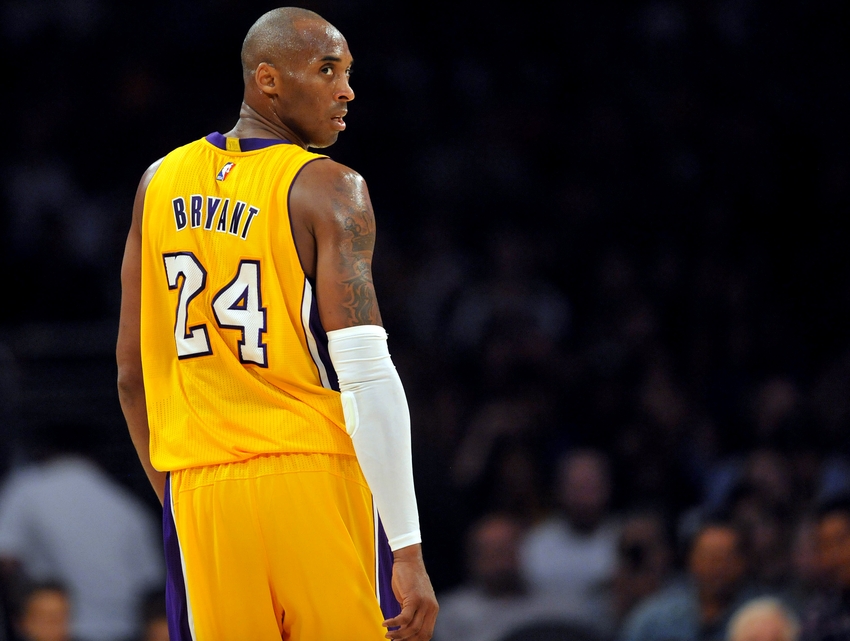
For sports fans, June 14th is a date etched in memory for championship glory and astonishing athletic feats. The Chicago Bulls dynasty made this day their own, clinching NBA titles in 1992, 1996, and 1998—including Michael Jordan’s sixth Finals MVP award. The Los Angeles Lakers also celebrated on this day, winning championships in 1987 and 2009. Across the rink, Mark Messier famously led the New York Rangers to their first Stanley Cup in 54 years, ending a legendary drought in 1994.
In individual sports, Asafa Powell of Jamaica set a blistering new world record of 9.77 seconds in the men’s 100 meters in 2005. Meanwhile, baseball fans witnessed incredible extremes: in 1965, Jim Maloney threw a no-hitter but still lost the game, and in 1966, the Miami Marlins and St. Petersburg Cardinals played a 29-inning marathon, the longest game in organized baseball history up to that point.
✍️ The Ink of History: Pens and Partings
Some events on June 14th changed the map of the world. The Falklands War officially came to an end in 1982 when Argentina surrendered to the United Kingdom, concluding a ten-week conflict over the remote South Atlantic islands.
Other moments were defined by the people who left their mark on the world. This day marks the passing of giants like the brilliant Argentine writer Jorge Luis Borges (1986), the fiery British suffragette Emmeline Pankhurst (1928), and the influential German sociologist Max Weber (1920). It is also the birthday of Harriet Beecher Stowe (1811), the author of Uncle Tom’s Cabin, and Karl Landsteiner (1868), the Nobel Prize-winning scientist who discovered the blood groups. Even the controversial Benedict Arnold died on this day in 1801, ensuring his name would live on in infamy.
✨ A Final Thought
From the adoption of a national flag to the foundation of a global city; from a monkey’s flight into space to a guitarist’s first live performance; from basketball dynasties to the end of a war—June 14th is a day that has consistently delivered a snapshot of human triumph, tragedy, and creativity. As the years unfold, this date will surely add more chapters to its already rich and diverse story.
Leave a Reply