Russian public won’t turn against this war – but they’re clearly feeling it now
Northern Boy
Do we know what the Russian public are feeling regarding the war now? Surely the increased conscription is impacting national perception of Putin?
Michael Clarke says conscription isn’t a massive issue in Russia, where twice a year the government pulls around 130,000-140,000 troops into service.
He says Russian public opinion is difficult to ascertain, but notes recent polling results from The Levada Center, a nongovernmental polling and sociological research organisation.
It says around 70% of Russians say the war in Ukraine is now affecting them, something not admitted during previous years of the conflict.
“Those sorts of percentages are quite revealing, because it does show that the Russian public, of course, are getting fed up with this,” Clarke says.
“It’s going on for years now. It’s affecting the economy. The economy is staggering. It’s not going to collapse, but fuel is now difficult to buy and the prices have gone through the roof.
“There are problems with investment too, and there is a sense they want it now to be over.”
Clarke adds: “I’m not optimistic that the public are going to turn against this war, but I’m interested that a high proportion now clearly are feeling it. And that wasn’t the case in 2022 or 2023.”
What does it mean to ‘scramble jets’ and how much does it cost?
johnnyboy
What does “scrambling jets” actually mean in practice, what is its purpose, and how much does it cost?
Earlier today, NATO members Poland and Romania scrambled fighter jets in response to actual and potential airspace violations as Russia struck Ukraine.
A viewer asks Michael Clarke what “scrambling jets” actually means in practice and how much it costs.
Clarke says it means “getting off as quickly as possible”.
During the Second World War, it was “pilots running to their aircraft and jumping in and taking off”, he says.
“These days it all seems a bit longer because jets leave their hangars and they taxi out. But they get off within a number of minutes. As opposed to 45 seconds or something, they get off in 3 or 4 minutes.”
The fighter jets, equipped with powerful modern engines, then get up to an altitude of 40,000 to 50,000ft and swoop in beside the aircraft that they’re interested in, Clarke explains.
Their job is then to indicate that they’re there and then to go through all the protocols as to shepherding the hostile aircraft out of national airspace.
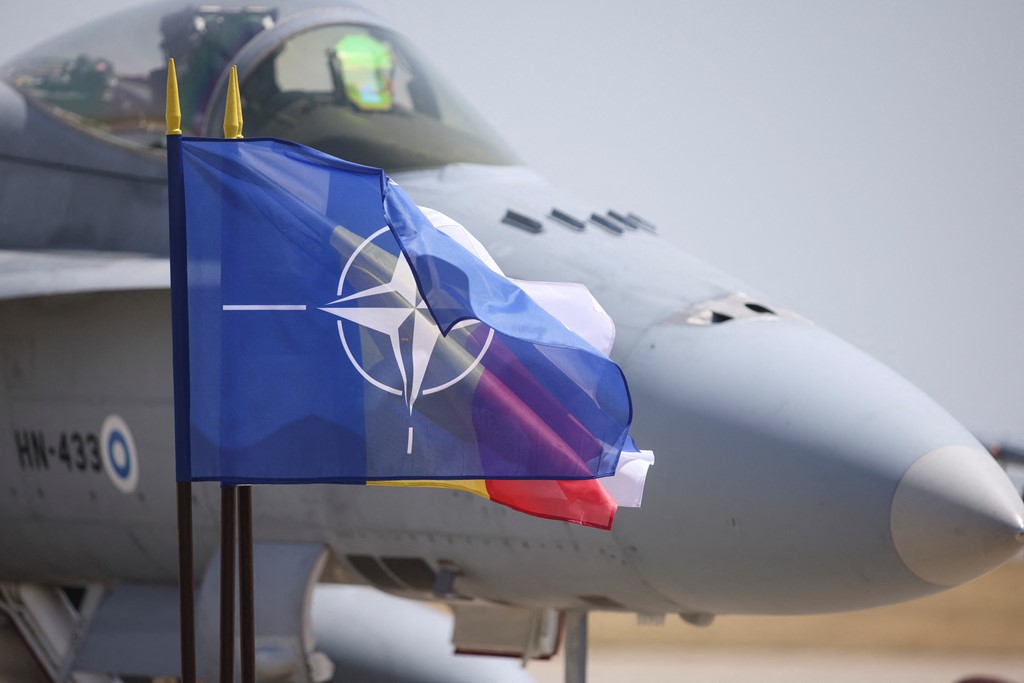
“If the hostile aircraft is in a position to do something hostile, then that’s where the pilot has to start making decisions about what to do,” Clarke adds.
“On the ground, you can guarantee there’s a lawyer sitting next to the air controller, but, ultimately, any pilot will tell you that you are kind of on your own,” our defence and security analyst says.
“If you think you have to do it, use your machine guns.”
The cost of this operation is usually not too high, however, Clarke says.
“These aircraft are regular on exercises, so the only extra cost is whatever extra fuel it is,” he explains.
“And if you release missiles, then the missiles cost a fair bit, depending on what they are.
“But it’s interesting: when people talk about the costs of war, it’s an inconvenient fact for many people that war doesn’t cost all that much extra.
“It costs the extra amount of fuel and ordnance that you use.”
Leave a Reply