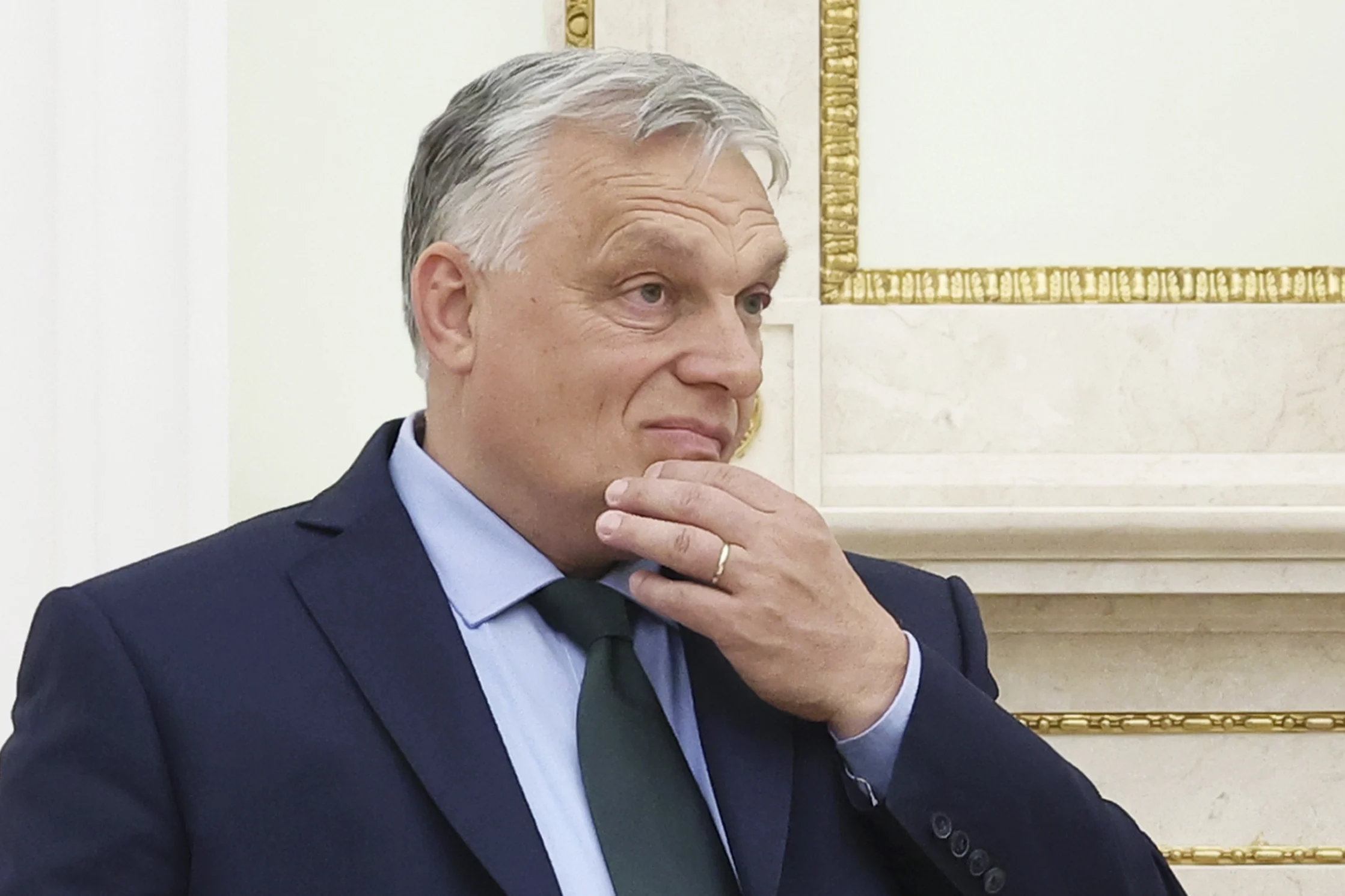
Hungarian Prime Minister Viktor Orbán has declared that the Visegrád Group (V4) has returned to full strength, invoking remarks by Polish Prime Minister Donald Tusk as he welcomed his Central European counterparts to a summit in Gödöllő.
Speaking at a press conference at the Grassalkovich Palace following talks with Czech Prime Minister Andrej Babiš, Polish Prime Minister Donald Tusk, and Slovak Prime Minister Robert Fico, Orbán reflected on the bloc’s 35th anniversary. He recalled that the alliance was founded on the recognition that shared interests outweigh national divisions. “Thirty-five years ago, it was recognized that there is more that unites our countries than divides us, and it is easier to succeed together,” he said. He added that all four nations—Hungary, the Czech Republic, Poland, and Slovakia—are committed to deepening cooperation with the aim of building a V4 that delivers tangible results and carries a strong voice in EU decision-making. “Today, Central Europe is one of the most dynamic development regions of the EU,” Orbán stated.
The four leaders also discussed the EU’s next seven-year budget, reaching consensus on the importance of cohesion policy and the Common Agricultural Policy. Orbán put forward a proposal for a high-speed railway linking Warsaw, Prague, Bratislava, and Budapest. Cultural and civic cooperation within the Visegrád framework was also on the agenda. Orbán thanked Fico for presenting Slovakia’s V4 presidency programme, which received unanimous support. The leaders agreed to restore coordination ahead of EU summits, “so that we can represent Central Europe together in Brussels.” “Today, the heart of Europe beats in Central Europe,” Orbán proclaimed. “Hungary is happy to return to V4 cooperation; our partners can always count on us.”
Fico, in his opening remarks, thanked his host before outlining Slovakia’s priorities for its V4 presidency. “The Slovak presidency comes at a time of hardship,” he said, arguing that the group must confront the serious challenges facing EU member states. He noted that the V4 countries collectively represent 65 million citizens. Fico identified illegal migration as a key pressure point and a priority for the Slovak presidency, pointing out that the group’s past coordination on the issue had been successful. He also called for a unified V4 position ahead of European Council meetings. He outlined four pillars for Slovakia’s presidency, the first being competitiveness, which he argued should be reflected in the next EU budget—rejecting the framing of cohesion and competitiveness as competing priorities. On energy, Fico cited Mario Draghi’s report, which identified high energy costs as a major economic problem for the EU, and called for lower electricity prices across the bloc. He used Slovakia’s aluminium industry as a cautionary tale: ambitious climate goals accelerated domestic production, but factories could not bear high energy prices, and imports from China—with higher pollution levels—subsequently filled the gap. He said that during a recent European Council debate on China, “there was more talk than substance.”
Czech Prime Minister Babiš expressed confidence in the group’s future. “I am confident that we will cooperate seamlessly—there is real chemistry between us,” he said, thanking the host for the notebook gifted during the talks. “These four countries are the future of Europe,” he added. Babiš echoed Fico’s concerns, identifying energy prices, carbon quotas, and the EU fiscal framework as the most pressing issues, and said the leaders also touched on the agenda for the upcoming NATO summit in Ankara. He closed by welcoming the restoration of previous coordination mechanisms: “We are in the same boat again.”
Polish Prime Minister Tusk stressed that the key to the group’s influence lies in unity. “If we always remember that what unites us is greater than what divides us, Europe will start to listen to us,” he said, adding that Orbán’s energy may be one of the catalysts for this revival. Tusk recalled that when the V4 stood united in the past, it provided a model for countries at odds with the EU or for those with disagreements with larger member states like Germany and France. “If V4 returns to mutual loyalty, it will become one of the most powerful forces,” he argued. He said it took just one hour to define the contours of Slovakia’s presidency agenda—before lightly ribbing Babiš, joking that the Czech PM’s communication style borrowed from Donald Trump’s playbook. “Thank you for bringing back hope,” Tusk said.
While the V4 countries do not agree on every issue and differences have always existed, he described the partnership as fundamentally loyal—one that, on many occasions, has been able to shape and even determine EU decisions.
Leave a Reply