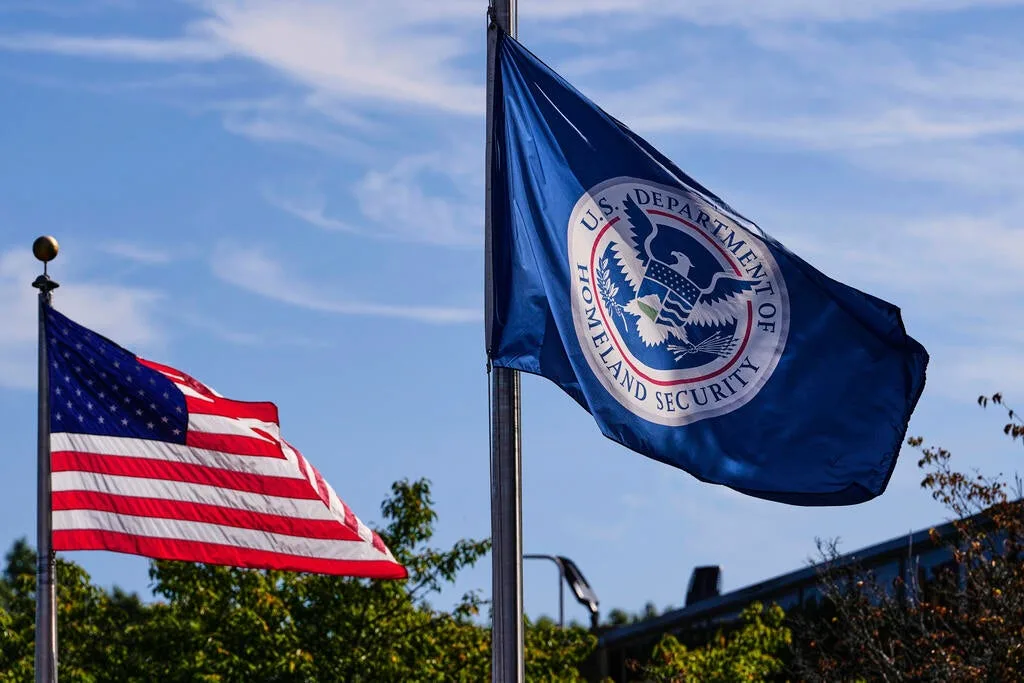
The U.S. State Department has instructed diplomats working in its Bureau of International Organization Affairs to stop using the term “artificial intelligence” and instead refer to the technology as “super intelligence.”
The directive followed President Donald Trump’s address to the United Nations General Assembly earlier this week, during which he announced that the U.S. government would begin using the alternative terminology.
An email sent to employees by Michael Drager, deputy assistant secretary of state for the Bureau of International Organization Affairs, instructed staff to make the change in official communications.
“Following the president’s remarks at the GA today, please change all references of ‘Artificial Intelligence’ to ‘Super Intelligence’ in our documents and positions. We will be using ‘SI’ in all remarks, positions and press elements moving forward,” the email stated.
The message was sent shortly after Trump delivered his speech at the U.N. and carried the subject line “Change in Nomenclature AI to SI.”
Directive Follows Trump’s U.N. Speech
Trump announced the terminology change during his speech to the General Assembly on Tuesday.
The president argued that the word “artificial” gave the technology an inaccurate impression because it could make intelligence appear to be something fabricated or unreal.
“The use of the word artificial makes intelligence fake, it makes it sound fake and it is not fake. It’s actually amazing,” Trump said.
Trump added that U.S. government documents would adopt the new terminology.
“From this point forward, all of the United States’ documents, and hopefully the world’s, will be changed to use the much more accurate term ‘super,’ as opposed to ‘artificial,’” he said.
He subsequently referred to the technology as “super intelligence.”
Bureau Oversees U.N. and Multilateral Missions
The Bureau of International Organization Affairs is responsible for U.S. diplomatic missions to the United Nations and other multilateral organizations around the world.
The instruction therefore affects official communications and positions produced by diplomats working within that bureau.
It was not immediately clear whether other State Department bureaus had received similar instructions or whether the terminology would eventually be adopted throughout the wider U.S. government.
The directive also raises questions about whether other government initiatives that currently use “AI” in their names could eventually be renamed.
U.S. Representatives Begin Using ‘SI’
The terminology change was already visible at the United Nations following Trump’s announcement.
U.S. representatives used “SI” rather than “AI” during a U.N. Security Council meeting focused on the technology.
The meeting brought technology executives before the Security Council as the United Nations considered the growing impact and potential risks associated with increasingly advanced artificial intelligence systems.
The terminology used by U.S. representatives reflects the administration’s effort to implement Trump’s announcement within diplomatic communications.
Trump Opposes Efforts to Slow AI Development
Trump has consistently argued against measures that could significantly restrict the development of artificial intelligence.
The technology industry has faced growing warnings about the potential risks posed by increasingly powerful AI systems, including concerns that development could move faster than governments’ ability to establish effective safeguards.
Trump, however, has argued that excessive regulation could undermine U.S. technological competitiveness.
He has emphasized the importance of ensuring that the United States maintains an advantage over China in the development of advanced AI technology.
In a post on social media Monday, Trump said he was “not going to stifle Growth, of something that will be bigger than the Industrial Revolution, or the Internet, itself.”
He has also claimed that the United States is currently ahead of China in AI development.
AI Remains a Major International Issue
The terminology change comes as artificial intelligence becomes an increasingly important issue in international diplomacy and technology policy.
Governments are considering how to address potential risks while allowing companies to continue developing increasingly capable systems.
AI companies, lawmakers and other experts have warned about issues including safety, control and the possibility that technological development could outpace the ability of humans and governments to manage its consequences.
Those concerns have fueled calls for international standards and regulatory safeguards.
The Trump administration has instead placed significant emphasis on maintaining the pace of U.S. technological development and competing with China.
China Competition Adds to Debate
The U.S.-China technology competition is an important factor in Washington’s approach to artificial intelligence.
Both countries have invested heavily in AI research and development, while policymakers in each country have sought to strengthen their domestic technology sectors.
Trump’s emphasis on maintaining an American advantage has led his administration to resist measures that it believes could slow innovation.
Artificial intelligence is also expected to be an important subject during Trump’s planned meeting with Chinese President Xi Jinping in Washington.
The developments come as the United States and China continue competing over advanced technologies that could have significant economic, military and geopolitical consequences.
For now, the State Department’s international organizations bureau has adopted Trump’s preferred terminology, instructing its diplomats to use “super intelligence” and the abbreviation “SI” in official remarks, positions and press materials.
Leave a Reply