Washington has revised its proposed U.N. resolution demanding that Iran halt attacks and the deployment of mines in the Strait of Hormuz, but the changes are unlikely to avert Chinese and Russian vetoes, diplomats said on Friday.
A Chinese veto would be awkward ahead of President Donald Trump’s trip to China next week, where the Iran war is likely to be high on the agenda.
An updated draft shared with Security Council members on Thursday afternoon and seen by Reuters removed a clause invoking Chapter VII of the U.N. Charter, which allows the council to impose measures ranging from sanctions to military action.
However, tough language against Iran remained, as well as a clause that in the event of non-compliance the council would “meet again to consider effective measures … including sanctions measures, in order to ensure the freedom of navigation in the area.”
It was unclear when the council might vote on the resolution.
While the text does not explicitly authorize force, it does not rule it out, and “reaffirms the right of member States … to defend their vessels from attacks and threats, including those that undermine navigational rights and freedoms.”
A previous resolution backed by the United States that appeared to open a path to legitimizing U.S. military action against Iran failed last month after Russia and China exercised their vetoes in the 15-member U.N. Security Council.
Diplomats said the original version of the current resolution, drafted by the United States and Bahrain and submitted to council members for review this week. ran into strong Chinese and Russian objections.
A U.N. diplomat said that despite dropping the Chapter VII reference, which was also done with the last month’s resolution, the new draft did not address Chinese and Russian objections.
China’s U.N. mission said it had no comment on the new draft, and the Russian mission did not immediately respond.
A statement from Russia’s mission on Thursday said Security Council members should refrain from “pushing through one-sided and confrontational draft resolutions” that could “trigger a new wave of escalation in the Middle East.”
“It is precisely for this reason that on April 7, Russia, along with China, blocked the adoption of a draft resolution on the situation in the Strait of Hormuz,” it said.
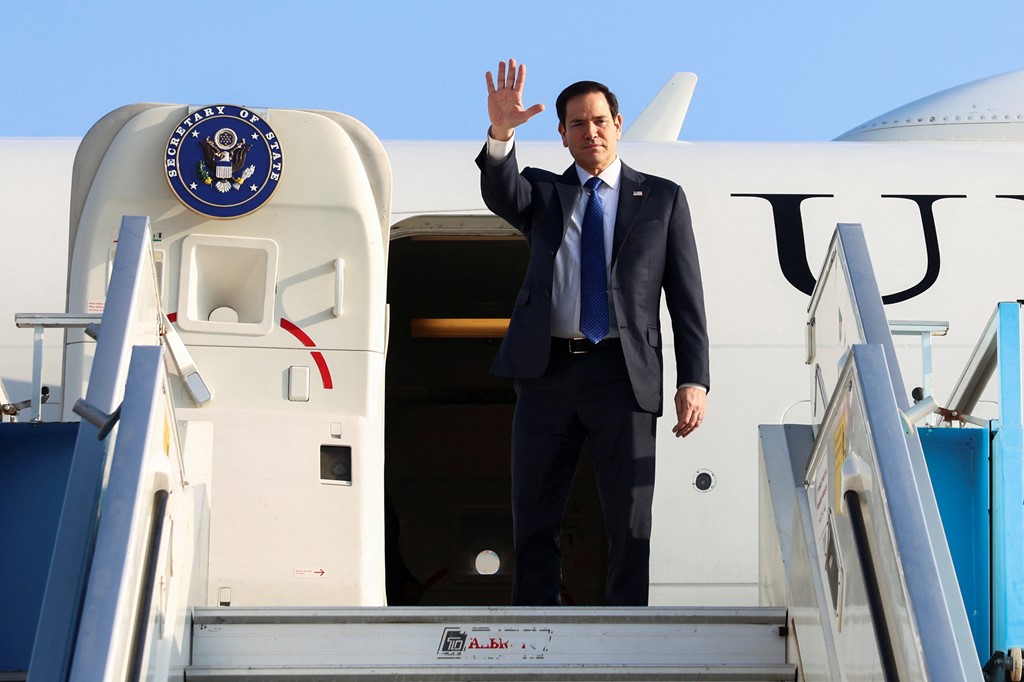
On Tuesday, U.S. Secretary of State Marco Rubio called the proposed resolution a test of the utility of the United Nations and urged China and Russia not to veto it.
Leave a Reply