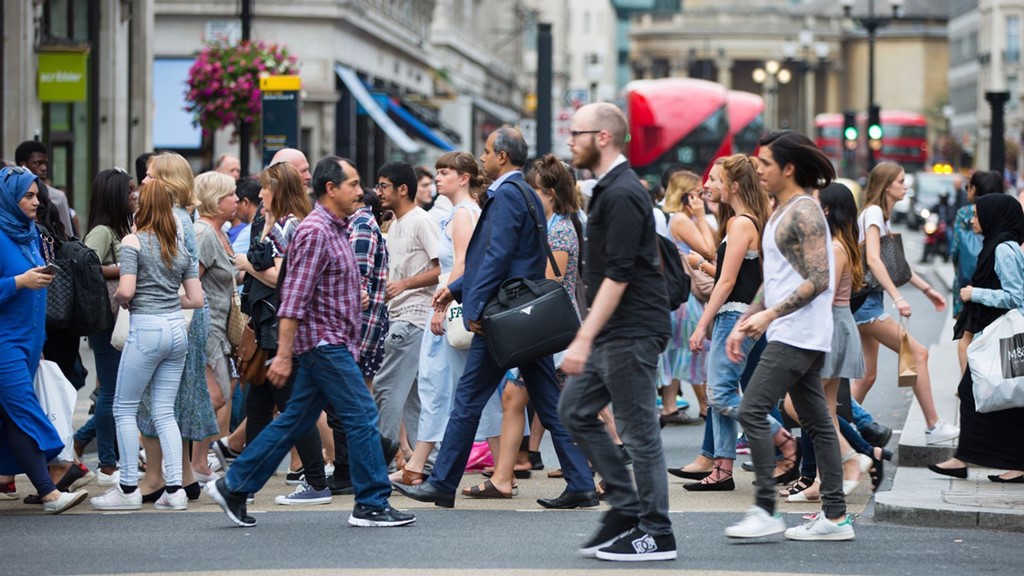
The UK population is set to grow by five million people in ten years, despite death rates being projected to overtake birth rates in that time.
All the forecast population growth is due to migration.
Britain is expected to take in a total of 494,000 more people a year on average over the next decade than the amount who leave, analysis by the Office for National Statistics (ONS) reveals.
There are expected to be about 30,000 more deaths than the number of children born over that time.
Net migration in 2023 was 906,000. However, with recent changes to student visas and less current movement of Ukrainians and other refugees, it’s projected to decline significantly from current high levels – though still remain at a higher rate than any year prior to 2022.
Of course, future global shocks are impossible to predict and could impact migration.
Despite the fall, it would mean the UK having the highest migration rate in Europe by 2029 (excluding countries with populations smaller than 500,000), overtaking the Netherlands, Ireland, and countries that border Ukraine.
Expected population growth shows ‘scale of challenge’ facing Labour government
Next on Politics Hub With Sophy Ridge, we are hearing from our panel about the expected growth in the UK population over the next five years (see previous post).
Jo Tanner, former Conservative adviser, says: “It just shows the scale of the challenge the government has got, around how do you get public services that work, how do you get a system that can actually deal with the numbers?”
There are questions about restriction numbers, planning for industry, planning for public services, and then also delivering those services for the “sheer number of people” that will need them.
Sophy Ridge turns to the question of a potential cap on migration, but Tom Baldwin, former Labour director of communication and Starmer biographer, labels it an “artificial measure” because it is about numbers coming in, rather than who is coming in.
Immigration, he argues, has been “good” for growth and public services.
He concedes that “you do want to be able to pick and choose” and “bring people in with skills”, but adds: “At some point, we’re going to have a more grown-up conversation about immigration, not just pretending it’s a bad thing in all circumstances.”
The number of arrivals will “come down anyway”, but he argues that the government should “make a case for the right kind of immigration” where we need it in order to grow the economy and run public services.
Leave a Reply