The United States attacked Iran on Friday, one day after Tehran struck a commercial vessel in the Strait of Hormuz — an exchange that threatened to unravel the fragile ceasefire between the two countries.
U.S. Central Command said American aircraft hit Iranian missile and drone storage sites, along with coastal radar installations, describing the operation as a “powerful response to yesterday’s attack.” The strikes came after a Singapore-flagged container ship, the Ever Lovely, sustained damage on Thursday from what the U.S. identified as an Iranian one-way attack drone.
President Donald Trump, visibly frustrated by the incident, told reporters at the White House earlier Friday that “I don’t like the fact that they took a shot.” “They shouldn’t be doing that,” he added. Trump later posted on social media that Iran had sent “at least four” one-way attack drones at ships in the strait, with one of them “solidly hit the upper deck of a large and very expensive” cargo ship. “Obviously, this is a foolish violation of our Ceasefire Agreement,” the president wrote.
Iran’s Islamic Revolutionary Guard Corps vowed to respond, claiming in a statement carried by the semi-official ISNA news agency that its forces had “successfully repelled the attack.”
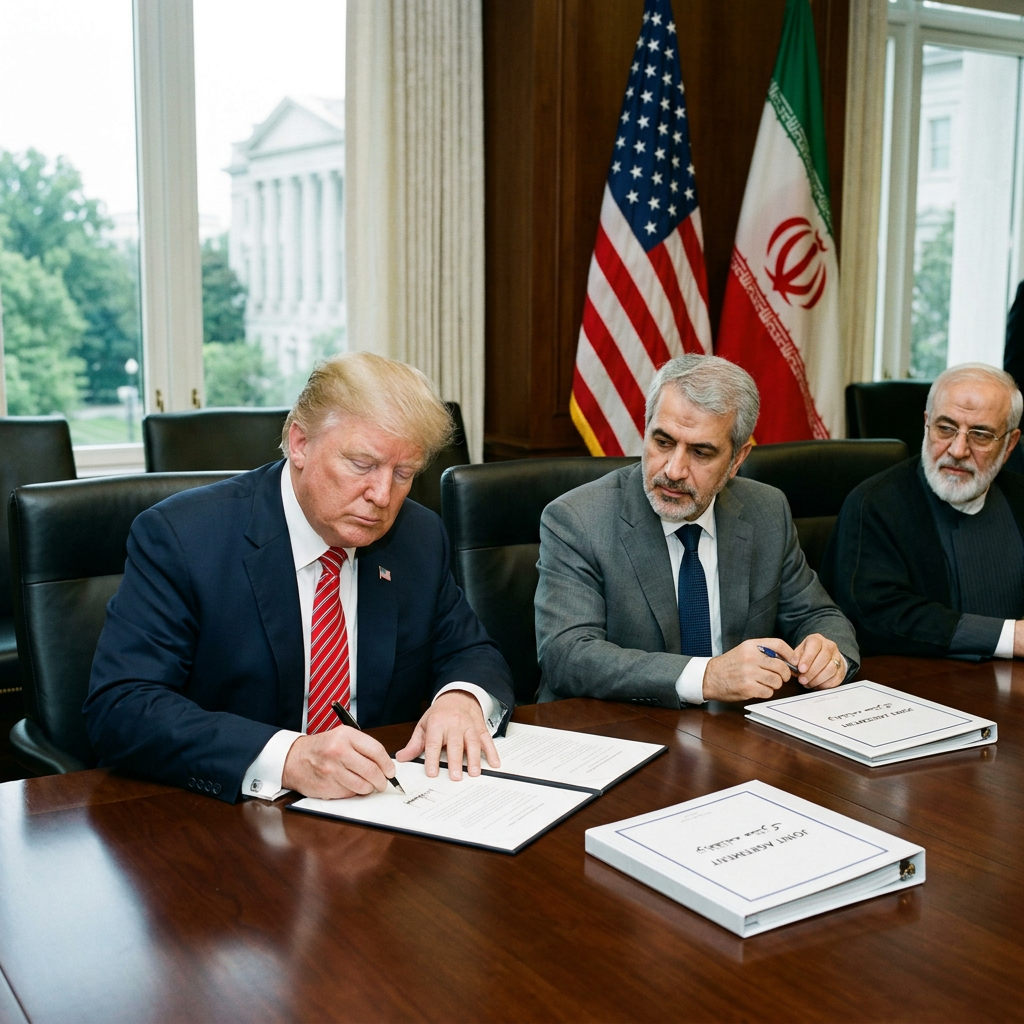
The strikes underscore the fragility of the 60-day truce signed last week, under which Trump had warned that military action would resume if Iran violated the agreement’s terms. The deal was intended to restore the flow of vessels through the strategic waterway and open talks over Iran’s nuclear program in exchange for sanctions relief.
Before announcing the strikes, Trump declined to telegraph his response, telling a reporter who asked whether the U.S. would retaliate: “you’re going to find out.” His decision to use military force signals a willingness to defend freedom of navigation in the strait, even as Iran’s attack demonstrates its continued efforts to assert control over the waterway — a chokepoint it largely shut after the war began on Feb. 28.
The drone attack rattled the confidence of shipowners and crews, though vessels continued to transit through the narrow corridor earlier Friday. Tehran has repeatedly insisted that ships cannot pass Hormuz without its permission, and a handful of tankers turned around early Thursday after reportedly receiving warnings from the Iranian Navy.
Central Command said in its statement Friday that it would “continue to provide safe passage coordination and support to commercial vessels transiting the strait.” “The U.S. military,” the statement added, “remains present and vigilant to ensure all aspects of the agreement with Iran are adhered to, obeyed, and in full force and effect.”
The resumption of strikes now raises questions about how much further progress toward restoring shipping traffic in the energy thoroughfare to pre-war levels will be slowed. Washington and Tehran were able to agree to an interim peace deal last week despite trading strikes in the lead-up to that document being finalized. Yet the two sides continue to clash over key provisions, including whether Iran will impose tolls or other monetary costs on ships seeking to sail through Hormuz.
Leave a Reply