Below are the leading stories making headlines across Britain today.
Starmer Faces Deepening Leadership Crisis
The dominant political story in Britain today is the intensifying pressure on Prime Minister Keir Starmer, whose leadership is now under open challenge following Labour’s disappointing local election performance earlier this month.
Reports across British newspapers indicate that senior Labour figures have become increasingly concerned about Starmer’s ability to lead the party into the next general election. Several MPs are said to be discussing succession options privately, while political tensions inside Downing Street continue to grow. (The Guardian)
One of the most closely watched developments involves Health Secretary Wes Streeting. According to reports, Streeting has been considering resignation and may position himself as a potential leadership challenger. The speculation intensified after accounts emerged of a tense private meeting between him and Starmer at Number 10 Downing Street. (The Guardian)
Although Starmer publicly insisted he would not resign, many newspapers described his authority as weakened. Some Labour MPs have reportedly concluded that the Prime Minister’s political standing may already be beyond repair.
The leadership uncertainty has created comparisons with earlier periods of political instability in Britain, particularly the chaotic final months of former Conservative governments. Analysts note that Labour won a massive parliamentary majority only two years ago, making the current unrest especially striking. (The Guardian)
King Charles Delivers Government Agenda in Parliament
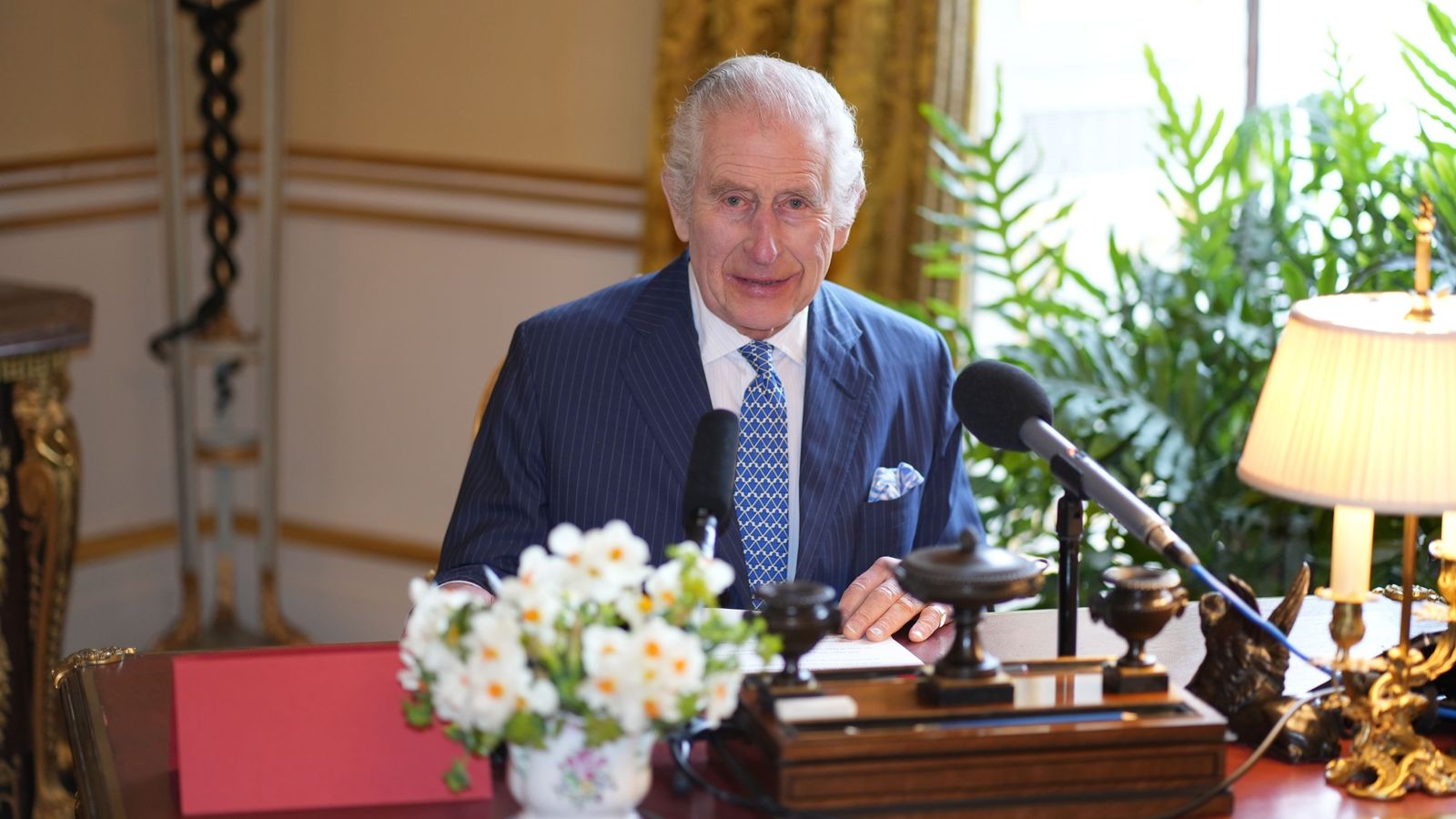
Against the backdrop of political turmoil, King Charles III formally opened Parliament today during the State Opening ceremony in Westminster.
The King’s Speech outlined the government’s proposed legislative agenda for the coming parliamentary session. Major priorities included economic reform, immigration policy, energy infrastructure expansion, housing development, education reform, and stronger cooperation with European partners. (The Guardian)
The ceremony itself retained its traditional grandeur, complete with royal processions, ceremonial guards, and centuries-old parliamentary customs. Yet newspapers noted that the pageantry contrasted sharply with the political anxiety surrounding the government.
Among the most controversial proposals was legislation aimed at tightening immigration and asylum procedures. Human rights organizations reportedly criticized aspects of the plan, arguing that some measures could undermine refugee protections and due process safeguards. (The Guardian)
Another major proposal involves closer regulatory alignment between Britain and the European Union in selected sectors, especially trade and standards. While government officials insist this does not amount to reversing Brexit, critics argue it signals a gradual movement toward deeper European integration. (Reuters)
The King’s Speech also highlighted plans to increase renewable energy production, address late payments affecting small businesses, and invest in social housing projects across the country.
Financial Markets React Nervously to Political Instability
Political uncertainty in Westminster quickly spilled into Britain’s financial markets today.
The British pound weakened against the US dollar as investors reacted cautiously to the possibility of leadership changes at the top of government. Analysts warned that prolonged instability could damage confidence in Britain’s economic direction. (Reuters)
Government borrowing costs also remained elevated, with long-term gilt yields staying near levels not seen in decades. Financial commentators increasingly fear that Britain could face a combination of political fragmentation, slowing growth, and inflationary pressure simultaneously. (Financial Times)
Several newspapers reported that investors are especially worried about the possibility of future governments increasing spending dramatically while public finances remain under strain.
Market attention is also fixed on the Bank of England, which faces difficult decisions over interest rates. Rising global energy prices linked to tensions in the Middle East continue to complicate inflation forecasts, making monetary policy increasingly unpredictable. (Reuters)
The uncertainty contributed to subdued trading on the London Stock Exchange today. While the FTSE 100 index remained relatively stable, analysts described overall investor sentiment as fragile. (Reuters)
Concerns Grow Over Britain’s Economy
Economic concerns remain central to public debate across the UK.
Many newspapers today highlighted fears that British households could face another difficult period of rising living costs later this year. Higher global fuel prices, slower growth forecasts, and uncertainty around government policy are all contributing to public anxiety. (Financial Times)
Britain’s housing sector is also showing signs of strain. Construction company Vistry issued a warning about lower profits and announced plans to slow housebuilding activity due to economic uncertainty linked partly to international conflicts and weaker market conditions. (Reuters)
Economists increasingly warn that Britain’s economy remains vulnerable to external shocks, especially ongoing tensions involving Iran and global energy supply disruptions.
At the same time, critics argue that neither the government nor opposition figures have yet presented a convincing long-term strategy for restoring confidence and accelerating growth.
Defence and National Security Move Up the Agenda
National security has become another major political focus today.
Reports indicate that Britain is exploring stronger multinational defence cooperation initiatives aimed at reducing the costs of military rearmament and strengthening Western security partnerships. (Reuters)
The government also announced new investment through Britain’s National Wealth Fund into the defence sector. Engineering company Rowden received funding support to expand manufacturing operations tied to defence technology production. (Reuters)
The renewed emphasis on defence comes amid continuing geopolitical instability involving both Ukraine and the Middle East. British officials increasingly believe Europe must strengthen domestic defence capabilities as international security threats grow more complex.
Several newspapers observed that defence policy could become a major dividing line in any future Labour leadership contest, with different factions disagreeing over military spending levels and Britain’s strategic priorities.
Brexit Debate Quietly Returns
Although Brexit no longer dominates British politics in the way it once did, today’s legislative discussions revealed that the issue still shapes many policy debates.
Government proposals to align certain British regulations with European Union standards have reignited arguments over sovereignty, trade, and Britain’s post-Brexit identity. (Reuters)
Supporters say closer alignment could reduce trade barriers, improve business confidence, and ease pressure on consumers. Critics, however, accuse the government of slowly reintroducing European influence through secondary legislation and technical agreements.
The debate reflects a broader shift in British politics. While outright campaigns to reverse Brexit remain limited, there is increasing acceptance across parts of government and business that practical cooperation with Europe is economically necessary.
Newspaper commentary today suggested that future UK-EU relations may become one of the defining political battlegrounds of the next few years.
Questions Over Labour’s Future Leadership
As leadership speculation intensifies, newspapers are increasingly discussing possible successors to Starmer.
Besides Wes Streeting, names frequently mentioned include Ed Miliband and Greater Manchester Mayor Andy Burnham. (The Guardian)
Miliband is reportedly willing to enter a leadership race if circumstances change rapidly. Burnham, meanwhile, remains popular with parts of Labour’s grassroots base but faces constitutional complications because he is not currently an MP. (The Guardian)
Political commentators say Labour now appears divided into several competing camps: loyalists backing Starmer, MPs demanding immediate change, and others hoping to delay decisions until a stronger consensus candidate emerges.
The uncertainty has left Westminster in an unusually tense atmosphere, with ministers, advisers, and MPs reportedly preparing for multiple possible political scenarios.
Media Industry Faces Questions Over Journalism Standards
Beyond politics and economics, today also brought discussion about journalism itself.
A report highlighted growing concerns about the identities of several prolific financial and cryptocurrency writers whose work has appeared across multiple publications. Questions have reportedly emerged regarding whether some freelance contributors are genuine individuals or fabricated online personas. (pressgazette.substack.com)
The controversy has intensified wider debates within British media over AI-generated content, newsroom verification standards, and the future credibility of online journalism.
The issue arrives at a time when trust in news organizations is already under pressure globally.
Sport Headlines Also Capture Attention
Although politics dominated today’s front pages, British sports news remained active.
England’s cricket selectors reportedly dropped opener Zak Crawley ahead of the upcoming Test series against New Zealand, signaling the beginning of a broader rebuilding effort after England’s disappointing Ashes performance in Australia. (Reuters)
Football transfer speculation and preparations for the upcoming international tournaments also continued to feature prominently across British sports sections.
Leave a Reply