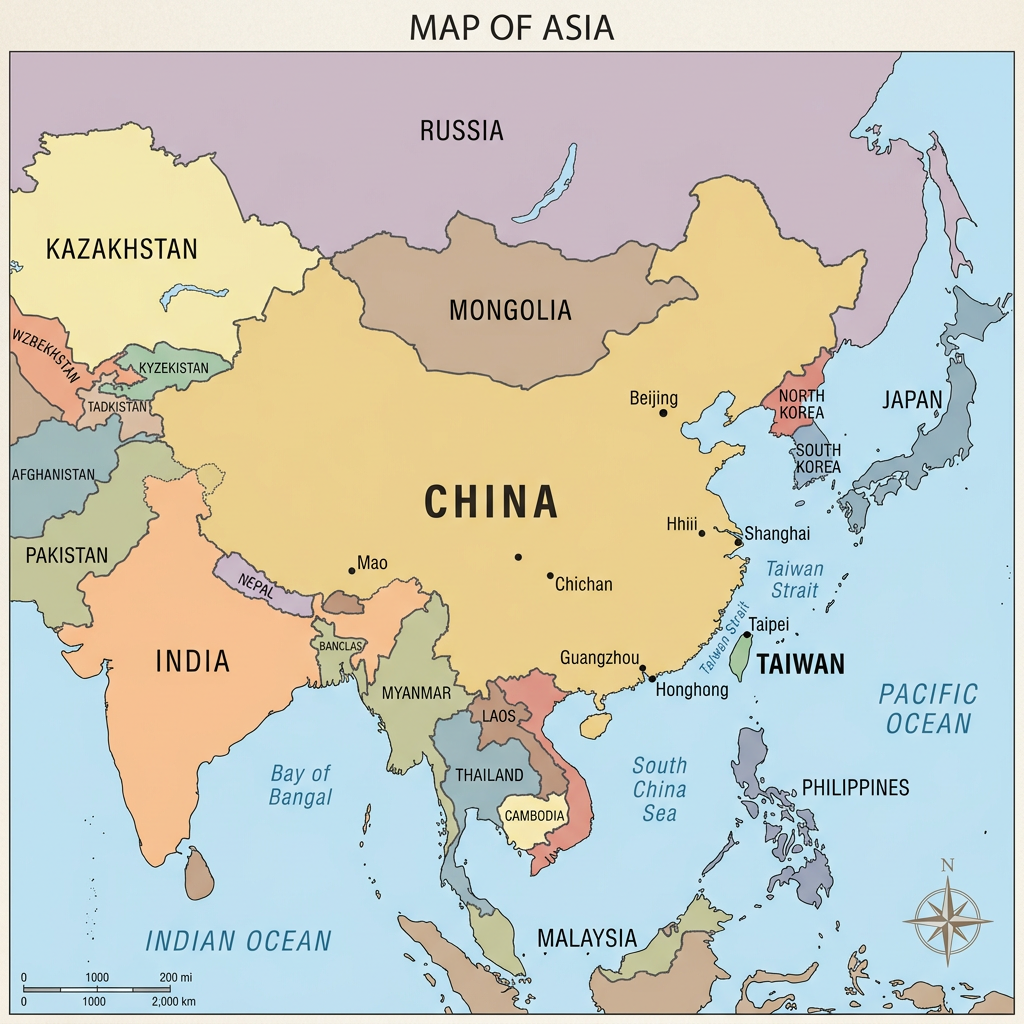
China restricts fuel exports as Asian markets face tighter supplies
China has suspended most fuel exports beyond Hong Kong and Macau during October, creating concerns about tighter supplies across Asian markets.
The move is particularly significant for major fuel importers including Singapore, Malaysia and Australia. Singapore, one of the largest buyers of Chinese gasoline, has reportedly experienced a sharp decline in Chinese supplies, while Asian gasoline refining margins have climbed substantially. Jet fuel exports remain an exception under the current restrictions when shipped to Hong Kong.
The development comes as Asian economies are already dealing with elevated energy costs and uncertainty caused by disruptions to global energy markets.
China accelerates construction at disputed South China Sea reef
New satellite imagery indicates that Chinese construction work at Antelope Reef in the disputed Paracel Islands is progressing rapidly.
The imagery shows extensive land reclamation, foundation work, construction equipment and deliveries to a newly developed wharf. Analysts cited in reports believe the project could eventually include a full-length runway and potentially become an important Chinese military facility.
China has not officially described the project as a military base and has previously referred to civilian purposes such as scientific research, maritime activities and weather monitoring. Vietnam and Taiwan also claim the Paracel Islands.
India sees protests over voter-roll allegations
Hundreds of supporters of India’s youth-led Cockroach Janta Party demonstrated in Mumbai on Friday, demanding the resignation of Election Commission chief Gyanesh Kumar.
The protesters are alleging that voter-roll changes have excluded eligible voters and have called for greater transparency in the electoral process. The Election Commission has rejected allegations of wrongdoing while taking steps concerning the inclusion of newly eligible and previously omitted voters.
Further demonstrations have been announced in several Indian cities, highlighting growing political activity among younger voters.
Indian rupee falls to two-month low
India’s rupee weakened to its lowest level in about two months amid rising global bond yields and higher oil prices.
The currency fell around 0.5% on Thursday to about 96.315 rupees per US dollar. The decline came as foreign portfolio outflows and higher energy costs added pressure to the Indian currency.
The situation is being closely watched because sustained increases in oil prices could raise India’s import bill and contribute to inflationary pressure.
Asian factories benefit from artificial intelligence boom
Manufacturing activity across several major Asian economies remained strong at the end of the third quarter, supported by demand for artificial intelligence-related technology and semiconductors.
South Korea recorded particularly strong factory activity, with its September purchasing managers’ index reaching 53.9, its highest level in roughly five and a half years. Taiwan and India also reported strong manufacturing performances.
However, higher energy and production costs remain a concern. Economists have warned that prolonged disruption to energy supplies could eventually weaken industrial growth across the region.
South Korea and United States discuss major investment plans
South Korea remains at the centre of negotiations with the United States over a major investment package covering energy and other projects.
Seoul has sought clarification over the terms and has indicated that commercial viability should be considered before committing to some projects. The discussions include a proposed investment linked to an Alaska liquefied natural gas project.
The negotiations come amid broader efforts by Washington and Seoul to deepen their economic relationship while addressing trade and investment issues.
Japan tightens permanent residency rules for foreigners
Japan is introducing tighter requirements for foreigners seeking permanent residency as the government reviews its immigration and residency policies.
The change is part of a broader effort to strengthen oversight of foreign residents while Japan continues to rely on overseas workers to address labour shortages.
Japan is simultaneously dealing with increased encounters between people and bears, prompting authorities and local communities to examine measures beyond traditional culling.
Indonesia announces cabinet changes
Indonesian President Prabowo Subianto has appointed new ministers for foreign affairs and industry as part of a cabinet reshuffle.
The changes come less than three weeks after the president removed Finance Minister Purbaya Yudhi Sadewa and replaced him with his deputy. The latest appointments are being watched for their potential impact on Indonesia’s economic and foreign-policy direction.
Philippines’ GCash parent prices major IPO
Mynt, the parent company of Philippine mobile-wallet service GCash, has priced its initial public offering at 6.60 pesos per share, valuing the offering at approximately 53 billion pesos ($844.7 million).
The listing is expected to become one of the largest IPOs in Philippine history, with shares scheduled to begin trading on October 20. The company plans to use the proceeds to support fintech expansion and product development.
Philippines faces pressure over rising transport costs
Jeepney drivers in the Philippines are facing growing financial pressure as fuel and operating costs rise faster than government assistance.
The issue has renewed debate over the sustainability of public transportation and the financial challenges faced by drivers who depend on jeepneys for their livelihoods.
Afghanistan-Pakistan tensions escalate
Relations between Afghanistan and Pakistan remain tense following deadly Pakistani airstrikes in Afghanistan.
Afghan authorities said the strikes killed women and children, while Pakistan said it had targeted fighters and reported that 22 militants were killed. The allegations from the two sides differ significantly, and the incident adds to longstanding tensions along their border.
Iran remains a major regional security concern
The conflict involving Iran continues to influence security and energy developments across Asia.
Iranian officials and sources say Tehran is preparing for a potentially broader response if the United States resumes large-scale attacks, while diplomatic efforts continue. The uncertainty is particularly significant for Asian economies because many depend heavily on energy supplies transported through Middle Eastern shipping routes.
Asian financial markets under pressure
Asian shares declined on Friday as investors dealt with sharp movements in bond and currency markets, while elevated oil prices continued to fuel inflation concerns.
Markets are also awaiting important US employment data, which could influence expectations about US interest-rate policy. Changes in US rates and energy prices have significant implications for Asian currencies, stock markets and borrowing costs.
Singapore explores opportunities in fusion energy
Singapore is examining opportunities to participate in the developing global fusion-energy industry.
The country is exploring ways to build expertise and potentially establish a role in a sector that could become important to future energy production. The initiative comes as governments and private companies around the world increase investment in alternative energy technologies.
Asia faces a mixture of economic and security challenges
The major stories across Asia on October 2 are dominated by energy security, China’s expanding regional activities, economic pressure and political developments.
China’s fuel-export restrictions are affecting regional energy markets, while construction at Antelope Reef is attracting attention because of its potential security implications. India is experiencing renewed political demonstrations, South Korea and other technology-exporting economies are benefiting from strong AI demand, and tensions involving Afghanistan, Pakistan and Iran continue to influence the region’s security environment.
At the same time, major Asian economies are attempting to manage higher energy costs while maintaining industrial growth and attracting investment.
Leave a Reply