Good evening from Meziesblog. Here is today’s summary of the most pressing news from Nigerian newspapers for Friday, May 22, 2026.
From the high-stakes political maneuvers of the All Progressives Congress (APC) governorship primaries to landmark judicial rulings that have reshaped the electoral calendar, today’s headlines paint a picture of a nation at a critical crossroads.
Politics
APC Governorship Primaries: Incumbent Governors Coast to Victory Amidst Delays
The political firmament of the nation was ablaze yesterday as the ruling All Progressives Congress (APC) conducted its much-anticipated governorship primaries across the 36 states of the federation. In a largely predictable outcome, incumbent governors and consensus-backed candidates secured a decisive victory in 25 states. Winners were declared in political powerhouses such as Ogun, Kebbi, Katsina, Kaduna, Delta, Enugu, and Rivers, reinforcing the power of incumbency and high-level political horse-trading. The APC governorship tickets were clinched in Oyo, Benue, Sokoto, Gombe, Yobe, Niger, Borno, Ebonyi, Abia, Jigawa, Taraba, Zamfara, Plateau, Cross River, Akwa Ibom, Adamawa, Lagos, and Kano among others.
However, the process was not without its dramatic hitches. The exercises in Kwara and Bauchi states were thrown into uncertainty after the APC National Working Committee (NWC) postponed the contests amid rising tensions and a failure to secure a consensus arrangement. The primaries in Kwara and Bauchi have been rescheduled, alongside the state assembly polls in Zamfara. Additionally, in Nasarawa State, the late arrival of electoral materials forced voters to return home, with the process expected to be concluded today.
As the party looks ahead to the 2027 presidential election, it has also finalized its structure for the upcoming presidential primary. Former Senate President Pius Anyim has been appointed to chair the presidential primary committee, while former Katsina State Governor Aminu Masari will lead the appeal panel.
Court Nullifies INEC’s 2027 Election Timetable
In a ruling with seismic implications for the 2027 general elections, a Federal High Court in Abuja has nullified the Revised Timetable and Schedule of Activities issued by the Independent National Electoral Commission (INEC). Delivering the judgement on Thursday, Justice M.G. Umar held that INEC lacked the statutory power to prescribe the timeframe within which political parties must conduct their primaries and submit their candidates‘ names.
The court ruled that Section 29(1) of the Electoral Act 2026 grants political parties up to 120 days before an election to submit the personal particulars of their candidates. Consequently, INEC’s earlier directive for parties to submit their membership registers by May 10 was deemed unlawful. This ruling effectively resets the electoral calendar, giving registered political parties until September 2026 to submit updated membership registers to the commission. The African Democratic Congress (ADC) has hailed the judgement, stating that the party has been vindicated in its legal challenge against the commission’s directives.
Presidency Debunks Constitutional Amendment Rumors
Amidst the political turbulence, the Presidency has stepped forward to quell swirling rumors regarding potential constitutional amendments. President Bola Tinubu’s Special Adviser on Information and Strategy, Bayo Onanuga, issued a firm denial that the President plans to change the country’s name from Nigeria to the “United States of Nigeria” or abolish Sharia law in the northern region.
Onanuga described the reports, which circulated widely on social media, as a ploy by desperate politicians to stir a political crisis and heat up the polity ahead of the 2027 elections. He emphasized that the process of amending the constitution is a tedious one, requiring a two-thirds majority in both chambers of the National Assembly and the concurrence of 24 State Houses of Assembly, making it impossible for the President to act unilaterally.
Tinubu Appoints 39-Year-Old Professor as New JAMB Registrar
In a move that has generated significant discussion within academic and policy circles, President Bola Tinubu has approved the appointment of Professor Segun Aina as the new Registrar of the Joint Admissions and Matriculation Board (JAMB). At just 39 years old, the professor of computer engineering from Obafemi Awolowo University (OAU) brings a youthful vigor to the helm of the nation’s examination body. He is set to replace Professor Is-haq Oloyede, whose tenure will conclude on July 31, 2026. Professor Aina’s appointment signals a potential shift towards technological innovation and modernization within the board as it prepares for the next examination cycle.
Economy & Business
NNPC Weighs Chinese Majority Stake in Refineries
The Nigerian National Petroleum Company (NNPC) Limited is reportedly considering an equity partnership model similar to the Nigeria LNG (NLNG) structure, which could potentially hand Chinese investors a majority stake—approximately 51%—in the Port Harcourt and Warri refineries. This development comes as the Dangote Refinery and fuel marketers have resumed hostilities over the issuance of new import licenses by the federal government, signaling a potential resurgence of the long-standing rivalry between the domestic producer and traditional importers.
The move is seen as a strategic effort to attract the massive capital and technical expertise required to bring the nation’s long-moribund refineries back to full capacity. However, it also raises questions about national control over strategic assets, a debate that is likely to intensify as the details of the proposed partnership are made public.
Navy Attributes Oil Theft to Weak Community-IOC Relations
Meanwhile, in the Niger Delta, the Nigerian Navy has diagnosed the persistent plague of crude oil theft and pipeline vandalism, attributing it directly to the weak relationships between host communities and International Oil Companies (IOCs). Speaking during a press briefing to mark the Navy’s 70th anniversary in Abuja, Chief of Policy and Plans, Akinola Olodude, warned that unresolved disputes around oil facilities continue to create opportunities for criminal networks operating across Nigeria’s waterways.
Despite these challenges, Olodude declared that the Navy’s sustained crackdown is yielding significant results. Nigeria’s average crude oil production has climbed to a five-year high, rising from approximately 1.25 million barrels per day in January 2023 to about 1.71 million barrels per day as of April 2026. The Navy has intensified its crackdown through expanded surveillance operations, deployment of drones, and advanced maritime platforms, aiming to hit an interim target of 2.5 million barrels daily by 2027 and three million by 2030.
Faltering Sugar Tax Fails to Curb Consumption
A new report has cast doubt on the efficacy of Nigeria’s public health fiscal policy. Corporate Accountability and Public Participation Africa (CAPPA) has declared that Nigeria’s current N10 per litre excise duty on Sugar-Sweetened Beverages (SSB) has failed to reduce harmful sugary drink consumption or discourage unhealthy industry practices. CAPPA described the tax, introduced under the Finance Act 2021, as too weak to influence consumer behavior and warned that the nation is facing a growing public health crisis driven by excessive intake of sweetened beverages.
The organization launched a documentary titled ’Sweet Poison‘ in Lagos to highlight the link between sugary drinks and rising cases of non-communicable diseases such as Type 2 diabetes, hypertension, and obesity. CAPPA is advocating for a more aggressive tax structure, recommending at least a 20 percent excise tax on sugary drinks, with a preferred target of 50 percent of the final retail price, and that a portion of the revenue be dedicated to healthcare interventions.
Concerns Over $500m Airbus MRO Facility
Economic analysts have raised red flags over the proposed $500 million Airbus Maintenance, Repair, and Overhaul (MRO) facility championed by President Bola Tinubu. According to a report in BusinessDay, concerns are mounting over the economic viability of the project, as industry stakeholders point to a critical deficit in the aircraft volume required to sustain such a capital-intensive asset. Currently, Nigeria counts only two active Airbus aircraft within its borders, leading experts to question the soundness of the investment, despite the announcement that European aerospace giant Airbus has proposed establishing maintenance and hangar facilities in the country.
Security
DHQ Links Oyo Kidnap to Dislodged JAS Terrorists
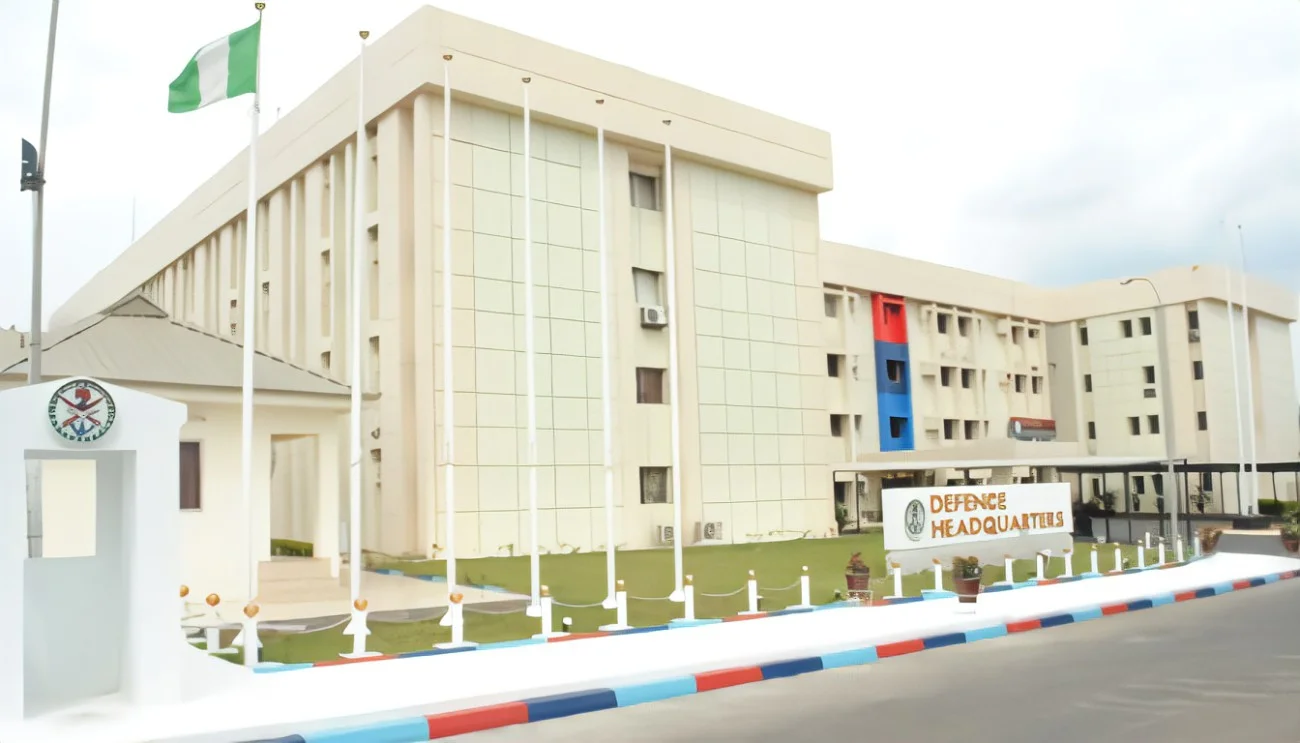
The Defence Headquarters (DHQ) has provided clarity on the recent kidnapping incident in Oyo State, revealing that the attack was perpetrated by members of the Jama’atu Ahlis Sunna Lidda’awati wal-Jihad (JAS) terrorist group who have been dislodged from other parts of the country. The military high command, in a statement signed by the Director of Defence Media Operations, Maj Gen Michael Onoja, dismissed what it termed “mischievous and misleading publications” surrounding the classification of the attackers, confirming that sustained military offensives across the nation have displaced these elements, forcing them to seek refuge in new territories.
This revelation has raised fresh concerns regarding the movement of insurgent elements beyond the traditional North-East operational theater. As the community in Oyo State prepares to bury the slain school teacher murdered by the suspected kidnappers, family members and residents are demanding justice. The slain teacher is scheduled to be laid to rest today.
NLC Urges Government to Tackle Security Challenges Immediately
Amidst the escalating violence, the Nigeria Labour Congress (NLC) has issued a passionate plea to governments at all levels and security agencies to urgently tackle the country’s mounting security challenges. The labour union’s call to action reflects growing public frustration with the inability of security forces to protect lives and property, a sentiment that is rapidly becoming a central theme of public discourse. The Defence Minister, General Christopher Gwabin Musa (Rtd.), has maintained that Nigeria’s security and national outlook are gradually improving under President Tinubu‘s leadership, but the NLC’s statement suggests that a significant gap remains between government assurances and the reality on the ground.
Governance & Society
NEC Adopts 112 as National Emergency Number
In a significant step to strengthen coordinated response to disasters and security incidents, the National Economic Council (NEC) has approved the adoption of ’112‘ as Nigeria’s unified national emergency number. The decision was taken at the 157th NEC meeting held virtually and chaired by Vice President Kashim Shettima. The implementation of a single, easy-to-remember emergency number is expected to streamline the response mechanism for citizens in distress, finally harmonizing the various emergency lines that have operated in silos across different states and agencies.
IGP Passes Out Over 1,000 New Constables
The Inspector-General of Police (IGP), Olatunji Rilwan Disu, has passed out 1,068 newly trained constables in Akwa Ibom State. The constables underwent intensive firearms and tactical training conducted in collaboration with the Akwa Ibom State Government to enhance crime prevention and community policing at the grassroots. The IGP reaffirmed the Force’s commitment to strengthening operational capacity and discipline nationwide as part of a broader strategy to enhance internal security.
Infrastructure: FEC Approves Three Major Rail Projects
On the infrastructure front, the Federal Executive Council (FEC), presided over by President Bola Tinubu on Thursday, approved contracts for three major rail projects aimed at boosting economic growth. The Minister of Finance and Coordinating Minister of the Economy, Mr Taiwo Oyedele, disclosed that the projects will be implemented in Lagos, Kano, and Kaduna, signaling a major push to modernize the country’s transport network and facilitate the movement of goods and people across key commercial axes.
Leave a Reply