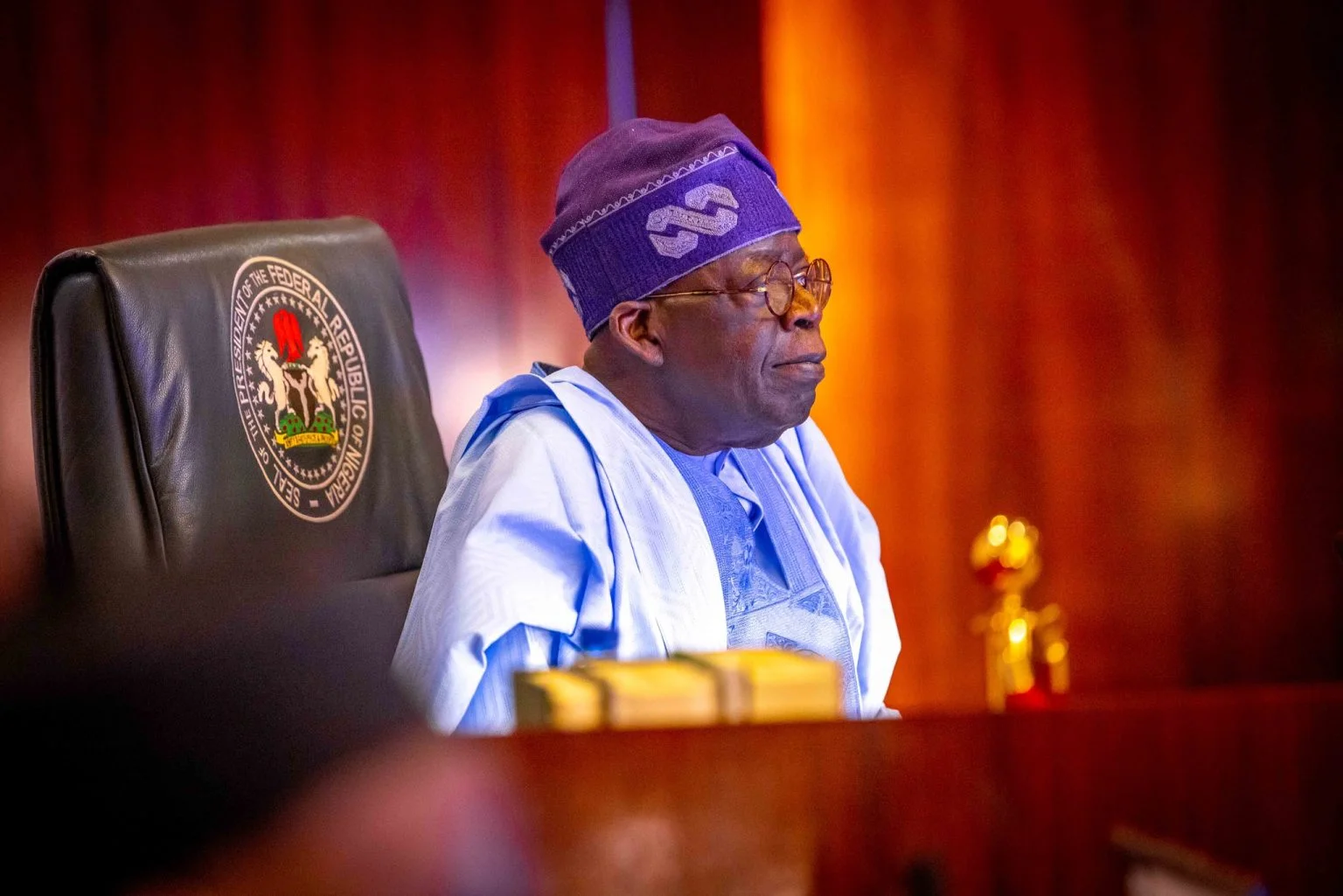
Nigerian President Bola Tinubu said on Wednesday that the African country’s democratic journey had become “steadied” since breaking the yoke of dreadful military rule in 1999 and paving the way for successive civilian administrations.
Delivering a national broadcast commemorating the 25th anniversary of unbroken democracy in Nigeria Wednesday morning, Tinubu described the West African nation as “the most populous democracy on African soil,” noting that it has also become “the beacon of democratic self-determination for the black race and one of the largest democracies in the world.”
Nigeria exited military rule on May 29, 1999. “Democracy Day” is a national public holiday in the country to commemorate the restoration of democracy in 1999, celebrated on June 12 in remembrance of the 1993 general elections adjudged as the freest and fairest in the nation’s history. Until 2018, Democracy Day was celebrated annually on May 29 — a tradition held annually, beginning in 2000.
“Democracy is neither a foreign nor abstract concept devoid of real-life meaning for us,” the Nigerian leader said in his televised address. “This change stands as a pivotal moment in human history. From this change, we shall never turn, nor shall the annals of mankind’s progress forget the sublime meaning of this great moment. Today, 25 years later, we celebrate the silver anniversary of our journey in democracy.”
While elections attract dramatic attention, they make up only one aspect of democracy, according to Tinubu. He noted that despite the steep and multiple challenges since he became president over a year ago, he was grateful to lead Nigeria at this moment in history and point in the democratic journey.
“I come before you also to declare that our most important work remains before us. This real test has never been whether we would rise to challenge the slings of misfortune and grievous pain of dictatorship. The real test is whether we shall lower our guards as the shadow of despotism and its evident physical danger fade,” he said.
While acknowledging the economic difficulties Nigerians are currently facing, the president said the economy had been in desperate need of reform for decades and had been unbalanced because it was built on the flawed foundation of over-reliance on revenues from oil, its mainstay, adding that the reforms initiated by his administration were intended to create a stronger, better foundation for future growth.
“There is no doubt the reforms have occasioned hardship. Yet, they are necessary repairs required to fix the economy over the long run so that everyone has access to economic opportunity, fair pay, and compensation for his endeavor and labor,” he said.
Leave a Reply