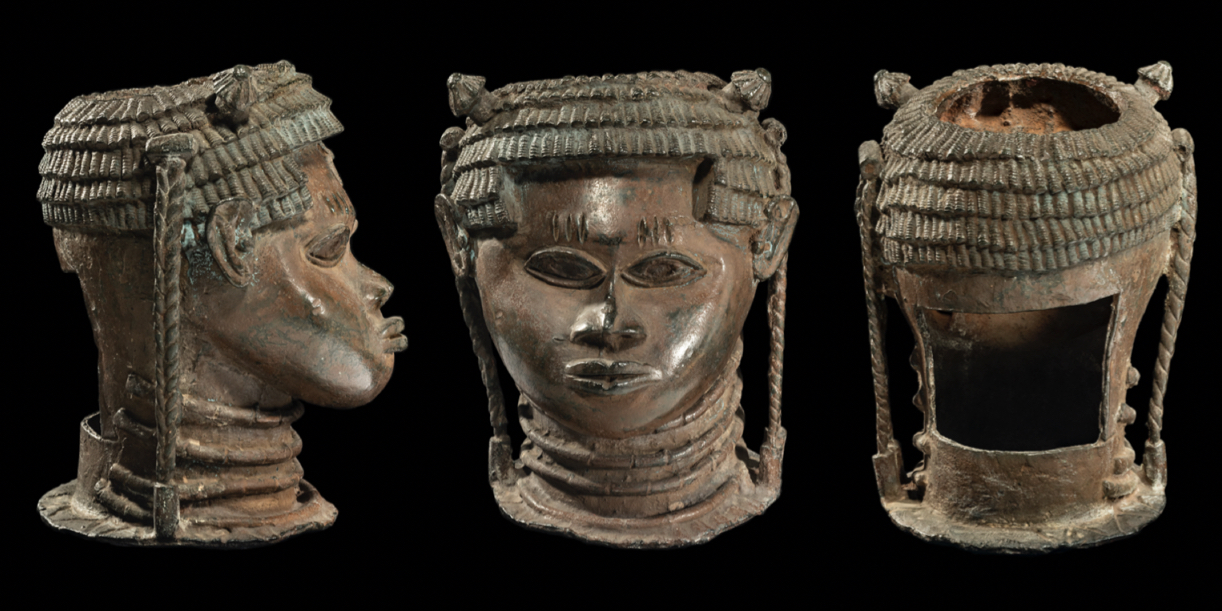
Nigeria’s longstanding campaign to recover its looted cultural heritage gained significant momentum on Monday, as 18 priceless artefacts from the ancient Benin Kingdom were returned by Swiss museums—a move that reflects a growing global commitment to addressing historical injustices and restoring Africa’s cultural legacy.
The returned objects are among the renowned “Benin bronzes,” which were plundered from the royal court of Benin during the British invasion of 1897. The handover ceremony, held at the National Museum in Lagos, was officiated by the National Commission for Museums and Monuments on behalf of the Federal Government. In addition to the museum returns, the Swiss government also handed over five artefacts that had been seized within its borders.
During the restitution event, Federal Councillor Elisabeth Baume-Schneider and Nigeria’s Minister of Art, Culture, Tourism and the Creative Economy, Hannatu Musa Musawa, signed a bilateral agreement governing the transfer of cultural property. The accord reaffirms both nations’ dedication to combating the illicit trade in cultural items and safeguarding heritage.
Fourteen of the artefacts originate from the Ethnographic Museum at the University of Zurich, two from Museum Rietberg Zurich, and two from the Musée d’Ethnographie de Genève. The restitution follows several years of collaborative provenance research conducted under the Benin Initiative Switzerland, which confirmed that the objects were looted during the British punitive expedition of 1897.
The ceremony also saw the return of a bronze bracelet and four archaeological monoliths from Nigeria’s Niger Delta region, which had been confiscated in Switzerland through criminal proceedings and subsequently transferred to Nigerian authorities.
The newly signed agreement establishes a legal framework for cooperation aimed at preventing the illicit trafficking of cultural property and facilitating future returns. The restitution effort is part of a broader endeavour to redress historical wrongs while laying the groundwork for a lasting cultural partnership between the two countries.
The returned artefacts hold deep significance as part of the historical memory, spiritual life, artistic heritage, and identity of the communities from which they were taken. Their return will enable Nigerian institutions, researchers, artists, students, and the wider public to study, preserve, and interpret this heritage on Nigeria’s own terms. While some of the artefacts will be placed on display at the National Museum in Lagos, the majority will be repatriated to their original home in Edo State.
The ceremony was also attended by NCMM Director General Olugbile Holloway, representatives of the Swiss Federal Office of Culture, and the directors of the three Swiss museums involved in the restitution: Alice Hertzog of the Ethnographic Museum at the University of Zurich, Annette Bhagwati of Museum Rietberg Zurich, and Carine Durand of the Musée d’Ethnographie de Genève.
Leave a Reply