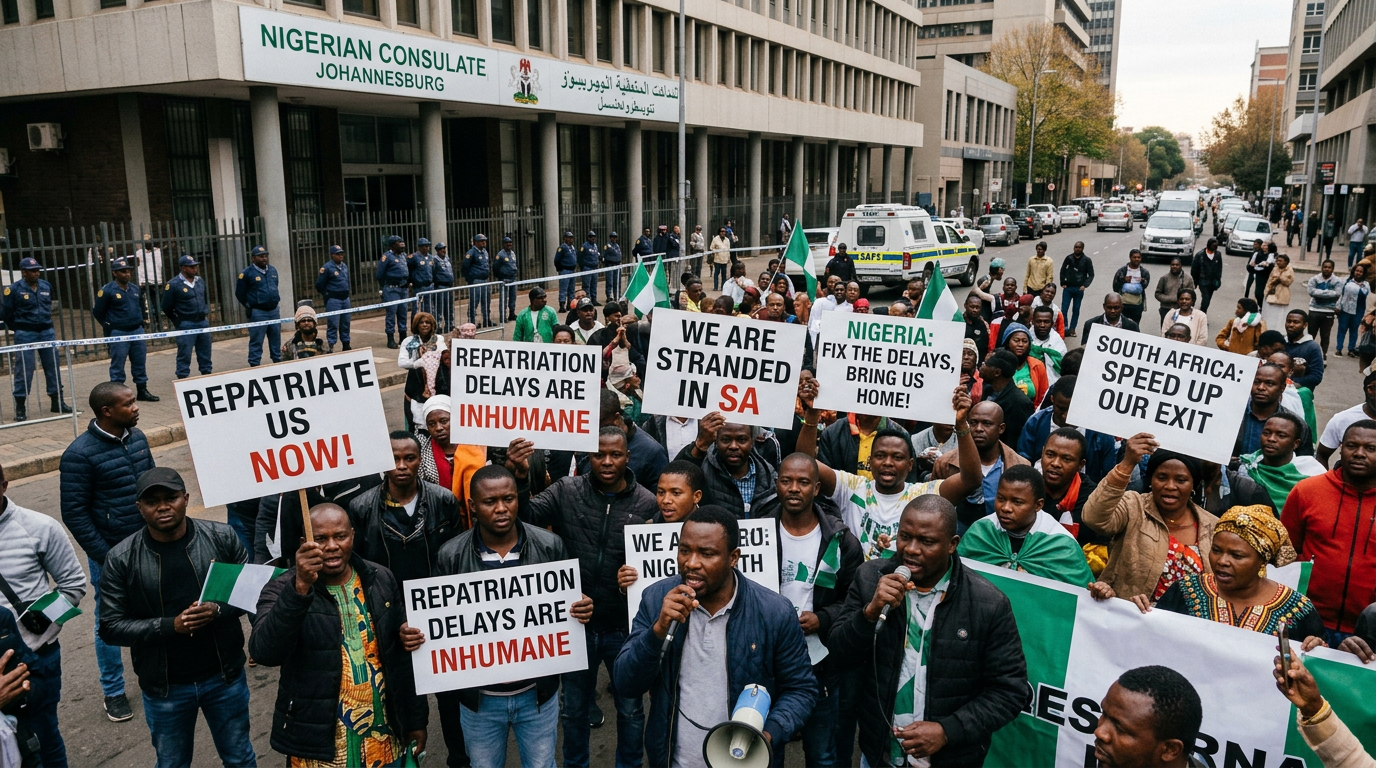
The Nigerian Citizens Association South Africa is demanding a thorough investigation into the killing of a 58-year-old cleric shot multiple times at his Johannesburg residence, as Nigeria’s ambassador-designate warns that the country’s “patience is wearing thin” over the killings of its nationals.
Johannesburg — The Nigerian community in South Africa is demanding justice following the killing of a Nigerian bishop who was found dead in his apartment in Johannesburg.
Bishop Taiwo Michael Fakunle, 58, was shot dead at his residence in Kensington, Johannesburg, on Friday, September 4, 2026, according to the Nigerian Citizens Association South Africa (NICASA). Fakunle, an indigene of Iye in Ilejemeje Local Government Area of Ekiti State, was reportedly attacked by two assailants who gained access to his home and opened fire, shooting him more than seven times.
NICASA Demands Thorough Investigation
In a statement signed by its National President, Rev. Frank Onyekwelu, NICASA described the killing as “a horrific and senseless act of violence” and condemned it in the strongest terms. “Enough is enough,” the association said, expressing concern over what it described as the continued loss of Nigerian lives through violent crime in South Africa.
NICASA said it had brought the incident to the attention of the Consulate General of Nigeria in Johannesburg, while a murder case had also been opened at Jeppe Police Station. The association called on the South African Police Service and other relevant authorities to investigate the killing with urgency, professionalism and transparency.
“We demand a thorough and credible investigation that will establish exactly what happened, identify all those responsible, apprehend the perpetrators and ensure that they are brought before the courts to face the full might of the law,” NICASA said.
The association also urged Nigerian diplomatic authorities in South Africa to continue engaging with their South African counterparts and monitor the investigation until those responsible are brought to justice. “The family deserves answers. The Nigerian community deserves justice. Bishop Taiwo deserves justice,” it said.
NICASA appealed to the South African authorities not to allow the case to go cold, warning against allowing the killing of another Nigerian to become a forgotten case. “Please do not allow this case to go cold. Do not allow another Nigerian life lost to violence to become another forgotten file. We expect accountability and justice,” the association said.
While expressing condolences to Fakunle’s family, friends, church community, fellow Ekiti indigenes and the wider Nigerian community in South Africa, NICASA urged Nigerians to remain calm and law-abiding. It cautioned members of the Nigerian community against taking the law into their own hands, stressing that the pursuit of justice must be conducted through legitimate and lawful channels.
A Second Killing the Following Day
The bishop’s killing was followed by the death of another Nigerian, James Uchechukwu Nwankwo, on September 5 in an incident involving officers of the South African Police Service (SAPS). Nwankwo reportedly died as a consequence of what has been described as “gruesome interrogation techniques” by South African police.
Fani-Kayode Warns: ‘Our Patience Is Wearing Thin’
Nigeria’s ambassador-designate to South Africa, Femi Fani-Kayode, has condemned the killings and warned that Nigeria’s patience is running thin. Fani-Kayode said he was “mortified and deeply shocked” by Fakunle’s death, alleging that the bishop had received threats before his attackers went to his residence.
Fani-Kayode said Fakunle and Nwankwo were the seventh and eighth Nigerians killed in South Africa in 2026. According to him, four of the eight Nigerians were allegedly killed by South African police officers. He further claimed that more than 100 Nigerians had been killed in South Africa between 2022 and September 2026, with over 30 allegedly killed by personnel of the SAPS and the South African Defence Force.
“What is most disturbing is the fact that in spite of our constant expressions of concern about this disturbing state of affairs not one person has been arrested, detained, prosecuted or brought to justice for ANY of these heinous crimes,” he said. “This is unacceptable”.
Fani-Kayode called on the South African Government to do more to protect Nigerians living in the country and ensure that those behind the killings are brought to justice. “We call on the South African Government to do far more to protect our nationals and to bring those that have killed or are planning to kill them to justice,” he said. “No-one deserves to be targeted and murdered simply because they are Nigerian”.
The ambassador-designate also accused some South African non-governmental organisations of being “brazenly racist, xenophobic and Afrophobic” and alleged that some of the groups had threatened African nationals who failed to comply with their demands. He urged the South African Government to protect Nigerians from such organisations and to apply the full weight of the law against them.
“Whilst we seek to establish stronger and deeper ties with the South African Government one thing remains clear,” he said. “If this vicious cycle of discrimination against and killing of our nationals does not stop there will be consequences. Simply put our patience is wearing thin”.
Fani-Kayode noted that South Africans are not targeted and killed in Nigeria by Nigerian people or security forces, adding that the least the South African Government can do is to reciprocate this gesture, protect Nigerian nationals and address their legitimate concerns.
A Pattern of Violence
The killings have renewed concerns over the safety of Nigerians and other African nationals in South Africa. A protest by the “March and March” and Operation Dudula movements in Johannesburg on June 30, 2026, saw anti-immigrant groups set an unofficial deadline for undocumented foreign nationals to leave the country, pushing thousands to flee. Fani-Kayode also noted that yet another deadline had been issued to African nationals, including Nigerians, to leave South Africa by September 30, 2026, by what he described as “brazenly racist, xenophobic and Afrophobic South African Non-Governmental Organisations”.
What Happens Next
NICASA said it would continue to engage relevant authorities and closely monitor the investigation. The case remains under investigation by the South African Police Service, with a murder case opened at Jeppe Police Station. The Nigerian Consulate General in Johannesburg has condemned the killing and is urging South African authorities to act.
The Nigerian National Assembly has also suspended all parliamentary visits to South Africa and directed lawmakers to stop attending meetings hosted by South African institutions following the attacks.
For now, the Nigerian community in South Africa awaits answers — and justice — for Bishop Fakunle and the growing list of Nigerians killed in the country.
Leave a Reply