1. Government Tightens Ebola Screening at Entry Points
The Federal Government has ordered stricter screening and surveillance at Nigeria’s entry points following concerns about breaches of established Ebola prevention protocols. Security agencies, health institutions and other relevant authorities have been directed to strengthen compliance and report any actual or attempted violations.
The move follows Nigeria’s confirmation of an imported case of Bundibugyo virus disease, a rare form of Ebola. Health authorities are investigating the circumstances surrounding the infection and monitoring people who may have been exposed.
Uganda’s health authorities have said the infected traveller showed no symptoms when she left the country. Nigerian officials are continuing investigations into the circumstances of the case, including its possible connection with infections elsewhere in Africa.
The situation has renewed concerns about airport screening, early diagnosis and the readiness of healthcare facilities to identify suspected infections. The World Health Organization has also begun a clinical trial of vaccine candidates against the Bundibugyo strain in the Democratic Republic of Congo, where the outbreak has been particularly severe.
Nigeria’s immediate priority is to strengthen disease surveillance, trace contacts and prevent further transmission.
2. Tinubu’s 2027 Campaign Flag-Off Draws Attention to Kaduna
Preparations for the All Progressives Congress (APC) presidential campaign flag-off have intensified in Kaduna, where President Bola Tinubu is expected to lead party activities on Saturday.
Security personnel have reportedly been deployed around major roads, public spaces and the Kaduna Township Stadium, the venue for the event. Campaign posters and billboards have also appeared across parts of the city as the party prepares to mobilise supporters ahead of the 2027 general elections.
The rally comes amid competing political narratives over the administration’s record on security, economic reforms and the cost of living. Supporters of the President argue that the reforms are intended to strengthen Nigeria’s economy over the long term, while opposition figures insist that Nigerians are experiencing severe hardship.
The campaign launch is therefore expected to serve not only as a demonstration of the APC’s political organisation but also as an opportunity for the party to defend its policies and persuade voters that the administration deserves another term.
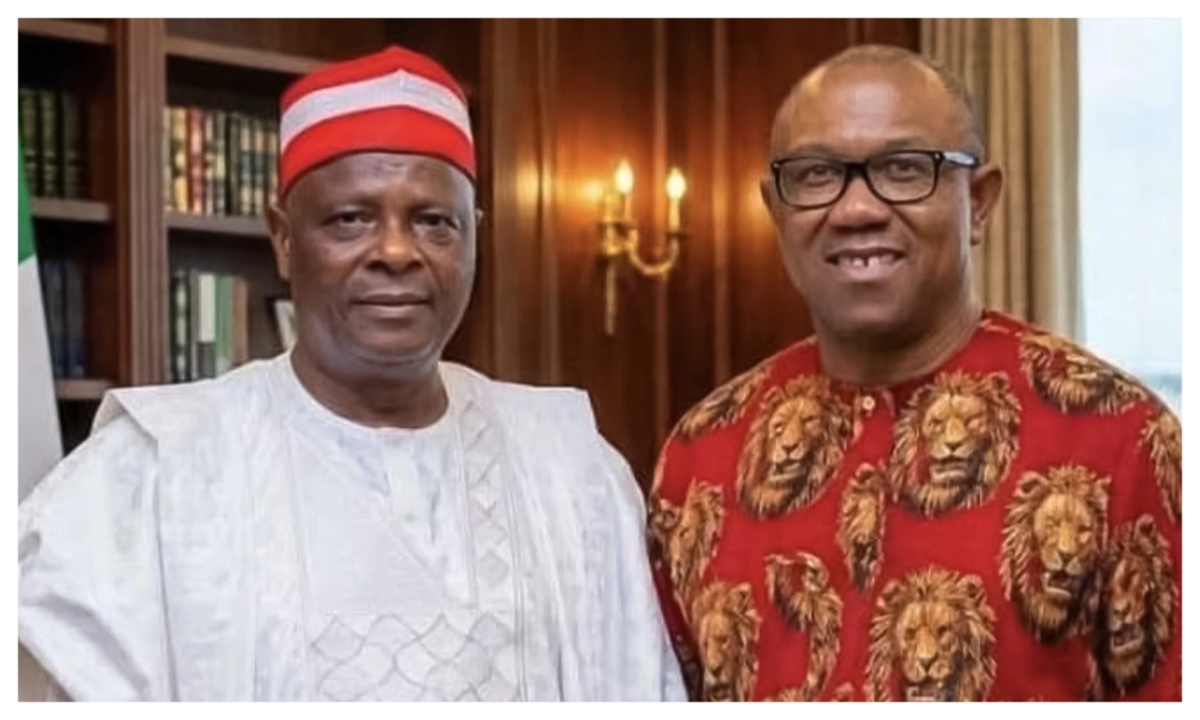
3. Peter Obi and Rabiu Kwankwaso Mobilise Support Ahead of 2027
The emerging political alliance between Peter Obi and Rabiu Musa Kwankwaso is attracting attention as opposition figures begin positioning themselves for the next presidential election.
Reports indicate that Obi and Kwankwaso are expected to participate in a solidarity march in Uyo, Akwa Ibom State, as supporters of the Nigeria Democratic Congress (NDC) seek to build momentum around their political platform.
Kwankwaso has also said the two leaders have agreed to harmonise their visions and policies for Nigeria. Their stated priorities include tackling insecurity, reducing poverty, improving education and strengthening agriculture.
The alliance faces the challenge of turning public enthusiasm into a nationwide political organisation capable of competing against established parties. Its prospects will depend on its ability to attract supporters across regional, ethnic and political boundaries while presenting credible solutions to Nigeria’s economic and security problems.
The growing activity surrounding the alliance reflects the early intensification of political competition ahead of the 2027 elections.
4. Petrol Price Increase Looms as Global Crude Oil Prices Rise
Nigerian motorists and households face the possibility of another increase in petrol prices following a sharp rise in international crude oil prices.
Brent crude reportedly climbed to approximately $115.18 per barrel on Friday, October 23, amid escalating tensions in the Middle East and fears of disruptions to global oil supplies.
The increase could put additional pressure on domestic fuel prices because crude oil costs influence the economics of refining and the replacement costs faced by fuel marketers. Reports on Saturday indicated that the Dangote Petroleum Refinery and other depot operators were selling petrol at around ₦1,350 per litre at their gantries.
Any further rise in petrol prices could have wider consequences for the Nigerian economy. Transport operators may face higher operating costs, businesses could increase the prices of goods and services, and households already struggling with inflation could experience additional financial pressure.
However, a further increase in retail petrol prices is not guaranteed, as domestic pricing also depends on supply conditions, exchange rates, refining costs and competition among suppliers.
5. Lagos Building Collapse Kills One Person and Injures Three
The Lagos State Government has blamed alleged negligence by a developer for the collapse of a three-storey building under construction in the Fadeyi area of Lagos.
The incident occurred on Akinola Street, off Ikorodu Road, killing one person and injuring three others. Emergency responders, including personnel from the Lagos State Emergency Management Agency, the Lagos State Fire and Rescue Service, the Lagos State Building Control Agency and the police, participated in rescue operations.
According to the emergency agency’s Director of Operations, Olatunde Akinsanya, the building had reportedly received several notices before the collapse. The authorities are focusing on allegations that construction requirements were not properly followed.
The incident has again drawn attention to building safety and enforcement of construction regulations in Lagos, a densely populated commercial centre where structural failures can threaten workers, residents and passers-by.
The authorities’ findings will be important in determining the precise causes of the collapse and whether further legal or regulatory action is warranted.
6. Federal Government Sets Three-Year Target for Lagos–Calabar Coastal Highway
The Federal Government has announced a three-year completion timeline for the Lagos–Calabar Coastal Highway, a major infrastructure project intended to improve transportation along Nigeria’s coastline.
The highway is expected to connect communities and economic centres across several coastal states, potentially improving the movement of people and goods and supporting tourism, trade and investment.
The project is also part of the government’s broader infrastructure agenda, which seeks to improve connectivity and stimulate economic activity. However, the scale of the undertaking means that implementation, funding, land acquisition, environmental concerns and construction quality will remain important considerations.
If delivered according to schedule, the highway could provide new transport links for businesses and communities. Its ultimate economic benefits will depend on the quality of construction, accessibility to surrounding areas and how effectively the infrastructure is integrated with existing transport networks.
7. Health Workers Threaten Fresh Nationwide Strike
Nigeria’s healthcare sector faces the possibility of renewed industrial action as health workers raise concerns over unpaid entitlements and unresolved employment-related issues.
Reports on Saturday indicate that health workers have threatened another nationwide strike, adding to concerns about the stability of public healthcare services.
A prolonged dispute could affect patient care, hospital operations and access to essential medical services, particularly for low-income Nigerians who depend heavily on public hospitals.
The threat also comes at a sensitive time for the country’s healthcare system, as authorities work to strengthen disease surveillance and prepare for possible additional Ebola cases.
Resolving the dispute through negotiations and addressing outstanding entitlements would be important in preventing further disruption to healthcare delivery.
8. Lagos Police Detain Four Officers Over Viral Video
The Lagos State Police Command has reportedly detained four police officers and disbanded a tactical team following a viral video that prompted scrutiny of police conduct.
The development comes amid broader public concerns about police accountability, allegations of brutality and extortion, and the need for security personnel to operate within the law.
The action signals an internal response to the incident, although the precise circumstances and findings of any investigation will determine what disciplinary or legal steps follow.
Public confidence in law enforcement depends not only on the detention of officers accused of misconduct but also on transparent investigations, appropriate sanctions where wrongdoing is established, and safeguards against similar incidents in the future.
9. INEC and Technology Partners Launch Elections Hackathon
Nigeria’s preparations for the 2027 general elections have received a technology-focused boost with the launch of the AI4Elections Hackathon.
The initiative, involving the Independent National Electoral Commission (INEC), Rise Networks and technology partners including Google, Microsoft and Meta, is intended to encourage technological solutions that could support electoral processes.
Technology could assist with voter information, election logistics, accessibility, data analysis and the identification of emerging electoral challenges. However, the use of artificial intelligence in elections also raises important questions about misinformation, data protection, cybersecurity and the transparency of automated systems.
As Nigeria prepares for another election cycle, the effectiveness of technology-driven initiatives will depend on whether they improve electoral integrity without undermining voter privacy or public trust.
INEC will also need to ensure that any solutions adopted are accessible to voters with disabilities and do not disadvantage people with limited internet access.
10. Katsina Targets 62,000 Businesses for Financial Support
Katsina State has announced plans targeting 62,000 businesses for support, alongside reported disbursements of ₦3.5 billion in non-interest financing to micro, small and medium-sized enterprises.
The initiative is intended to support businesses and strengthen economic activity at the grassroots level. Small enterprises play an important role in employment, retail trade, agriculture and local service delivery, particularly in communities where formal employment opportunities are limited.
Access to affordable financing can help business owners purchase equipment, expand production, manage operating expenses and create jobs. Non-interest financing may also appeal to entrepreneurs seeking alternatives to conventional interest-bearing loans.
The programme’s broader impact will depend on how funds are distributed, whether beneficiaries meet transparent eligibility requirements and how effectively the businesses use the support. Monitoring repayment arrangements where applicable and measuring employment outcomes will also be important for assessing its long-term value.
11. Obasanjo’s Criticism of Tinubu’s Economic Reforms Fuels Political Debate
Former President Olusegun Obasanjo has renewed criticism of President Bola Tinubu’s economic policies, arguing that the reforms have significantly worsened Nigerians’ financial circumstances.
Obasanjo’s remarks reflect continuing public debate over the effects of currency depreciation, inflation and changes to fuel pricing. While the administration has defended its economic reforms as necessary for improving the country’s long-term economic stability, critics argue that the immediate burden on households and businesses has been excessive.
The disagreement highlights a central challenge facing the government: demonstrating that its policies can translate into better living standards, more employment opportunities and greater purchasing power.
With the 2027 elections approaching, the economy is likely to remain a major campaign issue. Voters will assess the government not only on its economic policy announcements but also on measurable improvements in household incomes, food affordability, business conditions and access to essential services.
12. Nigerian Entertainment Mourns Veteran Actor Francis Duru
Nigeria’s entertainment industry is mourning veteran Nollywood actor Francis Duru, who has died at the age of 57.
Duru was known for his work in Nigerian film and television, where he built a career spanning multiple productions and earned recognition among audiences familiar with Nollywood’s development.
His death has prompted renewed attention to his contributions to the industry and the legacy of performers who helped shape Nigerian screen entertainment.
The loss also highlights the importance of documenting the careers of established actors and preserving the history of the Nigerian film industry for future generations.
Tributes and reflections on Duru’s work form part of the entertainment headlines receiving attention across Nigerian media.
Leave a Reply