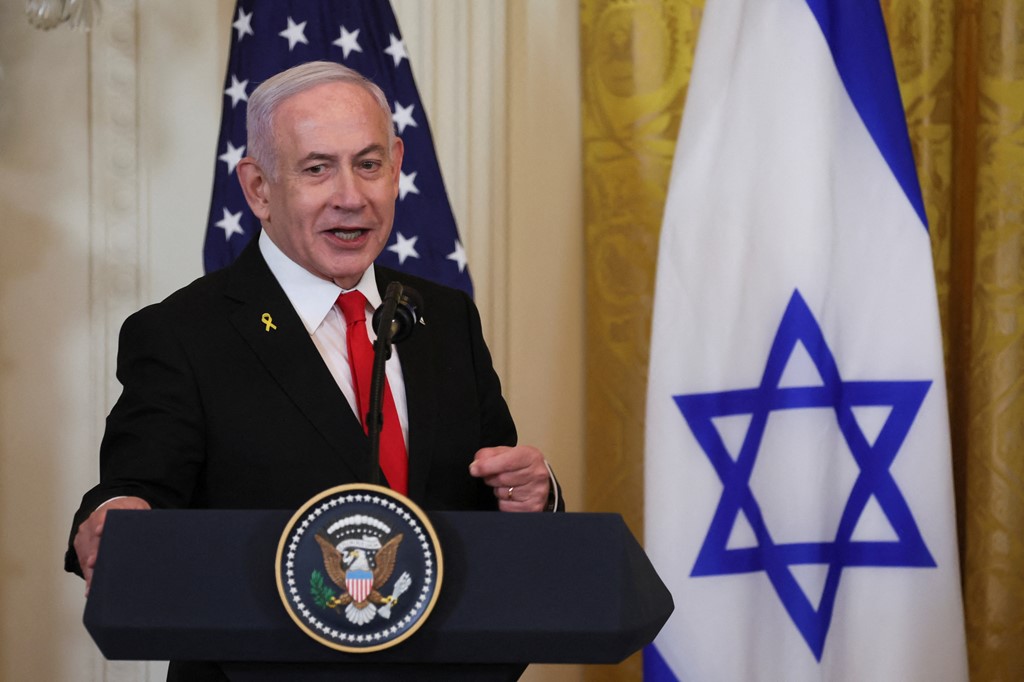
Israeli Prime Minister Benjamin Netanyahu accused Qatar and Turkey of contributing to what he described as an international campaign against Israel during his address to the United Nations General Assembly on Thursday.
Netanyahu used his speech to criticize governments and political leaders that he said were promoting false accusations against Israel, while also defending his country’s military actions in Gaza and its broader regional conflict with Iran and Iran-backed groups.
He specifically targeted Qatar and Turkey, with particular criticism directed at Turkish President Recep Tayyip Erdogan.
Netanyahu Targets Qatar and Turkey
Netanyahu argued that Qatar has played a contradictory role in the Middle East, presenting itself as a mediator while, in his view, supporting forces hostile to Israel.
He also accused Turkey of providing political support to Hamas and of seeking greater influence in the region.
The Israeli prime minister described Erdogan in strongly critical terms and accused the Turkish leader of hosting Hamas figures.
Netanyahu’s comments formed part of a wider attack on what he characterized as international efforts to isolate Israel and undermine its legitimacy.
His remarks came as Israel faced mounting criticism over its military campaign in Gaza and its policies toward Palestinians in the occupied West Bank.
Criticism of International Opposition
Netanyahu also condemned countries and representatives who walked out of the General Assembly chamber before or during his speech.
He argued that Israel’s military campaign against Iran had benefited countries that were now criticizing Israel.
“Many of their leaders even thanked us privately for taking out Iran’s nukes,” Netanyahu said in his address.
He accused Israel’s critics of applying different standards to Israel and its adversaries.
Netanyahu also connected international criticism of Israel with what he described as a rise in antisemitism around the world.
Netanyahu Defends Israel’s Actions in Gaza
A significant portion of the prime minister’s address focused on allegations that Israel had committed genocide in Gaza.
Netanyahu rejected the accusation and said Israel had taken measures intended to reduce civilian casualties, including distributing food and polio vaccinations and warning civilians about military operations through phone calls, text messages and leaflets.
He also accused Hamas of operating from civilian locations, including hospitals, schools and mosques.
Netanyahu cited John Spencer, chair of urban warfare studies at West Point’s Modern War Institute, while defending Israel’s military conduct.
“Israel has done more to prevent civilian casualties in war than any other military in history,” Netanyahu quoted Spencer as saying.
Netanyahu then rejected the genocide allegation, saying: “Is this genocide? Of course not. It’s the opposite of genocide.”
West Bank Violence Also Addressed
Netanyahu also spoke about violence by Israeli settlers against Palestinians in the occupied West Bank.
He described those responsible as “a handful of young juvenile delinquents” and said Israel did not tolerate vigilantism.
“I can’t stand that. I won’t stand for vigilantism,” Netanyahu said.
At the same time, he accused foreign governments and international media organizations of presenting what he considered a distorted picture of violence in the West Bank.
The United Nations Office for the Coordination of Humanitarian Affairs has reported more than 1,600 settler attacks this year.
According to figures cited in the report, at least 104 Palestinians have been killed by Israeli settlers or Israeli soldiers this year, while four Israelis have been killed by Palestinians during the same period.
The issue remains highly contentious, with Palestinians and much of the international community regarding Israeli settlements in the West Bank and East Jerusalem as illegal and as an obstacle to establishing a viable Palestinian state.
Netanyahu Accuses Mamdani of Endangering Jews
New York City Mayor Zohran Mamdani was another major target of Netanyahu’s speech.
Before Netanyahu’s arrival in New York, Mamdani had called him a “war criminal” and advocated for his arrest in connection with the International Criminal Court warrant issued against the Israeli leader.
Mamdani has acknowledged that New York City does not have the authority to enforce the warrant but has called on federal authorities to act.
Netanyahu accused Mamdani of spreading what he described as false claims about Israel and argued that anti-Israel rhetoric was contributing to an increasingly hostile environment for Jews.
“The lies you and other anti-semites spread about the Jews and the Jewish state have real consequences,” Netanyahu told Mamdani.
“In New York, Jews are threatened on the way to synagogue. Jews have been stabbed in the streets. Jews are demonized, targeted.”
Netanyahu also referred to attacks against Jewish people in cities including Sydney, Manchester, Montreal and Boulder, Colorado, as well as incidents in Los Angeles, London, Paris, Berlin and Washington, D.C.
He concluded his warning about antisemitism by urging Jews not to be intimidated.
“Raise your head high,” Netanyahu said. “Be proud, be confident. Don’t be intimidated. Stand up.”
Wider Regional Conflict
Netanyahu’s accusations against Qatar and Turkey came within a broader presentation of Israel’s regional conflicts.
During his U.N. address, he described Israel as having fought on multiple fronts since the Hamas-led attack of October 7, 2023.
He has previously characterized those fronts as including Hamas, Hezbollah, the Houthis, Iran, militias in Iraq and Syria, and Palestinian militants in the West Bank.
Netanyahu also praised U.S. President Donald Trump for his support of Israel and for American military action against Iran.
“In this battle against the barbarians, we’ve had no greater partner than President Trump,” Netanyahu said. “I thank him. I thank him for his bold leadership.”
The Israeli leader portrayed the U.S.-Israel alliance as central to confronting Iran and other threats facing Israel.
Qatar’s Role in the Conflict
Qatar has maintained a significant diplomatic role in the Israel-Hamas conflict, including involvement in negotiations concerning hostages and ceasefire arrangements.
Netanyahu’s criticism nevertheless reflects Israel’s broader objections to Doha’s relationship with Hamas and its regional policies.
Israeli Ambassador to the United States Michael Leiter had also criticized Qatar shortly before Netanyahu’s U.N. address, accusing Doha of simultaneously presenting itself as a mediator while supporting forces and ideas hostile to Israel and the West. Leiter described Qatar as a country that “fund[s] the arsonists and the fire department at the same time.”
Turkey has likewise maintained close political relations with Hamas while Erdogan has repeatedly criticized Israel’s military campaign in Gaza.
Netanyahu’s decision to highlight both countries during his U.N. address underscored the extent of the diplomatic dispute surrounding Israel’s conduct in Gaza and its wider regional policies.
Netanyahu’s Message to the International Community
The Israeli prime minister’s speech combined a defense of Israel’s military operations with criticism of governments, international institutions and political figures he believes have adopted an anti-Israel position.
His remarks on Qatar and Turkey were part of a wider argument that Israel is facing not only military threats but also an international campaign that Netanyahu believes seeks to delegitimize the country.
At the same time, his critics have continued to accuse Israel of serious violations in Gaza and the occupied Palestinian territories, making the conflict one of the most divisive issues before the United Nations.
Netanyahu’s appearance at the General Assembly therefore served both as a defense of Israel’s policies and as a direct challenge to governments and political leaders he believes are contributing to international pressure on his country.
Leave a Reply