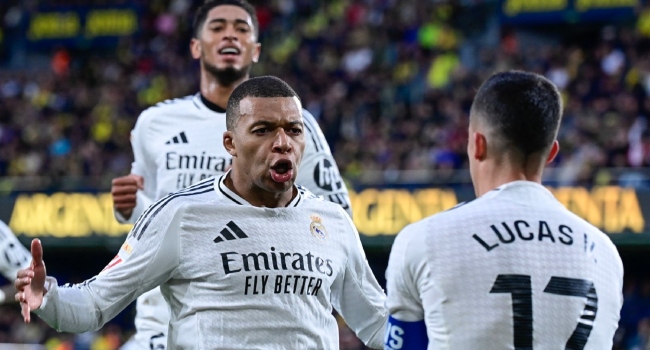
French football captain Kylian Mbappé has apologised to Chinese fans after comments he made about former Chinese leader Mao Zedong sparked widespread criticism on social media and prompted several Chinese companies to terminate their sponsorship agreements with him.
The Real Madrid forward issued the apology on Tuesday, October 27, 2026, describing his remarks as “ill-judged” and acknowledging that they had offended people in China and Chinese communities around the world.
“My comment was ill-judged, and I now understand that it hurt many people in China and in Chinese communities around the world. I apologise to everyone my words have upset,” Mbappé said in a statement published in French, Chinese and English.
He added that offending people had not been his intention and expressed respect for the Chinese people and their history.
The controversy erupted after a video circulated online showing Mbappé discussing internet memes featuring his face digitally superimposed onto historical figures. In the clip, he appeared to describe the funniest meme he had seen as one featuring his face alongside “some guy — I think he’s a Chinese dictator”.
The remark was widely interpreted as referring to Mao Zedong, who led the Chinese Communist Party to power in 1949 and became the founding leader of the People’s Republic of China. The authenticity of the video could not immediately be independently verified by AFP Fact Check.
Chinese Companies Terminate Sponsorship Agreements
Mbappé’s apology came after several major Chinese companies announced that they were ending their commercial relationships with the football star.
Dongpeng Beverage, a major Chinese drinks manufacturer, announced that it was terminating its cooperation with the France captain with immediate effect.
“Our company firmly opposes and has a zero-tolerance policy towards any behaviour that offends national sentiments,” the company said in a statement.
Mengniu, one of China’s largest dairy producers, also announced that it was ending its partnership with Mbappé, citing its opposition to words or actions considered offensive to the Chinese people.
Shanghai Milkground Food Tech, a Chinese cheese producer, was also reported to have ended its cooperation with the footballer.
The decisions marked a significant setback for Mbappé’s commercial activities in China, where he had built a substantial following among football supporters.
Dongpeng had previously featured the striker in advertising campaigns, including promotions that used AI-generated images of him consuming its sports drinks.
The announcements triggered widespread discussion on Chinese social media platform Weibo, where topics related to the controversy attracted hundreds of millions of views.
Some users called on the companies to remove Mbappé’s image from their products and advertisements, while others criticised the footballer’s apparent remarks as disrespectful to China’s national identity and historical legacy.
La Liga Also Apologises Over the Controversy
The fallout extended beyond Mbappé’s individual sponsorship agreements, prompting Spain’s top-flight football league, La Liga, to issue an apology to Chinese fans.
The league said it regretted the offence caused by the footballer’s comments and emphasised that the remarks had been made in his personal capacity and did not represent the organisation.
La Liga president Javier Tebas also expressed regret and said the organisation was working with its partners and contacts in China to address the situation.
The controversy raised concerns about the potential consequences for Spanish football’s commercial relationships in China, a major market for international sports broadcasting, sponsorships and merchandise.
Chinese media reports also indicated that state broadcaster CCTV had suspended broadcasts of La Liga matches and removed advertisements featuring Mbappé. However, the precise scope and duration of the reported restrictions remained unclear.
Mao Zedong Remains a Sensitive Subject in China
Mao Zedong remains a prominent figure in China’s political and historical narrative, having led the country from the establishment of the People’s Republic in 1949 until his death in 1976.
Although historians continue to debate his legacy and examine the devastating consequences of policies implemented during his rule, jokes about Mao are considered sensitive by many in China.
The backlash against Mbappé illustrated the risks international celebrities face when comments are interpreted as disrespectful towards Chinese history or national sentiment.
China has previously witnessed similar disputes involving international sports figures and entertainment companies whose remarks or actions touched on politically sensitive issues.
The NBA, for example, experienced a major dispute with Chinese partners in 2019 after then-Houston Rockets general manager Daryl Morey expressed support for Hong Kong protesters on social media. The incident led to broadcasting suspensions and commercial tensions between the league and Chinese organisations.
Apology Comes Amid Growing Commercial Pressure
Mbappé’s statement was an attempt to address the backlash after the controversy threatened his commercial relationships in one of the world’s largest consumer markets.
International football stars frequently depend on sponsorship agreements with beverage manufacturers, sportswear companies, technology businesses and other global brands. For companies operating in China, public reaction and consumer sentiment can significantly influence decisions about celebrity partnerships.
The incident demonstrated how a comment about an internet meme can develop into a wider commercial dispute when it touches on a country’s historical and political sensitivities.
Despite Mbappé’s apology, criticism continued on Chinese social media, with some users questioning whether his statement was sufficient to repair the damage.
The French forward, who plays for Real Madrid and captains the French national team, had previously enjoyed considerable popularity among Chinese football supporters.
The financial value of the sponsorship agreements terminated over the controversy was not immediately disclosed, leaving the full impact on his commercial earnings uncertain.
Mbappé’s apology has therefore become a central part of efforts to contain a dispute that has extended from social media into sponsorship, broadcasting and international football relations.
Leave a Reply