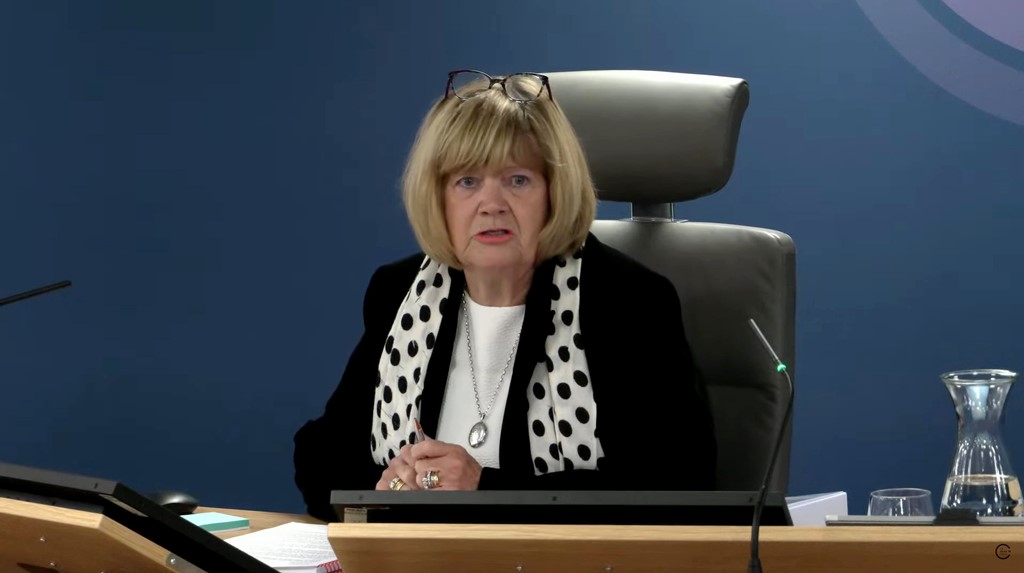
The chair of the public inquiry Baroness Heather Hallett is said to be ready to make recommendations around the use of social media and its role in spreading false information as the COVID-19 inquiry resumes.
Kirit Mistry worked as a COVID champion in Leicester during the pandemic and has contributed to the inquiry’s Every Story Matters campaign which allows the public to share their story.
His job was to try to engage with local communities to counter the disinformation being promoted on social media.
Mr Mistry, who comes from the south Asian community, said: “I think a lot of misinformation was coming from our own countries back home but also in this country as well.
“People may have lost somebody and they were putting it down to the vaccination that was the cause of that, so it was trying to get people to understand that being hesitant and working off misinformation is not the right way because we need to protect ourselves,” he told Sky News.
Kirit said his job was made more difficult because of the lack of real information coming from the government at the time. This vacuum was filled with disinformation that impacted his own family.
“Well, the messaging was very low and misinformation was coming through various WhatsApp communications. That was really kind of what was noticeable, you know.
“Certainly within our own family, my own brother, elder brother, was hesitant about taking the vaccination based on this misinformation.”
Kirit’s twin brother Keval did want the vaccine, but it came too late. He caught the virus and almost died.
‘I’m wary of strangers now’
He spent two weeks on a ventilator in intensive care. Keval survived, but now lives with the life-changing impact of long COVID.
Before the infection, he walked miles every day in his job as a postman. Now, he can barely manage a few steps.
“I still struggle to walk any distance and I struggle to do my housework and I get help to do my washing and cleaning I can’t do, I have to get someone in to help with the cleaning,” he said.
It’s not just a physical struggle for Keval. Long COVID has left him with anxiety that prevents him from socialising in public spaces.
“I am aware about going into social environments where I would only interact with people that I know who I’m close with, like small groups of, you know, a small group of people or family that I know. I’m a little bit more wary of strangers now. Well, because of COVID I tend not to be as sociable.”
Witnessess gather outside inquiry
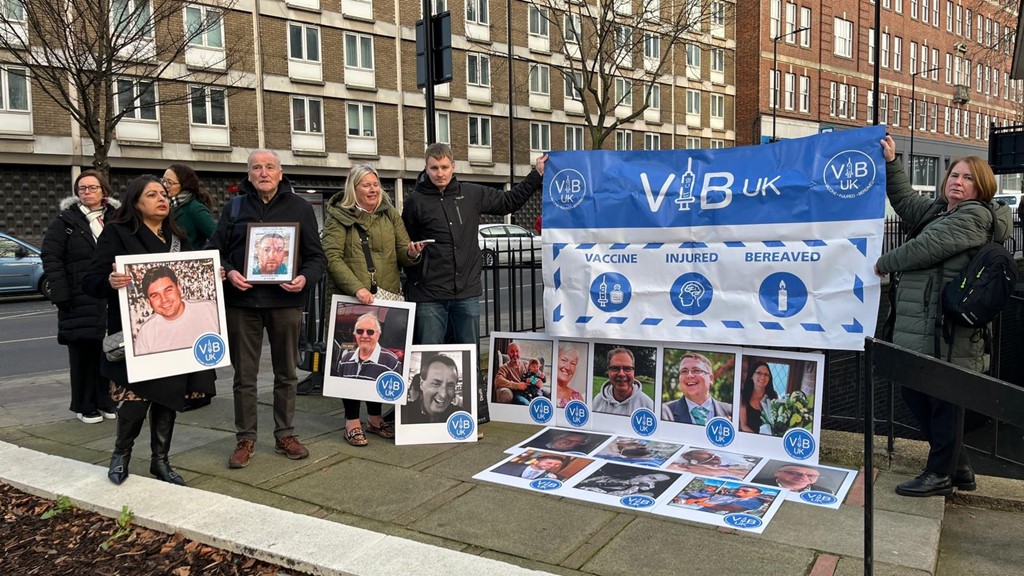
A small group of participants demonstrated outside the inquiry on Tuesday.
They are from the Vaccine Injured and Bereaved UK group, which is expected to speak during proceedings.
Reporters spoke to Kate Scott, whose husband suffered a brain injury after taking the AstraZeneca vaccine.
“We really want to put across the personal stories, which is very difficult to do in 30 minutes,” she said.
“Our group is big. There’s many people suffering who’ve had their voices silenced.”
Vaccine approval ‘expedited’, but no evidence of ‘reduction in safety’, says counsel
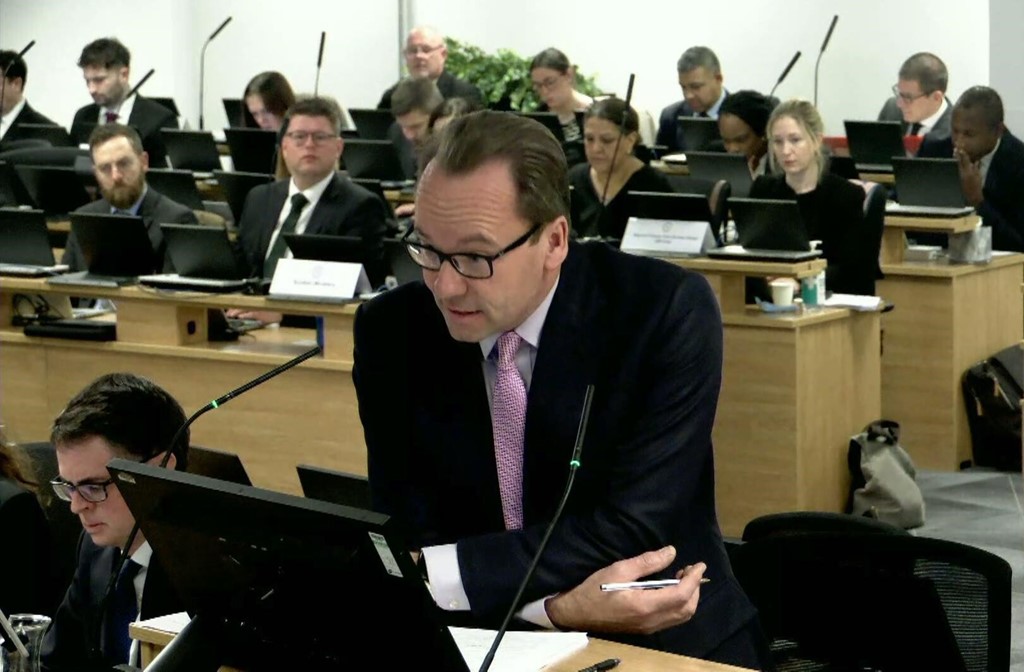
This hearing was meant to begin with an impact film, but the inquiry chair has just told us it’s not ready.
Baroness Heather Hallett says we will instead hear from Hugo Keith KC, who is counsel to the inquiry, to set out the issues they will address.
He’s ran through the procedure for vaccine approval in the UK.
Approval for the first vaccine used in the pandemic was “expedited”, he says, but the evidence indicates there was “no reduction in the efficacy or safety of any of the vaccines or the trials”.
Clinical trials can only include a finite number of patients, he adds, but evidence suggests a reaction or condition from use of the vaccine was extremely rare.
So rare, he says, that trials would have been unlikely to identify such risks.
‘Robust’ vaccine safety processes scrutinised by inquiry
Hugo Keith KC, counsel to the inquiry, says the evidence being put forward suggests “overwhelmingly” that the UK operated a “robust and sophisticated system for ensuring the highest levels of safety”.
“But it will be of course for you to assess the accuracy of that proposition,” he tells Baroness Heather Hallett.
“And therein lies one of the most important purposes of this module.”
He says the overall process in which the Medicines and Healthcare Products Regulatory Agency (MHRA) ensured vaccines were “effective and acceptably safe” was no different to the process that would have applied had applications been made before January 2021 under the then-EU regulated scheme.
What does ‘acceptably’ safe mean?
Mr Keith says that “almost no medical procedure is without risk”, and says some carry substantial risks, like chemotherapy.
He says, based on the MHRA, “acceptably safe” is when the “benefits or expected benefits” associated with a particular product are considered to outweigh any risks “at a population level, and that the risks are acceptable in the context of the expected benefits”.
He says the public health benefit of vaccination generally is “beyond argument”, but the issue at the heart of the module is whether the MHRA properly assessed whether the benefit of the vaccines outweighed its risks.
Leave a Reply