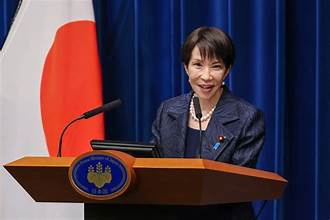
Japan’s Olympic chief, Seiko Hashimoto, has acknowledged that the number of athletes and officials attending the Aichi-Nagoya Asian Games was significantly higher than organisers had anticipated, contributing to accommodation shortages and logistical difficulties during the competition.
Several participating teams reportedly encountered problems with accommodation after arriving in Nagoya, with some finding that there were not enough rooms available for all members of their delegations.
Local organisers had expected approximately 15,000 athletes and officials to attend the Games, while the Olympic Council of Asia put the number of participants at more than 17,000.
Asked whether organisers had been fully aware of the eventual number of participants, Japanese Olympic Committee President Hashimoto acknowledged that the turnout exceeded expectations.
“We had more than we expected,” Hashimoto said.
She noted that accommodating such a large number of additional participants had been particularly difficult and acknowledged that the situation may have created problems for athletes.
“It’s really difficult to accommodate a lot more people and that may have caused some troubles to the athletes,” she said.
The accommodation challenge was partly linked to the decision not to construct a dedicated athletes’ village. Organisers had opted for alternative arrangements in an effort to reduce costs, placing participants in hotels, temporary wooden container-style facilities and a cruise ship docked at Nagoya’s port.
The accommodation arrangements became one of several issues surrounding the organisation of the Games, which began on September 19.
Transport also emerged as a significant challenge. There were reports of buses failing to arrive or taking athletes to venues, while some teams said they were left waiting for as long as six hours at the airport after arriving in Nagoya.
The organisational difficulties came alongside uneven attendance at sporting events. Although some competitions attracted substantial crowds, several events, including the opening ceremony, were reported to have taken place with thousands of empty seats.
Hashimoto also pointed to difficult weather conditions as another factor affecting the Games. Several days of rain and the threat of a typhoon created additional challenges for organisers, athletes and spectators.
However, she acknowledged that transportation remained an area requiring attention and expressed disappointment over poor attendance at some sporting events.
Despite the difficulties, Hashimoto described the experience as an important learning opportunity for Japan as it prepares to host major international sporting competitions in the future.
She said organisers would need to examine the different aspects of the Games and use the experience to improve preparations for future events.
“We need to analyse every element so we can improve in future,” she said.
The comments came as the Aichi-Nagoya Asian Games approached their conclusion, with organisers facing scrutiny over accommodation, transportation and other operational arrangements.
Leave a Reply