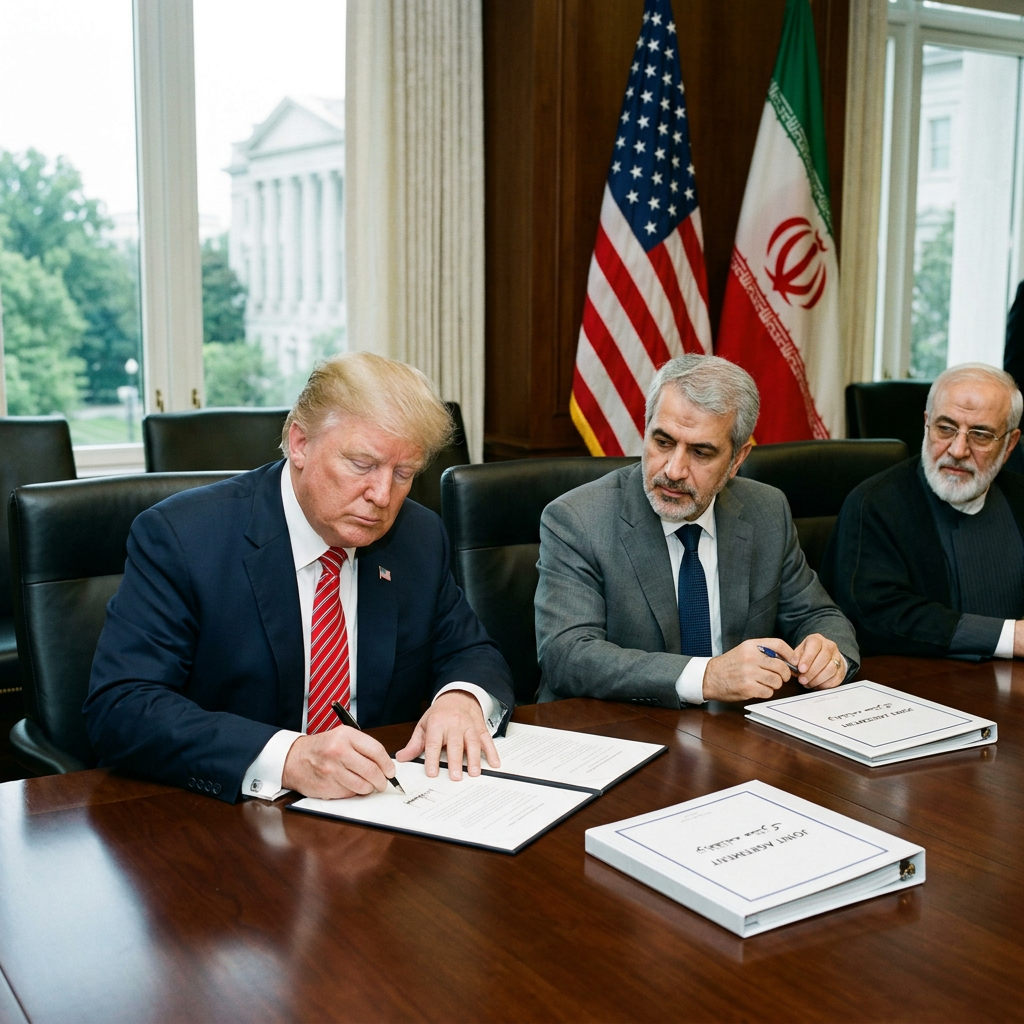
The Trump administration has proposed releasing billions of dollars in frozen Iranian assets in exchange for Tehran abandoning its demand to levy tolls on ships transiting the Strait of Hormuz, but Iranian officials have flatly rejected the offer and continue to assert control over the strategic waterway, according to a report by The Wall Street Journal on Thursday.
Citing sources familiar with the negotiations, the Journal reported that U.S. envoy Steve Witkoff and White House adviser Jared Kushner, President Donald Trump’s son‑in‑law, traveled to Doha, Qatar, this week for indirect talks with Iranian representatives through Qatari mediators. The discussions were aimed at advancing last month’s memorandum of understanding between Washington and Tehran.
Under the U.S. proposal, negotiators offered Iran access to a portion of its roughly $100 billion in frozen overseas assets in exchange for relinquishing its claim to control the strait and abandoning plans to collect tolls from commercial shipping. The offer reportedly included the potential release of $6 billion held in Qatar. However, the Journal noted that Iran’s continued efforts to restrict passage through the strait have delayed any release of the funds.
Iranian Deputy Foreign Minister Kazem Gharibabadi, who participated in the talks, returned from Doha and declared Thursday that the Strait of Hormuz remains “under Iran’s command,” according to the Journal. Later the same day, Iran’s military warned that any vessel traveling outside routes approved by the regime would face an “immediate and powerful” response.
The Journal reported that Iran wants to impose fees on every vessel using the waterway, arguing the payments would cover maritime security and related services. The proposal could reportedly generate as much as $40 billion annually, but it has been rejected by the United States and Gulf Arab nations.
Negotiators are also evaluating an alternative proposal from Oman, which shares jurisdiction over part of the strait. Under that plan, shipping services would be financed through a voluntary fund supported by oil producers and shipping companies rather than mandatory transit fees. Iran has objected, the Journal reported, because the arrangement would not require vessels to pay tolls directly. U.S. officials have also expressed concerns that the proposal could still be viewed as indirectly benefiting Tehran.
“Iran is trying to open the strait on its own terms and does not want to relinquish what leverage it has gained,” Sanam Vakil, director of the Middle East and North Africa program at Chatham House, a London think tank, told the Journal. But “Tehran can disrupt the strait more easily than it can sustainably administer it,” she said.
The impasse has continued to disrupt one of the world’s most important maritime routes. The Journal reported that daily vessel traffic through the Strait of Hormuz dropped to 43 ships by Wednesday, down from 75 a week earlier. Before the conflict began Feb. 28, more than 100 ships transited the strait each day, carrying roughly one‑fifth of the world’s oil supply.
Leave a Reply