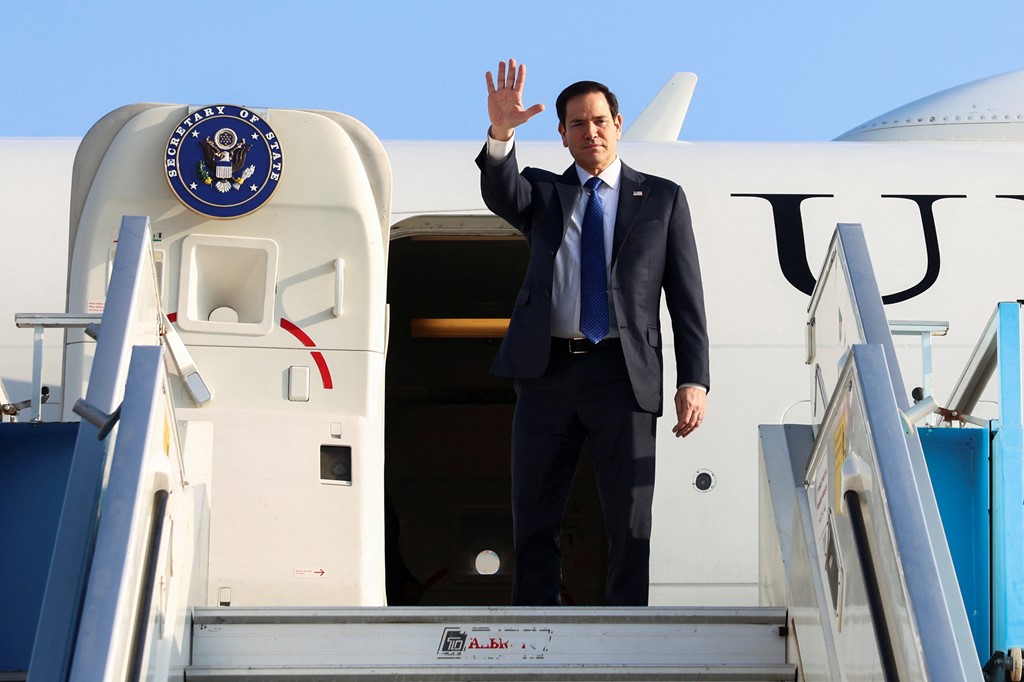
Secretary of State Marco Rubio warned Iran not to “test the will” of President Donald Trump during a White House briefing, saying the administration would respond forcefully to further escalation even as it continues to signal interest in winding down the conflict, according to remarks he delivered in the briefing room, as reported by Mediaite.
Rubio said explicitly, “They should not test the will of the president of the United States,” adding that Trump has “been very clear about what his objectives are” and warning that any miscalculation by Tehran could trigger a broader response, according to the same Mediaite report.
The warning comes as a fragile ceasefire between U.S. and Iranian forces has been repeatedly tested by missile, drone, and maritime attacks tied to Tehran, with U.S. officials acknowledging multiple strikes on American positions and commercial shipping since early April in statements carried by Reuters and other outlets.
Despite those incidents, War Secretary Pete Hegseth has insisted the truce remains technically intact, saying in remarks reported by Reuters that the United States is “not looking for a fight” but will continue operations to defend shipping lanes and U.S. personnel.
At the center of the conflict is the Strait of Hormuz, a narrow maritime chokepoint through which roughly one-fifth of the world’s oil supply normally flows, and which Iran has effectively constricted since the war began, dramatically slowing global energy shipments and rattling markets, as detailed by FactCheck.org and other economic analyses.
Iran’s disruption of traffic through the strait has emerged as its primary leverage in the conflict, with Tehran threatening vessels and using mines, drones, and fast boats to deter transit, a strategy that has reduced oil flows “to a trickle” and driven global price spikes that are now being felt by American consumers at the pump, according to FactCheck.org.
That pressure has pushed the confrontation increasingly toward control of the waterway itself, with the Trump administration launching ‘Project Freedom’ — a U.S.-led naval effort to reopen shipping lanes and escort vessels through the strait — in an attempt to break Iran’s de facto blockade and stabilize energy markets, as reported by Axios, The Washington Post, and other outlets.
The operation comes as hundreds of ships remain stalled and global oil prices have surged sharply amid the disruption, underscoring how the fight over Hormuz has become both a military and economic flashpoint in the broader war, according to reporting from MarketWatch.
The economic fallout has been felt domestically as well, with rising crude prices translating into higher gasoline costs in the United States even though most American oil is sourced elsewhere, reflecting the global nature of energy markets, according to FactCheck.org.
At the same time, Iran now faces the prospect of additional international pressure, including potential new sanctions tied to its interference with global shipping, as U.S. officials argue that restricting transit through an international waterway risks broader economic retaliation, a dynamic referenced in ongoing coverage from Reuters and other outlets.
The broader conflict traces back to late February strikes by U.S. and Israeli forces on Iranian targets, which triggered retaliatory attacks from Tehran and set off a cycle of escalation that quickly centered on control of Hormuz and the flow of oil through it, as widely reported across international coverage.
A ceasefire reached weeks later was intended in part to restore normal shipping, but repeated violations and continued Iranian harassment of vessels have kept the waterway unstable and prevented a full reopening, according to reporting from Reuters, Axios, and The Washington Post.
Even as those clashes continue, Trump has suggested publicly and privately that Iran may be looking for an “exit ramp” from the conflict, telling advisers that Tehran’s behavior indicates it wants to avoid a prolonged war, as reported by The Wall Street Journal.
That assessment has shaped the administration’s approach, pairing military pressure in and around the strait with efforts to keep diplomatic channels open, even as officials warn that continued attacks could quickly collapse the ceasefire entirely.
Rubio’s warning underscores that balancing act, combining a blunt threat with an implicit acknowledgment that negotiations remain possible, even as the battlefield — and the global economy — continue to hinge on who ultimately controls the flow of oil through the Strait of Hormuz.
Leave a Reply