A long-awaited ceasefire in the Israel-Hamas war was delayed Sunday (Jan 19) after Prime Minister Benjamin Netanyahu said at the last minute that it would not take effect until the Palestinian militant group provided a list of the hostages to be released.
Hamas, while “affirming its commitment” to the terms of the ceasefire, said: “The delay in providing the names of those to be released in the first batch is due to technical reasons.”
A statement from Netanyahu’s office, issued about an hour before the truce was to start at 8.30am local time said he had “instructed the IDF (military) that the ceasefire … will not begin until Israel has received the list”.
An Israeli military spokesperson later said the ceasefire will not take effect as long as Hamas fails to meet its obligations.
Israel will continue to attack as long as Hamas does not meet its demands, said the spokesperson, adding that the military is fully ready for the implementation of the ceasefire and ready to respond if the terms are broken by Hamas.
Hostages were expected to be released within hours of the start of the ceasefire, opening the way to a possible end to a 15-month war that has upended the Middle East.
The ceasefire agreement followed months of on-off negotiations brokered by Egypt, Qatar and the United States, and came just ahead of the Jan 20 inauguration of US President-elect Donald Trump.
In a televised address on Saturday, Netanyahu said Israel had US support to return to war if necessary.
Calling the 42-day first phase a “temporary ceasefire”, he said: “If we are forced to resume the war, we will do so with force.”
THREE STAGES
The planned ceasefire consists of three stages.
Its first stage will last six weeks, during which 33 of the remaining 98 hostages – women, children, men over 50, the ill and wounded – will be released in return for almost 2,000 Palestinian prisoners and detainees.
They include 737 male, female and teenage prisoners, some of whom are members of militant groups convicted of attacks that killed dozens of Israelis, as well as hundreds of Palestinians from Gaza in detention since the start of the war.
Three female hostages are expected to be released on Sunday afternoon through the Red Cross, in return for 30 prisoners each.
After Sunday’s hostage release, lead US negotiator Brett McGurk said, the accord calls for four more female hostages to be freed after seven days, followed by the release of three further hostages every seven days thereafter.
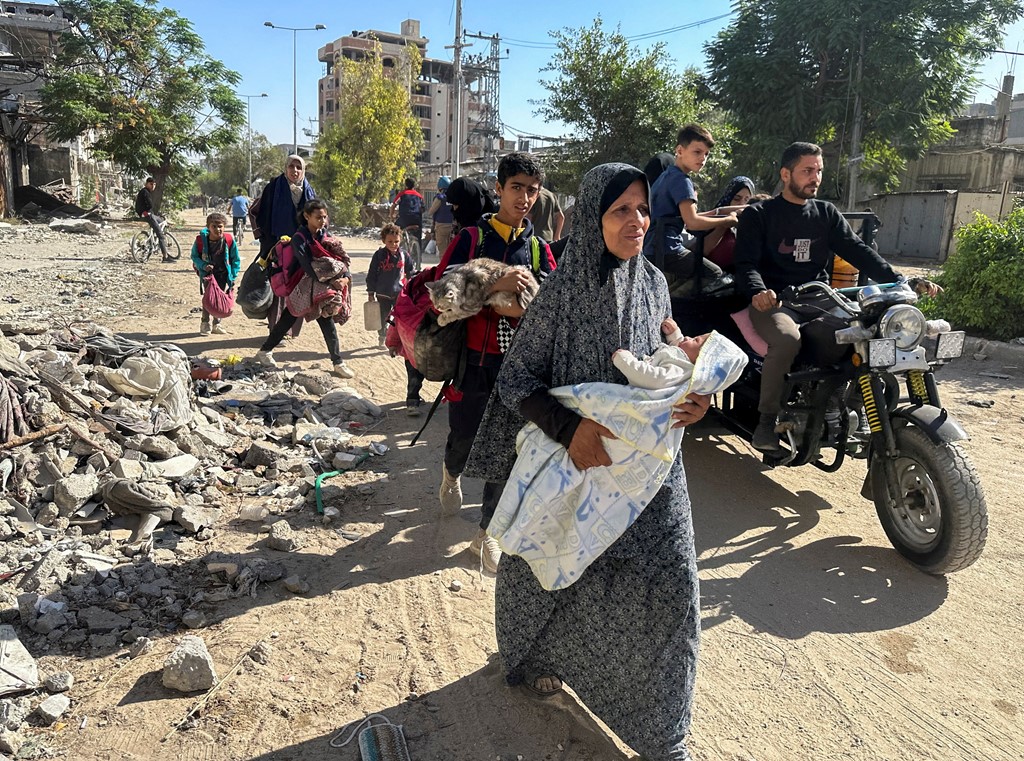
During the first phase the Israeli army will pull back from some of its positions in Gaza and Palestinians displaced from areas in northern Gaza will be allowed to return.
US President Joe Biden’s team worked closely with Trump’s Middle East envoy Steve Witkoff to push the deal over the line.
As his inauguration approached, Trump had repeated his demand that a deal be done swiftly, warning repeatedly that there would be “hell to pay” if the hostages were not released.
Leave a Reply