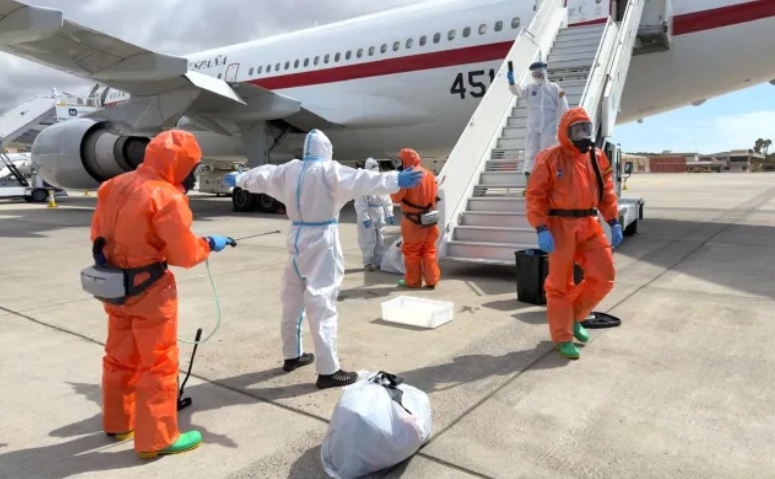
A French national evacuated from a cruise ship hit by the hantavirus with no initial symptoms is now in ‘serious condition’ with the disease.
The unnamed woman was showing none of the disease’s typical flu-like symptoms when she was flown from Tenerife on Sunday.
French Health Minister Stéphanie Rist told French media today: ‘Unfortunately, her symptoms worsened overnight.’
At least three people aboard the MV Hondius have died of hantavirus in the nearly six weeks since the ship began its cruise from Argentina to remote islands in the southern Atlantic Ocean.
They include Leo Schilperoord, 70, a bird expert who hopped back on the cruise after visiting a landfill in Argentina to birdwatch.
He was the first person to die, followed by his wife Miriam, a few days later, after she flew from St Helena to Johannesburg in South Africa.
A German woman had ‘fever and general malaise’ on April 28 before testing positive and dying of hantavirus aboard the ship on May 2.
Several people who were on the ship have tested positive or fallen ill, including:
- One of 17 Americans who had been returned to the US on Sunday ‘tested mildly’ positive while another had ‘mild symptoms’, the US Department of Health said.
- The ship’s doctor and a guide are ‘stable in isolation’ after being flown to the Netherlands.
- A man who disembarked at St Helena, a remote island in the South Atlantic Ocean, tested positive and remains at a Swiss hospital.
- A British man on the island of Tristan da Cunha in the South Atlantic is suspected of having been infected.
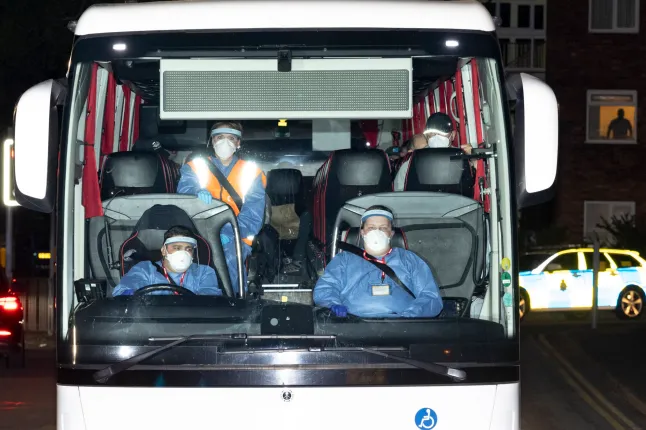
British passengers aboard the MV Hondius arrived at Arrowe Park Hospital in Wirral yesterday.
The 20 passengers, along with one German national, who is a UK resident, and one Japanese passenger, have tested negative for hantavirus.
The UK Health Security Agency said that the patients had been ‘safely transferred’ to the hospital just after 8.40pm.
They will now isolate for 72 hours in a dedicated accommodation block to determine if they can complete a 45-day isolation at home.
Janelle Holmes, CEO of Wirral University Teaching Hospital Trust, said the passengers will be able to phone their friends and family.
She said: ‘What we’ve learnt from past experience is they’re going to be absolutely shattered.
‘They’ve probably felt quite traumatised by the whole experience, so the thing for us to do is to make sure that they’re here, they’re safe, they’re welcome.’
MV Hondius captain Jan Dobrogowski said the past few weeks have been ‘extremely challenging to us all’.
Addressing the crew, Dobrogowski said: ‘What touched me the most, what moved me the most, was your patience, your discipline, and also [the] kindness that you showed to each other throughout.
‘I cannot imagine sailing through these circumstances with a better group of people, guests and crew alike. Most importantly, our thoughts are with the ones that are no longer with us.
‘Whatever I say will not ease this loss. I’d like you to know they are with us every day, in our hearts and our thoughts.’
Cruise operator Oceanwide Expeditions said yesterday that once all evacuations have happened, the ship ‘will bunker and take on necessary supplies’ before heading to Rotterdam in the Netherlands.
What is hantavirus and how is it spread?
Pharmacist Thorrun Govind tells Metro: ‘Hantavirus is a group of viruses, not one specific virus, which is carried by rats and mice and can cause serious disease in humans.’
Catching hantavirus can lead to two main illnesses, one of which affects the lungs (Hantavirus Pulmonary Syndrome or HPS) and the other which affects the kidneys (Hemorrhagic fever with renal syndrome or HFRS).
The virus is contracted through exposure to rodent urine and droppings.
‘We’re really talking about breathing contaminated air because the virus becomes airborne when rodent urine or droppings dry out,’ Dr Govind explains.
‘You’ll need to be in the contaminated area for a prolonged amount of time, but you can get it from touching contaminated surfaces or from a bite or scratch – but that tends to be more rare.’
The incubation period for this illness is generally two to four weeks, but can range from as little as two days to as long as eight weeks.
‘It’s very rare for it to spread from person to person – this is not like Covid or flu,’ the pharmacist adds.
What are the first signs of hantavirus?
Hantavirus can be hard to spot as initial symptoms can often be confused with flu.
‘Early symptoms can be fatigue, a fever, a headache, and muscle ache,’ Dr Govind explains. The Centres for Disease Control and Prevention (CDC) states this muscle pain will likely manifest in areas like the thighs, hips, back and shoulders.
About half of HPS sufferers will go on to experience headaches, dizziness, chills and abdominal problems like nausea, vomiting, and diarrhoea.
About four to 10 days after these initial symptoms, the CDC says sufferers experience ‘late symptoms’, which include coughing and shortness of breath, as well as tightness in the chest as the lungs fill with fluid.
In patients with HFRS, initial symptoms will include intense headaches, back and abdominal pain, fever or chills, nausea, and blurred vision.
Patients may also experience inflammation or redness in the eyes or a rash.
As the disease progresses, later symptoms include low blood pressure, acute shock (lack of blood flow), internal bleeding, and acute kidney failure, according to the CDC.
What is the mortality rate for hantavirus, and is there a treatment?
About 38% of people who develop respiratory symptoms die from the illness, but the mortality rate varies by strain.
The Hantaan (from field mice) and Dobrava (from yellow-necked field mice) strains usually cause severe symptoms and a mortality rate of roughly five to 15%, while other variants like Seoul (from rats), Saaremaa, and Puumala (from bank voles) see less than 1% of patients die from the disease.
‘Hantavirus can have serious consequences, but there are some groups who are more susceptible,’ Dr Govind adds. ‘People who are immunosuppressed or who are elderly are going to struggle more than others.’
There is currently no cure for the disease, and while antivirals have been used, they aren’t a standard treatment.
Dr Govind continues: ‘Typically, [patients will] be admitted to hospital, monitored and supported.
‘They might have oxygen therapy if they have breathing difficulties, and doctors will monitor key organs like the heart, lungs and kidneys.’
Is hantavirus in the UK?
In short, yes. But human-to-human transmission is incredibly rare, and medical experts have said the risk to the general public is low.
‘This is not something I would be worried about in the UK,’ Dr Govind explains.
‘It’s important people are aware of it, but we’re not going to be seeing a pandemic.’
Since 2012, there have been six cases of acute kidney injury due to hantavirus infection in the UK, and a possible 11 cases overall, according to the UK government.
How do I avoid getting hantavirus?
Although hantavirus is uncommon in people, anyone can contract it. However, there are things you can do to mitigate your risk.
Dr Govind adds: ‘If you’re sweeping somewhere where there could be dry droppings, for example, you want to avoid creating dust and use protective equipment.’
This could mean wearing a face mask and goggles, and maintaining personal hygiene also helps to reduce your risk.
If you do spot rodent droppings in your house, contact a professional pest control expert who can locate the animal or animals, help you clean safely and ensure the situation is under control.
The CDC also recommends minimising or eliminating contact with rodents in your home, workplace or campsites, to reduce your exposure risk.
The organisation also says to seal holes and gaps in your home or garage and place traps to keep rodents from getting in, and clean up any easy-to-reach food that could attract them.
Leave a Reply