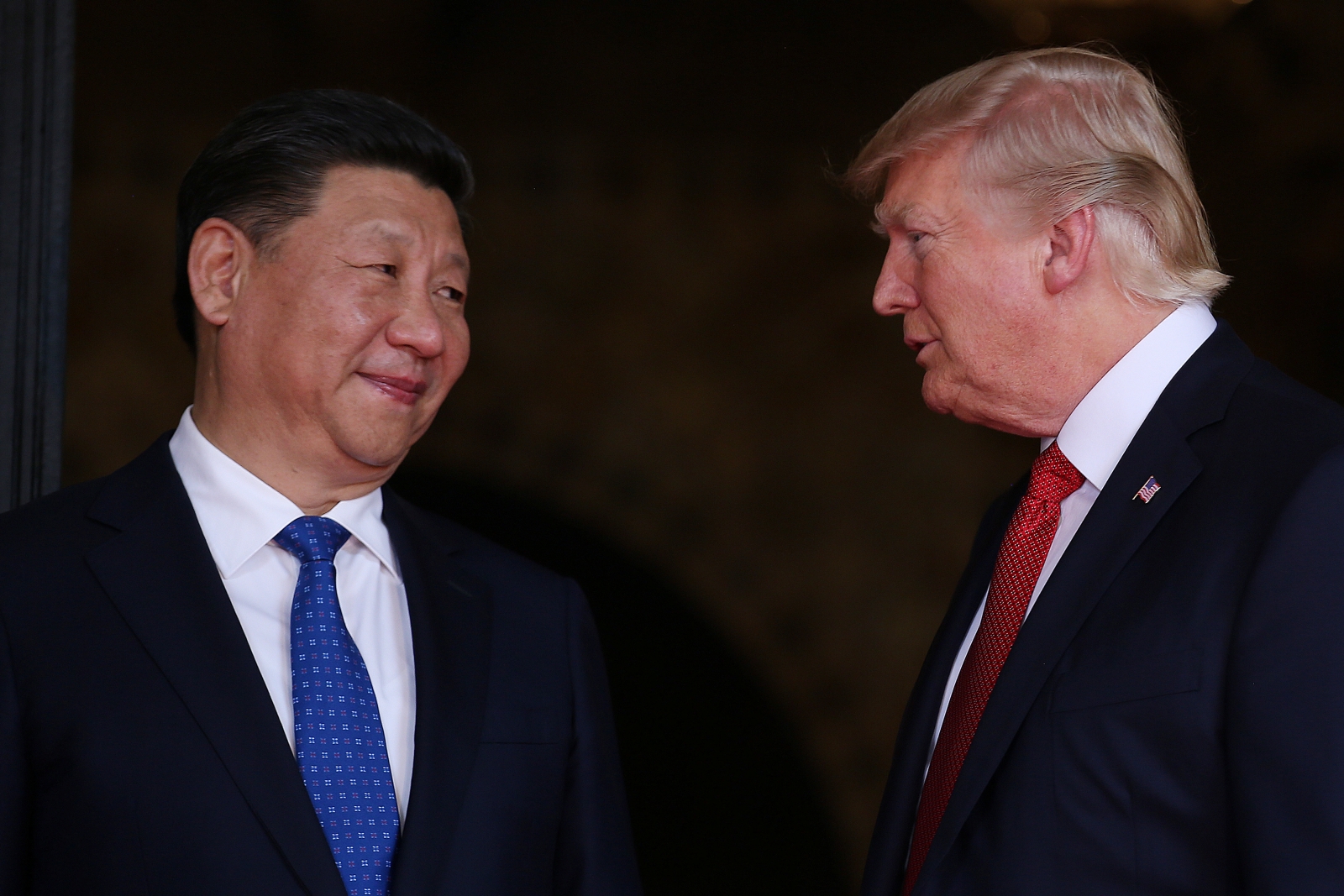
China expert Gordon Chang told Newsmax on Friday that the latest extension of the U.S.-China trade truce gives President Donald Trump additional time to negotiate with Chinese President Xi Jinping but does not resolve the deeper disagreements between Washington and Beijing.
Chang made the comments as Trump and Xi met in Washington for high-level talks covering trade and other areas of the U.S.-China relationship.
The United States and China recently agreed to extend their existing trade arrangement until Jan. 10. Treasury Secretary Scott Bessent announced the extension after discussions with Chinese Vice Premier He Lifeng.
The agreement keeps the current economic framework in place for several additional months, allowing negotiators more time to address outstanding issues.
Trade Truce Provides Additional Breathing Room
Chang said the extension should be viewed primarily as an opportunity for Washington and Beijing to continue negotiations rather than as a comprehensive settlement of their trade disputes.
The arrangement maintains a temporary period of reduced economic tensions between the world’s two largest economies, but many disagreements remain unresolved.
The two governments have spent months negotiating issues involving tariffs, agricultural purchases, critical minerals, technology and other areas of economic policy.
The current agreement grew out of the broader U.S.-China trade confrontation that resulted in successive rounds of tariffs and retaliatory measures.
Although the truce reduced some of the immediate pressure on businesses and supply chains, the fundamental differences between the two countries remain.
Trump and Xi Meet in Washington
The trade extension coincided with Xi’s visit to Washington, where Trump welcomed the Chinese leader for a state visit.
Trade was among the principal issues on the agenda for the two presidents, along with technology, artificial intelligence, critical minerals and security matters.
The talks followed several days of negotiations between senior American and Chinese officials aimed at preparing for the presidential meeting.
Bessent said the two sides had agreed to extend what is known as the “Busan Agreement,” moving its expiration date from Nov. 10 to Jan. 10.
“We have agreed today that we will extend what we call the Busan Agreement,” Bessent said.
The extension leaves open the possibility of maintaining the existing arrangement or using it as the basis for a broader economic agreement.
Major Trade Disputes Remain
The temporary agreement does not eliminate the broader economic disagreements between Washington and Beijing.
China previously agreed to suspend retaliatory tariffs on a range of U.S. agricultural products and increase purchases of American soybeans. Beijing also agreed to suspend certain new export controls involving rare earths and other critical minerals.
Other elements of the arrangement concerned fentanyl precursor chemicals and restrictions affecting U.S. companies operating in China.
The United States, meanwhile, suspended or reduced some tariffs and other trade restrictions imposed on Chinese goods and companies.
The measures helped bring down tariff levels after an intense period of escalation, but the two governments have continued to disagree over trade practices, technology and economic security.
Chang Questions Whether the Truce Solves the Bigger Problems
Chang’s assessment reflects his broader skepticism about the prospects for a major breakthrough in the U.S.-China relationship.
He has previously argued that Washington should focus heavily on the strategic competition between the two countries rather than assuming that continued negotiations will resolve fundamental disagreements.
In an earlier Newsmax appearance, Chang warned that agreements concerning artificial intelligence could be difficult to enforce, saying, “An AI agreement is inherently unenforceable.”
His latest comments similarly emphasize the distinction between reaching a temporary agreement and resolving the underlying disputes between Washington and Beijing.
Artificial Intelligence Becomes Part of the Talks
Artificial intelligence has emerged as another significant issue in the U.S.-China relationship.
American officials have sought discussions with Beijing over AI safety and other technology-related concerns.
The recent negotiations produced an agreement to establish a communication mechanism that would allow the two countries to discuss significant AI safety incidents.
The two governments are expected to continue discussions on the issue in the coming months.
Chang has argued that AI competition is strategically important because technological leadership could have significant economic, military and geopolitical consequences.
Critical Minerals and Supply Chains
Critical minerals are another important component of the U.S.-China negotiations.
China has a major position in the global supply chain for rare earth elements and other minerals used in manufacturing, electronics, energy technologies and defense systems.
Export controls involving these materials have therefore become an important part of the broader economic relationship.
The temporary trade arrangement has reduced some immediate pressure surrounding those restrictions, but the issue remains part of the larger negotiations between Washington and Beijing.
Fentanyl Precursors Also Remain an Issue
The United States has also pressed China over chemicals that can be used to manufacture fentanyl.
Measures concerning fentanyl precursor chemicals formed part of the previous trade arrangement, making the issue another area where Washington is seeking concrete commitments from Beijing.
The Trump administration has linked trade negotiations with broader concerns about China’s cooperation on the flow of precursor chemicals.
The subject remains part of the wider discussions between the two governments.
Agreement Does Not End Strategic Competition
The extension of the trade truce gives negotiators additional time, but the broader U.S.-China competition extends well beyond tariffs and trade.
Washington and Beijing continue to compete over advanced technology, artificial intelligence, critical minerals, manufacturing and national security.
The two governments also disagree over a number of geopolitical issues, including Taiwan.
Consequently, the trade agreement represents only one component of a much larger relationship.
Chang’s comments underline the distinction between a temporary reduction in economic tensions and a resolution of the strategic disagreements that have developed between the two countries.
For now, the extension through Jan. 10 gives Trump and Xi additional time to negotiate. Whether that period produces a broader agreement will depend on the outcome of discussions over trade, technology, critical minerals, agricultural purchases and other unresolved issues.
Leave a Reply