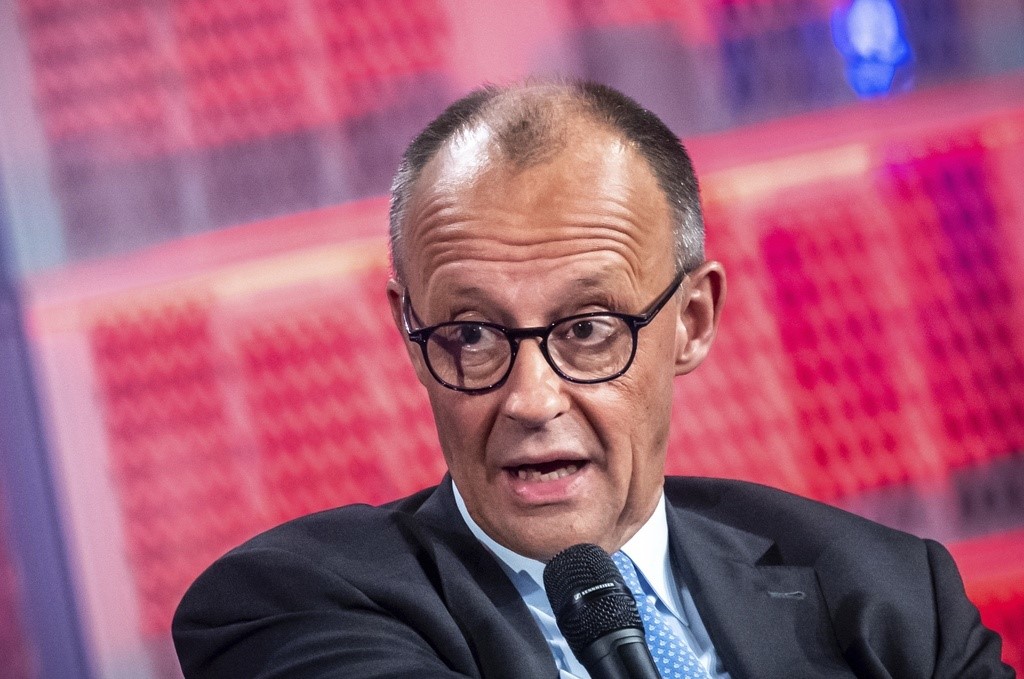
Merz and Takaichi also discussed regional security, particularly developments in the East China Sea, the South China Sea and the Taiwan Strait.
Both leaders expressed concern about the regional situation and opposed unilateral attempts to change the status quo through force or coercion. They emphasised the importance of maintaining peace and stability across the Taiwan Strait and called for a peaceful resolution of differences between China and Taiwan.
The discussions come amid heightened tensions in the Indo-Pacific, where China’s expanding military activities and disputes over territorial claims have become significant concerns for regional governments.
Takaichi previously told Japan’s parliament in November that a crisis involving Taiwan could potentially prompt Japanese military intervention under certain circumstances. Beijing considers Taiwan part of its territory, while the island is governed democratically.
Germany and Japan reaffirmed their commitment to strengthening cooperation with allies and countries that share their principles. These include freedom, democracy, the rule of law, human rights and fair international trade.
The two governments also agreed to expand military cooperation in the Indo-Pacific. Germany’s participation in the Japanese-American military exercise Keen Sword for the first time this year represents an example of their growing defence engagement.
The exercise, scheduled to continue until Thursday, involves activities at several locations across Japan, particularly in the maritime and airspace areas around Okinawa, where China’s military presence has increased in recent years.
The two countries are also exploring opportunities to deepen cooperation between their armed forces and strengthen collaboration within their respective defence industries.
Merz Calls for a New Alliance to Protect Global Trade
Speaking at an economic forum in Tokyo on Wednesday morning, Merz called for a new international alliance of like-minded countries to defend a rules-based global trading system.
He argued that countries should work together to preserve international trade rules and respond collectively when those rules come under threat.
The proposed alliance would seek to strengthen trade arrangements based on international agreements while giving participating countries a coordinated response to tariffs, economic coercion and other measures that undermine established trading principles.
Merz’s proposal reflects Germany’s efforts to navigate an increasingly challenging global economic environment. Europe’s largest economy has faced difficulties reviving growth while dealing with international tariff disputes and intensifying competition from China.
The German chancellor has also advocated closer cooperation among countries seeking to protect their economic interests without becoming excessively dependent on major powers.
Germany’s initiative echoes calls by other leaders for middle powers to coordinate their responses to pressure from larger economies. Merz has argued that countries can strengthen their influence by working together rather than confronting economic challenges individually.
The German government is also seeking to expand cooperation between the European Union and countries participating in the Comprehensive and Progressive Agreement for Trans-Pacific Partnership, which includes Japan and Canada.
Merz and Takaichi reaffirmed their support for free and fair trade, international cooperation and a global economic order governed by agreed rules.
Germany and Japan Set Ambitious Technology Investment Goals
The two countries have outlined significant investment ambitions in advanced technologies as they seek to improve industrial competitiveness and strengthen their positions in emerging sectors.
Germany plans to invest €2 billion in artificial intelligence and high technology by 2029. Japan, meanwhile, is targeting approximately €18 billion in private investment in these fields by 2040.
Artificial intelligence is expected to become an increasingly important area of bilateral cooperation, alongside semiconductor development, robotics, industrial automation and other advanced technologies.
The leaders’ agreement on an AI dialogue is intended to support closer coordination, while their broader technology declarations establish a framework for developing practical initiatives involving governments and private companies.
Nuclear fusion is another area attracting attention. During his visit to Japan, Merz toured Kyoto Fusioneering, a Japanese start-up involved in fusion technology development. The company is regarded as an example of the emerging German-Japanese high-technology partnership through its cooperation with Siemens Energy.
The collaboration seeks to advance technology capable of generating electricity through nuclear fusion, a process that scientists and engineers are working to develop as a potential source of future energy.
Japan is also supporting its semiconductor industry through extensive government subsidies, reflecting the strategic importance of chip manufacturing to modern economies and national security.
Germany Seeks to Diversify Its International Partnerships
Merz’s visit to Japan forms part of a broader effort to strengthen Germany’s economic relationships across Asia and reduce its dependence on a limited number of international suppliers.
The chancellor’s government has identified supply-chain diversification as an important objective, particularly in industries that rely on critical minerals and other strategically significant materials.
China remains an important trading partner for Germany and the European Union, but its dominance in certain raw-material supply chains has raised concerns about the potential consequences of export restrictions or other disruptions.
Germany’s approach is therefore focused on developing additional sources of supply and establishing stronger partnerships with countries capable of providing essential materials and technologies.
Japan’s experience offers a useful reference point. Following a dispute over rare-earth supplies with China in 2010, Japan spent more than a decade diversifying its imports, building strategic reserves and expanding recycling capabilities.
The two countries now intend to use their complementary industrial strengths to improve supply-chain resilience and reduce the risk of economic dependencies being used as instruments of pressure.
However, Germany’s efforts to diversify its partnerships remain at an early stage, and reducing reliance on established suppliers will require time, investment and cooperation with a broader range of countries.
Merz’s Asian tour is intended to support that process by strengthening economic and strategic relationships beyond Germany’s traditional partners.
South Korea Next on Merz’s Asian Tour
Following his meetings in Japan, Merz is scheduled to travel to South Korea on Thursday as the final stage of his Asian tour.
His discussions in Seoul are expected to address bilateral economic relations, regional security and cooperation in emerging technologies, including artificial intelligence.
The visit reflects Germany’s broader interest in strengthening partnerships across the Indo-Pacific as geopolitical competition, technological change and uncertainty in international trade continue to influence economic policy.
For Germany and Japan, the agreements reached in Tokyo establish a framework for closer cooperation in economic security, advanced technology, defence and international trade.
Their challenge will be to translate these commitments into practical measures that strengthen industrial competitiveness, diversify critical supply chains and support a stable international economic order.
Leave a Reply