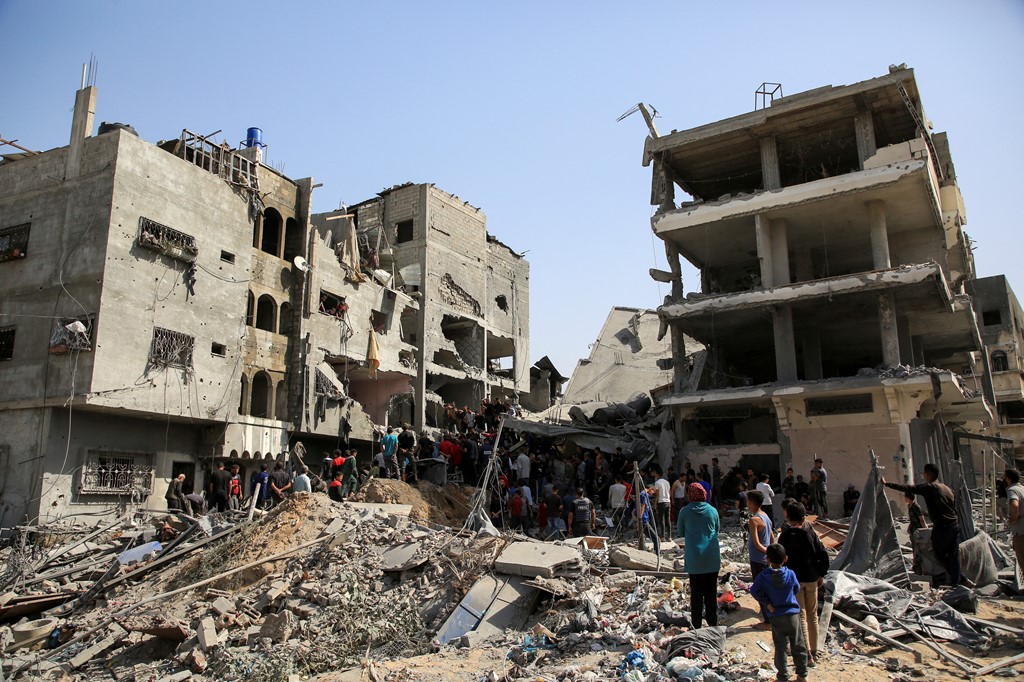
More than 100 people have been killed by Israeli strikes in Gaza following the announcement of a ceasefire and hostage release deal on Wednesday, according to a tally of data from the Gaza Civil Defense. The death toll includes at least 27 children.
Local emergency crews have described scenes of relentless bombardment since Israel and Hamas reached a deal, which is expected to come into effect in the coming days, pending an Israeli cabinet vote to approve the agreement.
Overnight, more than 20 people were killed by Israeli attacks on buildings sheltering people in Gaza, the Civil Defense said Friday.
They included nine people killed after a family home was shelled in Al-Jarn, north of Gaza City, according to Civil Defense spokesperson Mahmoud Basal.
In Khan Younis, southern Gaza, four people were killed in an Israeli helicopter attack in the early hours of Friday, the Civil Defense said.
Meanwhile, two bodies were recovered from another home in central Gaza after it was struck by Israeli forces, Basal said. Three bodies remained under the rubble, he said.
CNN said it contacted the Israeli military for more information about the attacks in Gaza early Friday.
Israel’s security cabinet will convene Friday to discuss the Gaza ceasefire and hostage release deal, according to an Israeli official. The meeting comes ahead of a wider cabinet vote to approve the deal, expected on Saturday.
“We have the staff on the ground,” says UNRWA official as aid workers await ceasefire
A senior official with the United Nations’ Palestinian refugee agency on Friday outlined the scale of the task facing aid workers as they prepare to ramp up their response in Gaza following the agreement of a ceasefire and hostage deal.
More than 15 months of Israeli bombardment has laid waste to the Palestinian enclave, displacing more than 2 million people – often multiple times – and triggered a humanitarian disaster marked by hunger, disease and a lack of medical care.
“Many of our warehouses have been inaccessible for several months, but we’re working to prepare to get them ready. We have the distribution networks. We have the staff on the ground,” said Sam Rose, UNRWA’s acting director of affairs in Gaza.
Speaking to CNN’s John Vause from Nuseirat, central Gaza, Rose said the entry of aid to the strip had been “systematically hindered and constrained,” with the situation compounded by a breakdown in law and order and destroyed roads.
With a ceasefire expected to take effect in the coming days, pending an Israeli government vote to approve the deal, Rose said aid agencies expect hundreds of thousands of people will be on the move back to Gaza City, making logistics and congestion a concern.
Unexploded ordnance hidden under debris is also a major risk for children and civilians, Rose said.
Flow of aid: Some 4,000 aid trucks have been stuck at a border crossing point for months, with two-thirds of all food aid waiting outside the enclave from UNRWA, Rose said.
Rose stressed that the flow of aid must increase from the first day of the ceasefire, which can only happen if trucks are able to come and go safely from cross border points.
“The supplies of aid have been so paltry over the past several months that, in a way, any increase will be a success,” he said, though he added that aid is only one factor in the humanitarian response.
“We need fuel to flow. We need spare parts,” he said. “We need supplies that hospitals can get back up and running, that electricity plants can get back up and running and that we can provide water through pipes rather than trucks.”
Leave a Reply