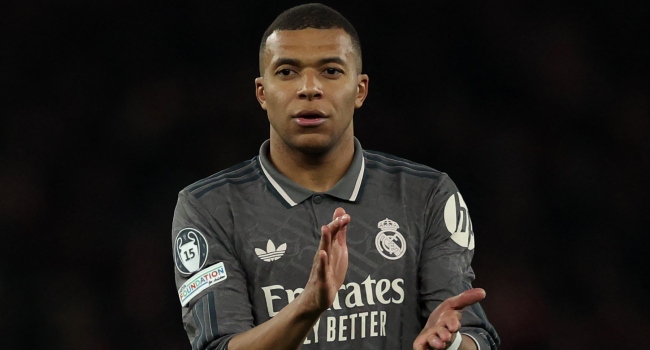
French football superstar Kylian Mbappé has lost several major Chinese sponsorship partnerships following a viral video in which he appeared to make a joke about former Chinese leader Mao Zedong, triggering widespread criticism across China.
The decision by major Chinese companies to end their commercial relationships with the Real Madrid and France forward came on Tuesday, October 27, 2026, after the video circulated online and prompted a backlash from Chinese football fans and social media users.
Dongpeng Beverage, a major Chinese drinks company, announced that it was immediately terminating its cooperation with the 27-year-old footballer.
“Our company firmly opposes and has a zero-tolerance policy towards any behaviour that offends national sentiments,” the company said in a statement.
Mengniu, one of China’s largest dairy producers, also confirmed that it was ending its relationship with Mbappé.
“With immediate effect our company is terminating all cooperation with Kylian Mbappe,” Mengniu stated.
The company added that it opposed comments and actions that could hurt the feelings of the Chinese people.
The controversy began after a video emerged online showing Mbappé discussing internet memes featuring his face digitally superimposed onto historical figures. During the conversation, he reportedly described the funniest meme he had encountered as one depicting him alongside “some guy — I think he’s a Chinese dictator”.
The remark appeared to refer to Mao Zedong, the founding leader of the People’s Republic of China, whose image remains politically and historically sensitive in the country.
The authenticity of the video could not immediately be independently verified by AFP Fact Check.
Backlash Spreads Across Chinese Social Media
The incident quickly became a major topic of discussion on Chinese social media, particularly Weibo, where the phrase “Dongpeng Beverage ends cooperation with Mbappe” emerged as a trending topic.
The controversy attracted considerable attention because Mbappé had previously enjoyed substantial popularity among Chinese football supporters and had commercial relationships with prominent domestic brands.
Some social media users criticised the footballer’s apparent remarks, while others called on companies to remove his image from their products and advertising campaigns.
Dongpeng had previously used Mbappé in promotional campaigns, including advertisements featuring AI-generated images of the footballer consuming its sports drink during the 2026 World Cup period.
The backlash demonstrated the potential commercial consequences international celebrities can face when their remarks are perceived as disrespectful towards China’s history, national identity or political leadership.
Why Mao Zedong Remains a Sensitive Figure in China
Mao Zedong, who died in 1976, played a central role in the establishment of the People’s Republic of China in 1949 and remains one of the country’s most influential historical figures.
Although his leadership and policies continue to attract international historical debate, Mao retains a prominent place in China’s official historical narrative and political identity.
His legacy is also associated with policies that contributed to widespread suffering and mass starvation, particularly during the Great Leap Forward.
As a result, jokes or remarks perceived as mocking Mao can provoke strong reactions among sections of Chinese society.
The Mbappé controversy illustrates how references to historical leaders can become commercially consequential when international sports personalities operate in markets where national history and political sensitivities carry considerable weight.
Commercial Consequences for Mbappé
The loss of Chinese sponsorship agreements represents a setback for Mbappé’s commercial activities in one of the world’s largest consumer markets.
International footballers often rely on sponsorship arrangements with beverage companies, sportswear manufacturers, technology businesses and other major brands to supplement their earnings from professional football.
China is particularly important to global sports marketing because of its large consumer population and extensive interest in international football.
For companies operating in the country, maintaining positive relationships with consumers is a major consideration when selecting celebrity ambassadors.
The decisions by Dongpeng and Mengniu show how quickly a reputational controversy can affect commercial partnerships. Both companies publicly framed their decisions around their opposition to conduct they considered offensive to Chinese national sentiment.
The wider financial implications for Mbappé were not immediately clear, and the value of the terminated agreements was not disclosed.
Potential Impact on Spanish Football Coverage in China
The controversy also raised questions about the availability of Spanish football broadcasts in China.
Chinese state media outlet The Paper reported that China Central Television (CCTV) was suspending broadcasts of Spain’s La Liga matches and removing advertisements involving Mbappé.
However, the full scope and duration of any broadcasting restrictions were not immediately clear. The availability of scheduled matches on the broadcaster’s online platform also complicated assessments of the reported suspension.
The developments nevertheless highlighted the potential for controversies involving individual footballers to affect the commercial and broadcasting relationships surrounding major sporting competitions.
A Wider Lesson for International Sports Stars
Mbappé’s experience reflects a broader challenge facing international athletes and entertainers who work with brands across different cultural and political environments.
Previous controversies involving global sports figures have shown that statements about sensitive political issues can prompt consumer boycotts, sponsor withdrawals and restrictions on media exposure in China.
The country’s response to the 2019 controversy involving former Houston Rockets executive Daryl Morey, who posted a message supporting Hong Kong protesters, demonstrated how disagreements over politically sensitive issues can disrupt international sports relationships.
In Mbappé’s case, the immediate consequences centred on sponsorship decisions following a video that appeared to reference Mao Zedong.
The episode underscores the importance of cultural awareness and careful communication for public figures whose commercial appeal extends across international markets.
For now, the financial impact of the terminated sponsorships remains uncertain. However, the speed of the companies’ responses and the scale of the online reaction demonstrate how quickly a viral controversy can threaten a celebrity’s commercial standing in China.
Leave a Reply