Here are the leading China-related developments as of Saturday, August 22, 2026, based on reporting published today and in the immediate preceding 24 hours.
1. U.S. military aircraft transits the Taiwan Strait
A U.S. Navy P-8A Poseidon surveillance aircraft flew through the Taiwan Strait in international airspace on Friday. The transit comes ahead of an expected September meeting between Chinese President Xi Jinping and U.S. President Donald Trump, with Taiwan, trade and technology restrictions among the major issues between Washington and Beijing.
The U.S. 7th Fleet said the operation “demonstrates the United States’ commitment to a free and open Indo-Pacific.” It added that the U.S. military “flies, sails, and operates anywhere international law allows.”
China’s military monitored the aircraft throughout the transit, with a source cited by the state-backed Global Times saying the “situation was under control.”
2. China signals more fiscal support for a slowing economy
Beijing says it will introduce additional fiscal measures as policymakers seek to strengthen economic growth and weak domestic demand. Vice Finance Minister Liao Min said a larger share of government spending would be directed toward households and consumption.
China is also expanding interest subsidies for small businesses and consumers, including a one-percentage-point subsidy on eligible small-business loans for up to two years. Authorities are accelerating spending on infrastructure projects already included in the budget rather than announcing a large new stimulus package.
Liao said preventing local governments from accumulating new hidden debt must remain an “iron discipline.”
The message is significant because Beijing is attempting to support growth while simultaneously containing local-government debt and other financial risks.
3. Chinese humanoid robot beats Usain Bolt’s 100m record
China’s rapidly developing robotics industry produced one of today’s most eye-catching stories. Tiangong Ultra, a Chinese humanoid robot, ran 100 metres in 9.39 seconds at the World Humanoid Robot Games in Beijing—faster than Usain Bolt’s human world record of 9.58 seconds.
Another Chinese robot, Honor’s Lightning, recorded 9.47 seconds. More than 2,000 robots from 666 teams across 16 countries and six continents are competing at the event.
The competition reflects Beijing’s broader effort to establish humanoid robotics as a strategic industry, with applications envisioned in manufacturing, logistics and consumer technology. Reuters notes that China’s policymakers and companies are betting that advances in AI and hardware will accelerate adoption.
4. China’s robotics push increasingly becomes an industrial strategy
Beyond the headline sprint, the Beijing robot games are being used as a showcase for China’s broader technological ambitions. The event has expanded dramatically from its inaugural edition, with this year’s competition featuring 51 events including football, dancing and industrial-task contests.
The country’s investment in the sector is also attracting financial-market attention: shares in Chinese humanoid-robot maker Unitree reportedly rose more than fivefold in its Shanghai debut earlier this week, giving the company a market value of roughly $50 billion.
5. China and Indonesia deepen strategic cooperation
China and Indonesia continue to strengthen their economic and strategic relationship following high-level meetings this week. The two countries have agreed to closer cooperation in areas including security, minerals, energy and technology.
Chinese Foreign Minister Wang Yi said Saturday that stronger China-Indonesia cooperation can serve as an example for the wider Global South. Indonesia, meanwhile, has emphasized its desire to attract additional Chinese investment and maintain a favorable environment for Chinese businesses.
Indonesian President Prabowo Subianto said his country “welcomes more Chinese enterprises to invest and do business” in Indonesia.
6. Chinese memory-chip maker prepares major Shanghai IPO
The parent company of Yangtze Memory Technologies Corp. (YMTC) is preparing a Shanghai listing that could raise about $4.9 billion, according to Reuters. The deal would be one of China’s largest technology-related IPOs and comes as Beijing continues to promote domestic semiconductor capabilities amid U.S.-China technology restrictions.
The planned listing underscores the strategic importance China places on semiconductor self-reliance, particularly in advanced computing, AI and memory technology.
7. Evergrande founder’s life sentence remains a major financial story
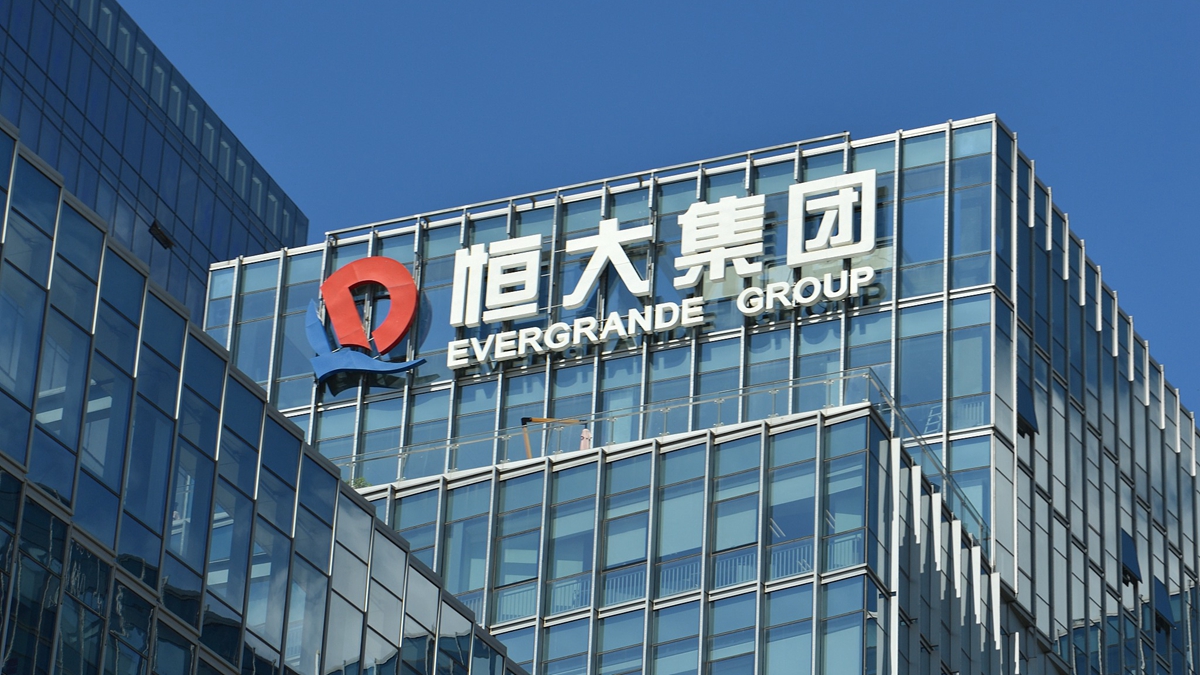
The sentencing of Hui Ka Yan, founder of property giant Evergrande, to life imprisonment continues to reverberate through China’s financial sector. Hui pleaded guilty to eight charges, including misuse of funds, fundraising fraud, illegally taking public deposits, fraudulently issuing securities and bribery.
The case has become a powerful symbol of China’s prolonged property-sector crisis and Beijing’s tougher approach to financial misconduct.
Leave a Reply