China launches new measures to boost consumer spending
China has unveiled a fresh package of measures aimed at expanding and upgrading consumer-goods consumption as policymakers seek to strengthen domestic demand and give the economy additional momentum.
The measures, announced by Chinese authorities on Monday, August 31, are designed to expand the scale of consumer spending while encouraging the production and sale of higher-quality goods. The government has increasingly emphasized domestic consumption as an important source of economic growth at a time when the property sector remains weak and households have remained cautious about spending.
The move comes alongside new economic data showing that China’s manufacturing sector remained in contraction territory in August, although activity improved compared with July. The latest policy push therefore reflects the government’s continuing effort to support demand without relying exclusively on traditional investment and infrastructure spending.
China’s efforts to stimulate consumption have included trade-in programmes, measures supporting consumer credit and policies intended to encourage spending on automobiles, household appliances, digital products and other consumer goods.
Manufacturing activity improves but remains below growth threshold
China’s official manufacturing Purchasing Managers’ Index rose to 49.8 in August from 49.2 in July, according to data released Monday. Although the improvement was better than some market expectations, a reading below 50 indicates that manufacturing activity remains in contraction territory.
There were nevertheless some encouraging signs within the figures. Production rose above the 50-point threshold to 50.4, while the new-orders index reached 50.6. New export orders also moved into expansion territory at 50.1, suggesting that external demand continues to provide support to Chinese manufacturers.
The picture was less positive for services and domestic demand. China’s non-manufacturing PMI stood at 49.0 in August, while the composite PMI output index increased from 49.3 to 49.5. The figures point to an economy that is improving in some industrial areas but continues to experience significant pressure in domestic consumption and parts of the services sector.
The data underline one of the central challenges confronting Beijing: Chinese factories remain highly competitive in global markets, particularly in sectors linked to advanced technology and exports, while domestic households and businesses have been more reluctant to spend.
Yuan appreciation prompts intervention from Chinese authorities
China is also taking steps to moderate the rise of the yuan as policymakers attempt to balance currency stability with the needs of exporters.
Reuters reported Monday that the yuan has gained roughly 9% against the U.S. dollar over almost two years, reaching levels not seen for about three and a half years. Chinese authorities have responded by guiding the currency’s daily trading midpoint and allowing state-owned banks to buy dollars, measures intended to prevent the yuan from appreciating too rapidly.
A stronger yuan can make Chinese imports cheaper, but it can also make Chinese exports more expensive for overseas buyers. With exports remaining an important pillar of China’s economy, policymakers appear cautious about allowing the currency to strengthen too quickly.
The issue is particularly important because China’s domestic economy remains relatively soft. Weak consumer demand, low interest rates and subdued credit growth are among the factors complicating the outlook, even as China’s trade performance remains strong.
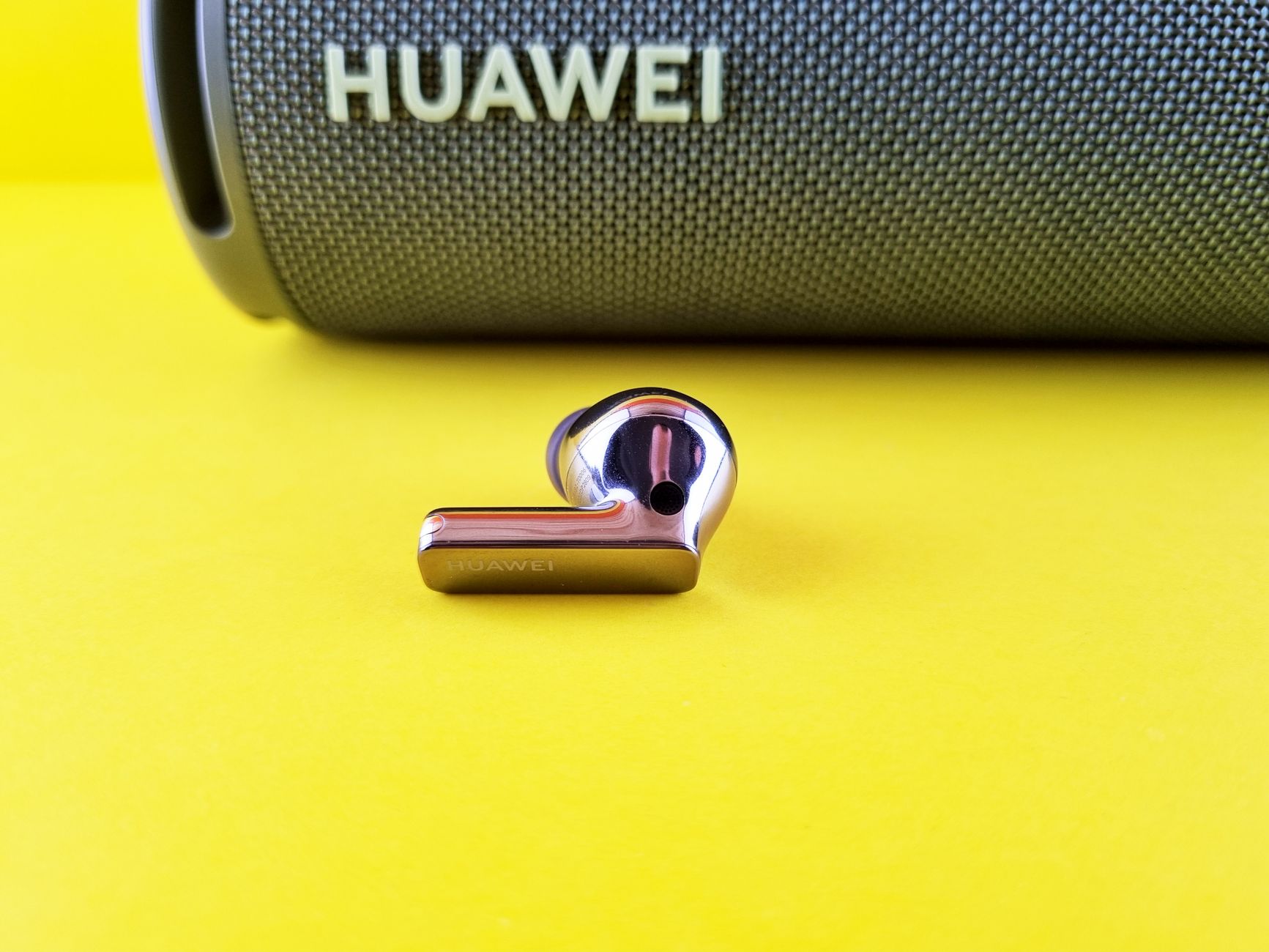
Huawei reports sharp fall in first-half profit
Chinese technology giant Huawei reported a substantial decline in net profit for the first half of 2026 despite continued revenue growth.
According to Reuters, Huawei’s net profit fell 36% to 23.81 billion yuan ($3.54 billion) during the first six months of the year. Revenue, however, increased 9.6% to 467.82 billion yuan.
The company attributed the pressure largely to rising costs and increased investment in research and development. Huawei’s R&D spending rose 25.2% to 121.38 billion yuan, equivalent to roughly 25.9% of its revenue.
The spending reflects Huawei’s continuing effort to strengthen its position in artificial intelligence, semiconductor technology, smart devices and intelligent vehicles while reducing its dependence on foreign technology.
Despite the profit decline, Reuters reported that all of Huawei’s business segments recorded year-on-year revenue growth. The company has also continued to recover from the severe revenue pressure it experienced after U.S. restrictions affected its access to advanced technology.
Huawei’s results illustrate the broader transformation taking place in China’s technology industry: companies are investing heavily in domestic technological capabilities even when doing so puts short-term pressure on profitability.
Chinese court freezes up to $300 million in Nexperia-related assets
A Chinese court has frozen up to 2.14 billion yuan ($300 million) in assets held by Dutch semiconductor manufacturer Nexperia, according to Reuters.
The action is connected to a wider dispute involving Nexperia’s Chinese operations and its parent company, Wingtech Technology.
The development highlights the growing strategic and legal tensions surrounding semiconductor companies operating between China and Western markets.
Semiconductors have become one of the most sensitive areas of the broader technology rivalry between China and the United States and its allies. Governments on both sides have increasingly treated chip production and supply chains as matters of national economic and technological security.
The Nexperia dispute is therefore being watched beyond the immediate legal case because of its potential implications for semiconductor supply chains connecting China and Europe.
Xi Jinping meets Central Asian leaders as China strengthens regional ties
Chinese President Xi Jinping held meetings with Central Asian leaders on Monday as China sought to deepen political and economic cooperation with neighboring countries.
During a meeting with Kyrgyz President Sadyr Japarov, Xi said China was ready to work with Kyrgyzstan to better align their development strategies. Beijing described the relationship as entering a new stage of cooperation.
China is placing growing emphasis on Central Asia because of the region’s importance to trade, energy, transportation and the country’s broader Belt and Road strategy.
Infrastructure projects, including railway connections, are particularly significant. Improved transport links can strengthen China’s access to Central Asian markets while creating additional routes toward Europe and the Middle East.
The diplomatic activity also comes as China seeks stronger regional partnerships amid increasing geopolitical competition with the United States and its allies.
Shanghai Cooperation Organisation summit draws attention
China is also using the Shanghai Cooperation Organisation, or SCO, as a platform for strengthening relations with Russia, India and other member states.
Chinese President Xi Jinping, Russian President Vladimir Putin and Indian Prime Minister Narendra Modi are among the leaders participating in the SCO summit taking place in Bishkek. The gathering is focused on regional security, economic cooperation and broader questions about the international order.
The summit is attracting particular international attention because China, Russia and India are three of the world’s largest countries and important members of the emerging multipolar diplomatic landscape.
For Beijing, the SCO provides an avenue for expanding economic and political cooperation outside traditional Western-led institutions. Trade, transportation, security and regional stability are among the major issues being discussed.
The meeting also provides an opportunity for Chinese diplomacy to demonstrate that Beijing retains strong relationships with major powers despite continuing tensions with Washington.
Rescue operations continue after deadly mudslide near China-Nepal border
Emergency crews are continuing intensive rescue and recovery operations following a devastating mudslide near Gyirong Port in China’s Xizang Autonomous Region.
The disaster has severely damaged the area around the China-Nepal border crossing and left hundreds of people missing. Chinese authorities have deployed rescue teams and heavy equipment while crews work under difficult high-altitude conditions.
China Daily reported that by 4 p.m. Monday, rescue teams had advanced road-clearing operations to within approximately 1.1 kilometres of Gyirong Port, illustrating the difficulties involved in reaching the affected area.
The disaster is connected to a much wider Himalayan catastrophe that has also devastated parts of Nepal. Reuters reported that Chinese and Indian specialists were assisting Nepalese rescue teams searching for people trapped inside hydropower tunnels after catastrophic flooding and debris flows.
The disaster has renewed concerns about the dangers posed by glacier instability, landslides and extreme weather in the Himalayan region.
China expands focus on artificial intelligence and data
China is continuing to promote artificial intelligence and the development of its data economy as strategic areas for future growth.
Chinese authorities said Monday that the country’s data industry reached 6.78 trillion yuan, or approximately $1 trillion, in 2025. Beijing is now promoting greater coordination between the data industry and artificial intelligence as part of its effort to develop new sources of economic growth.
The emphasis on data and AI is consistent with China’s broader strategy of building domestic technological capabilities and reducing dependence on foreign technologies.
AI has become especially important to China’s industrial strategy because it is increasingly being integrated into manufacturing, logistics, automobiles, robotics, financial services and consumer technology.
The rapid development of AI is also helping create demand for Chinese semiconductors, data centres, cloud computing and advanced computing infrastructure.
Taiwan reports growing Chinese military pressure
Tensions across the Taiwan Strait remain another major issue in the day’s China-related news.
Taiwan’s authorities said Monday that Beijing was strengthening its control over the air and maritime environment around Taiwan and described China’s behavior as increasingly unpredictable.
The comments came as relations between Taiwan and mainland China remain tense, while Taiwan continues to strengthen its defence capabilities and deepen security cooperation with the United States.
The issue is also becoming increasingly connected to wider U.S.-China competition. A senior U.S. diplomat in Taipei said Monday that U.S.-Taiwan relations had “never been stronger,” according to Reuters, a statement likely to attract a strong response from Beijing.
China continues to regard Taiwan as part of its territory and opposes moves it considers supportive of Taiwanese independence. Taiwan’s government, meanwhile, maintains that its future should be determined by its people.
China balances economic support with longer-term structural challenges
Taken together, Monday’s developments illustrate the complicated position of the Chinese economy and government.
Beijing is simultaneously trying to stimulate household consumption, maintain export competitiveness, support advanced technology, manage the yuan, strengthen regional relationships and respond to geopolitical tensions.
The August manufacturing figures provide some reason for optimism because production and new orders improved. However, the manufacturing PMI remains below 50, while services activity is also contracting.
At the same time, China’s technology companies continue to invest heavily in artificial intelligence, semiconductors and other strategic industries. Huawei’s sharply higher R&D expenditure is one example of this broader national push.
The government’s new consumer measures suggest that policymakers recognize the need to strengthen domestic demand. Whether those policies can produce a sustained increase in household spending will be one of the most important questions for China’s economy during the remainder of 2026.
For now, China’s economic picture remains mixed: exports and high-tech manufacturing are providing important support, while weak domestic demand, the property downturn and subdued services activity continue to weigh on growth.
Leave a Reply