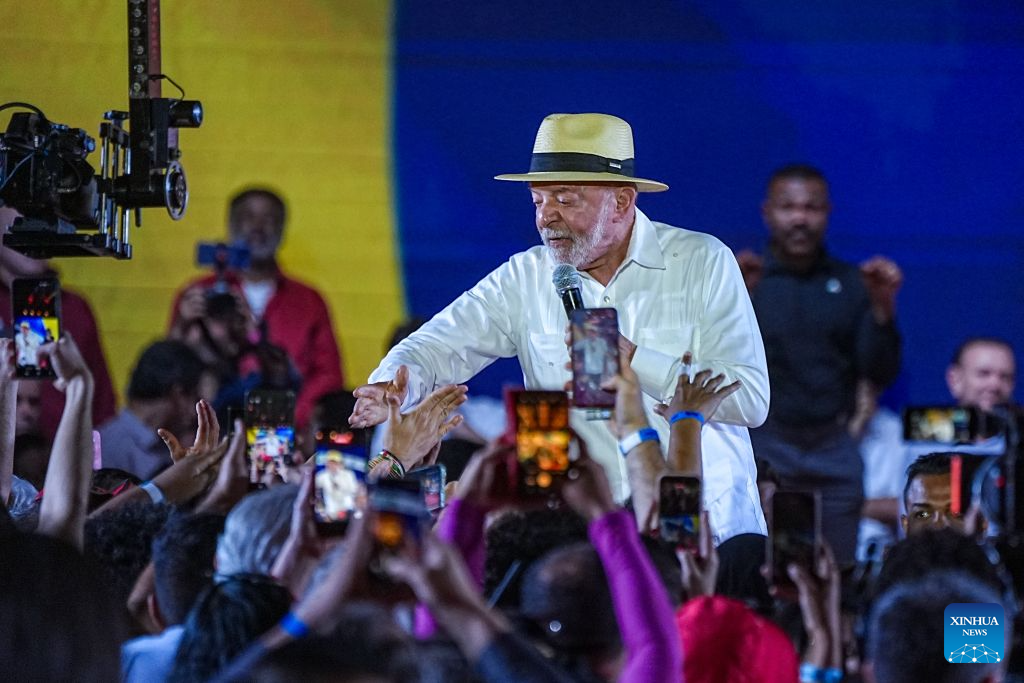
Brazil remained in the international spotlight on Wednesday as political developments ahead of the October general election dominated headlines, while diplomatic tensions with Argentina deepened and economic policymakers prepared for another key interest rate decision. The country’s energy sector also attracted attention after Petrobras paused a major infrastructure project, reflecting ongoing regulatory uncertainty.
Flávio Bolsonaro Announces Running Mate for Presidential Election
Brazil’s presidential race gathered momentum as Senator Flávio Bolsonaro, son of former President Jair Bolsonaro, officially unveiled his vice-presidential running mate ahead of the country’s October election.
Flávio selected federal lawmaker Alfredo Gaspar, a former prosecutor and public security official, to join the Liberal Party (PL) ticket. The announcement comes as President Luiz Inácio Lula da Silva seeks another term in what is expected to be one of Brazil’s most closely contested elections in recent years.
Introducing his running mate, Flávio Bolsonaro praised Gaspar’s public service record and said the alliance would strengthen the campaign’s focus on security and government reform. Gaspar is widely known in Brazil for his anti-crime credentials and experience in law enforcement.
Recent opinion polls suggest that Lula currently holds a narrow advantage over Flávio Bolsonaro, although analysts believe the race could ultimately be decided in a second-round runoff if no candidate secures an outright majority in the first round.
Brazil Downgrades Diplomatic Relations with Argentina
Relations between Brazil and Argentina deteriorated significantly after President Javier Milei made fresh personal attacks against President Lula.
Brazil announced that it would reduce diplomatic relations with Argentina to the level of chargé d’affaires, meaning ambassadors will no longer lead diplomatic engagement between the two countries for the time being. The move followed remarks by Milei during a television interview in which he referred to Lula using insulting language.
Brazil’s Foreign Ministry informed Argentina’s ambassador in Brasília of the decision, marking one of the lowest points in bilateral relations between South America’s two largest economies in decades. The diplomatic dispute adds further uncertainty to regional cooperation on trade and economic issues.
Central Bank Expected to Cut Interest Rates Again
Financial markets focused on the Brazilian Central Bank, where policymakers were widely expected to announce another reduction in the country’s benchmark interest rate.
According to a Reuters survey of economists, the central bank is expected to lower borrowing costs for the fourth consecutive meeting, reflecting easing inflation pressures while remaining cautious about future price risks. Economists believe policymakers are likely to avoid providing strong guidance about additional rate cuts until inflation trends become clearer.
Lower interest rates could provide additional support for consumer spending, business investment and economic growth during the second half of the year.
Petrobras Suspends Major Gas Pipeline Studies
State-controlled energy giant Petrobras announced that it has paused studies for a proposed US$1 billion natural gas pipeline project, citing uncertainty surrounding Brazil’s evolving regulatory framework.
Company officials said the project remains strategically important but that investment decisions require greater clarity regarding government rules governing gas transportation and infrastructure development.
Energy analysts said the decision illustrates the challenges facing large-scale infrastructure projects, where long-term investment depends heavily on regulatory certainty and predictable policy conditions.
Election Campaign Intensifies
Brazil’s political parties completed another important stage in preparations for the October elections as campaign organisations finalized candidate selections and coalition arrangements.
Political observers expect the campaign to focus heavily on public security, economic growth, inflation, employment, healthcare and Brazil’s international relations. The increasingly competitive race is also drawing international attention because of its potential impact on Latin American politics and Brazil’s relationships with major global partners.
Brazil Faces Continued International Attention
Brazil also remained at the center of growing diplomatic tensions involving the United States. Reports indicated that Washington had revoked the Brazilian ambassador’s visa amid disagreements over diplomatic appointments and broader political disputes, adding another layer of complexity to Brazil’s foreign relations during an election year.
Analysts noted that international issues, including trade, tariffs and diplomatic relations, are increasingly becoming campaign themes as presidential candidates seek to define Brazil’s role on the global stage.
Looking Ahead
Attention in Brazil will remain focused on the official monetary policy decision from the Central Bank, developments in the presidential campaign, and whether diplomatic tensions with Argentina and the United States show signs of easing. Investors will also continue monitoring economic indicators and policy announcements for clues about the direction of Latin America’s largest economy in the months leading up to the October election.
Leave a Reply