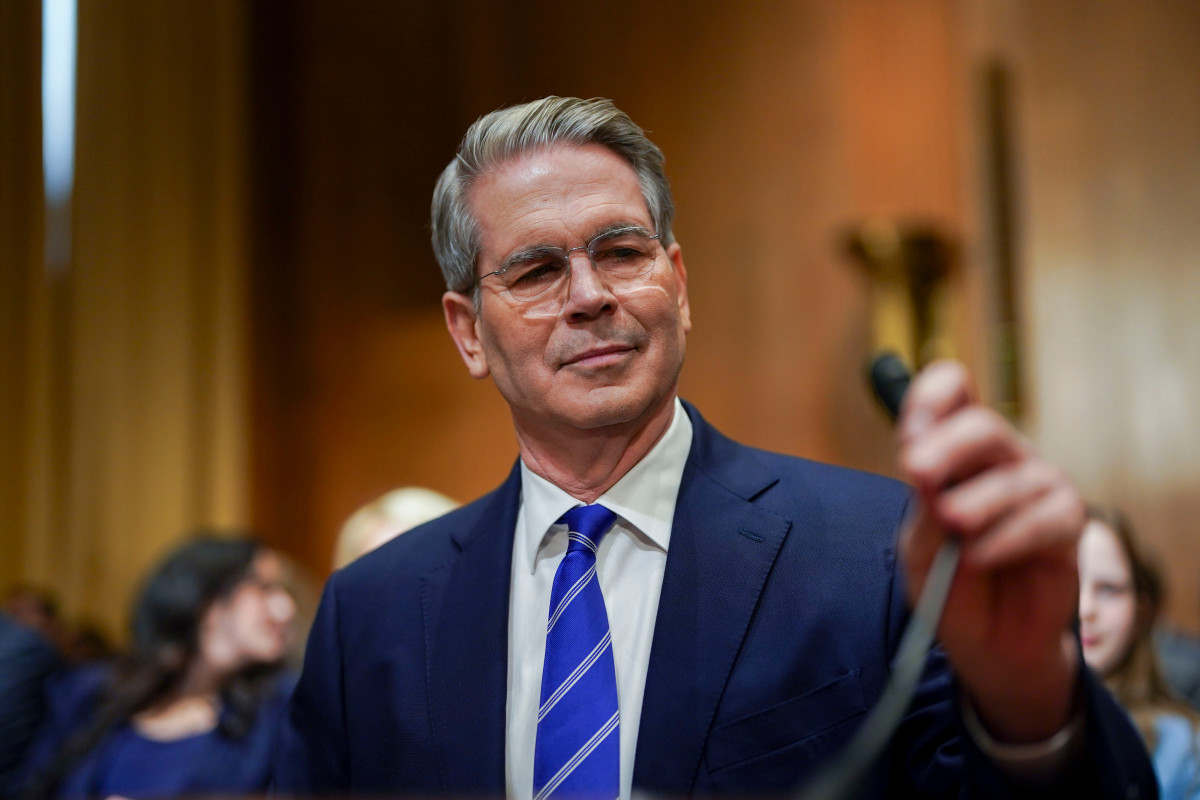
Treasury Secretary Scott Bessent on Friday delivered the Trump administration’s most expansive defense yet of its trade and industrial agenda, telling an audience at the Ronald Reagan Presidential Library that decades of bipartisan economic policy had hollowed out American manufacturing and left the country dependent on rivals, He also cast President Donald Trump’s tariffs, critical minerals actions, and supply chain rebuilds as a course correction grounded in national security.
At the Reagan National Economic Forum in Simi Valley, California, Bessent framed the speech, titled “While America Slept,” as a 250th anniversary reckoning rather than a routine policy defense.
“For too long, America had been asleep,” he said. “We mistook comfort for strength. We treated efficiency as a substitute for resilience, and consumption as a measure of prosperity.”
Beneath the policy failures, Bessent argued, lay a philosophical one.
“We measured abundance at the checkout counter rather than the factory gate,” he said.
“We talked about GDP [gross domestic product], but not enough about its composition.”
He cast manufacturing not as a line on a balance sheet but as “a reservoir of practical capability: engineers and welders, tool-and-die makers and logistics networks, plant managers and workers who know how to solve problems on the factory floor.”
He singled out two postwar bets that he said had failed: treating trade policy as separate from national strategy, and extending strategic trust to China through World Trade Organization accession and permanent normal trade relations.
The result, he said, was American workers left “to compete against state-led subsidies, excess capacity, and practices that distort trade and undermine reciprocity.”
The pandemic, he added, did not cause the brittleness of U.S. supply chains so much as expose it, leaving the country dependent on foreign suppliers for semiconductors, large-capacity batteries, critical minerals, and medicine.
Warnings from workers, manufacturers, military planners, and public health officials went unheeded, he said, because “our political class preferred the comfort of old formulas.”
Bessent then walked through the administration’s response: the America First trade policy memorandum signed on Trump’s first day back in office; April’s reciprocal tariff actions tied to a declared national emergency; Section 232 measures on processed critical minerals; an executive order on maritime dominance, paired with a new Office of Maritime and Industrial Capacity at the National Security Council; and a directive to fill the Strategic Active Pharmaceutical Ingredients Reserve.
He conceded that “reasonable people can debate the calibration of any particular instrument,” but argued the underlying logic was settled.
He drew a line against reading the doctrine as protectionism.
“It does not mean retreating from the world,” he said. “On the contrary, it means engaging with it on stronger, fairer, and more sustainable terms.”
The concer, he said, was not interdependence but “dangerous overdependence” on strategic adversaries, distinguished from “healthy interdependence” with trusted partners.
The remarks came roughly two weeks after Trump’s Beijing summit with Chinese President Xi Jinping, which produced managed-trade and farm-purchase agreements but left the broader U.S.-China contest unresolved.
The speech laid out no new proposals and did not address the war in Iran or the closure of the Strait of Hormuz.
Bessent closed by binding the doctrine to Reagan’s legacy and the country’s semiquincentennial.
“While America slept, our vulnerabilities grew,” he said. “But under President Trump’s leadership, we are alert to the risks we can no longer ignore, and attuned to the responsibilities we can no longer defer.”
Leave a Reply