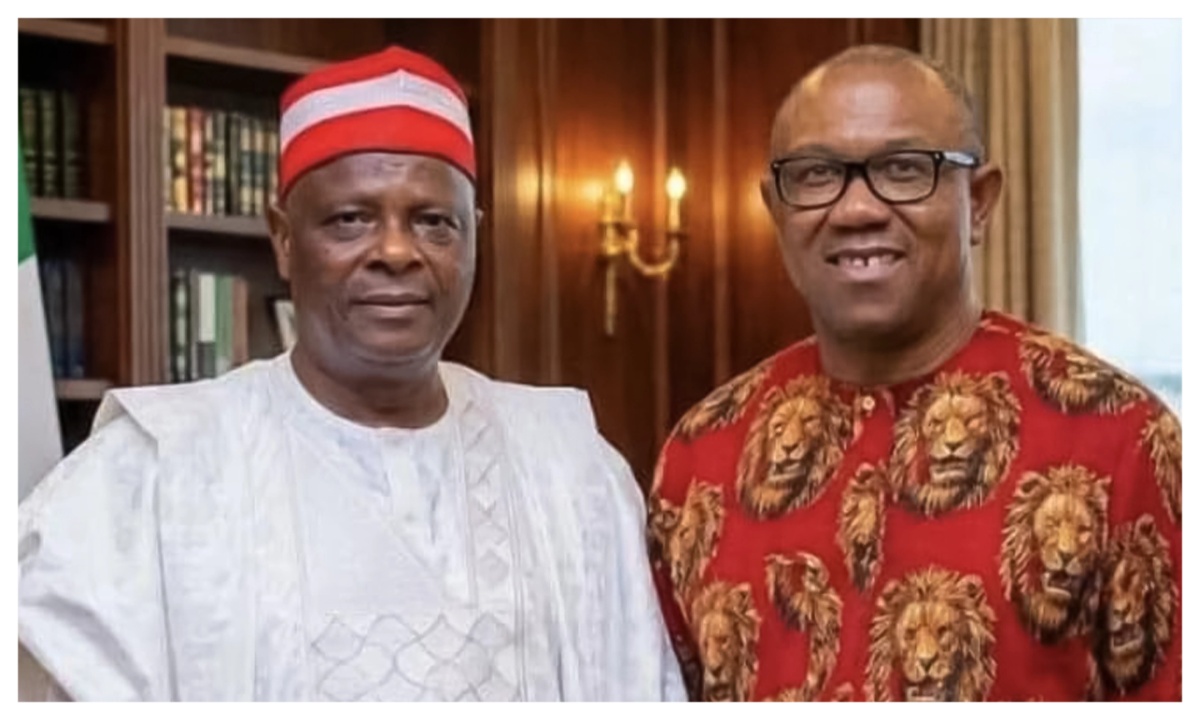
The fuel subsidy debate has exposed a notable difference in the positions of Nigeria Democratic Congress (NDC) presidential candidate Peter Obi and his running mate, Rabiu Kwankwaso, ahead of the 2027 general elections.
Kwankwaso, the NDC’s vice-presidential candidate and former Kano State governor, said on Tuesday that an administration led by Obi would introduce fuel subsidy through a different approach.
He made the disclosure during an interview with Arise TV while discussing petrol pricing, the removal of subsidy by President Bola Tinubu’s administration and the economic policies that could be pursued ahead of the 2027 election.
Asked whether the NDC could face difficulties campaigning in the North-West, where there is support for a return of fuel subsidy, Kwankwaso said the party had its own approach to making petrol more affordable.
“No, no, no, look. We are bringing subsidy in our own way,” he said.
Kwankwaso explained that one possible component of the proposed approach would be greater government investment in domestic refining. He argued that additional refineries could increase local petroleum production and help make petrol available to Nigerians at what he described as a reasonable price.
“Now, if individuals in this country could build refineries, I see no reason why government, under certain circumstances, will not build a refinery or refineries to the extent that we achieve the minimum requirement,” he said.
According to the former Kano governor, the objective would be to ensure that Nigerians can purchase petrol at a reasonable price rather than continuing to face the burden of high fuel costs.
“What is the minimum requirement? The minimum requirement is for the people across the country to go to the filling stations and buy fuel at a reasonable price,” he said.
Kwankwaso further stated that an NDC administration would take measures aimed at reducing the cost of petroleum products.
“We, in the NDC, will do whatever it takes, really, to put the price of oil down,” he said.
Kwankwaso Criticises Tinubu’s Approach to Subsidy Removal
Kwankwaso also criticised the manner in which President Bola Tinubu’s administration removed the petrol subsidy after taking office in 2023.
He acknowledged that the three major contenders in the 2023 presidential election had campaigned on removing the subsidy, but argued that Tinubu’s decision to implement the policy immediately after assuming office failed to adequately address the consequences that could follow.
“Among the three of them, Bola Tinubu decided to do so and removed the subsidy. And the consequences that we thought would happen, certainly happened,” Kwankwaso said.
He further argued that the policy was implemented too quickly without sufficient consideration of the issues associated with subsidy removal.
“And not only he decided to remove the subsidy, what he did was to remove it immediately—in fact, day one—without looking at all those possible issues that were associated with that. And that’s how we find ourselves in this total mess, economically,” he said.
Tinubu announced the end of the petrol subsidy during his inaugural address on May 29, 2023, declaring, “subsidy is gone.”
The decision was followed by a significant increase in petrol prices, with the cost of fuel rising from below N200 per litre to more than N500 in many parts of Nigeria. The increase also contributed to higher transportation and other costs.
In a national broadcast in July 2023, Tinubu acknowledged that subsidy removal had increased the cost of fuel, food and other goods. The administration, however, maintained that the subsidy system had become financially unsustainable and that resources saved from its removal would be redirected to other areas.
Obi Maintains Support for Subsidy Removal
Kwankwaso’s comments contrast with statements made by Peter Obi in August 2026 concerning the future of fuel subsidy.
Speaking during a panel session at the Nigerian Bar Association’s Annual General Conference in Port Harcourt, Rivers State, Obi maintained that he supported the removal of fuel subsidy.
The former Anambra State governor argued that the mismanagement of resources recovered after subsidy removal should not be used as a reason to reverse the policy.
“I subscribe and maintain that you need to remove subsidy. Mismanagement of the proceeds shouldn’t be the reason for not removing it,” he said.
Obi said the major issue was how the resources recovered from subsidy removal were being utilised. He argued that Nigerians should have benefited from the funds through investment in critical sectors.
“What we should have done is that when we removed the subsidy, we would have given the people alternative usage for the subsidy. What we have today is that that removal and the attendant resources being recovered is also being mismanaged and stolen. For example, we have received, according to them, N16 trillion.”
Obi said his preferred approach would have involved removing the subsidy in an organised manner and directing the resources recovered into areas capable of improving the country’s economic and social conditions.
He cited healthcare among the sectors that could have benefited from the funds, while also discussing the possibility of strengthening Nigeria’s sovereign wealth fund.
“So it’s what you use the money for that is the problem,” the former Anambra governor said.
He argued that the debate should therefore focus not only on whether subsidy should be removed, but also on how the resources generated from the policy are managed and whether Nigerians receive tangible benefits from them.
The contrasting statements from Obi and Kwankwaso have brought renewed attention to the NDC’s position on petrol pricing and subsidy ahead of the 2027 presidential election.
While Kwankwaso has spoken of introducing subsidy in a different form, particularly through measures including increased domestic refining, Obi has continued to argue that subsidy removal should be maintained and that the resulting resources should be properly managed and invested for the benefit of Nigerians.
Leave a Reply