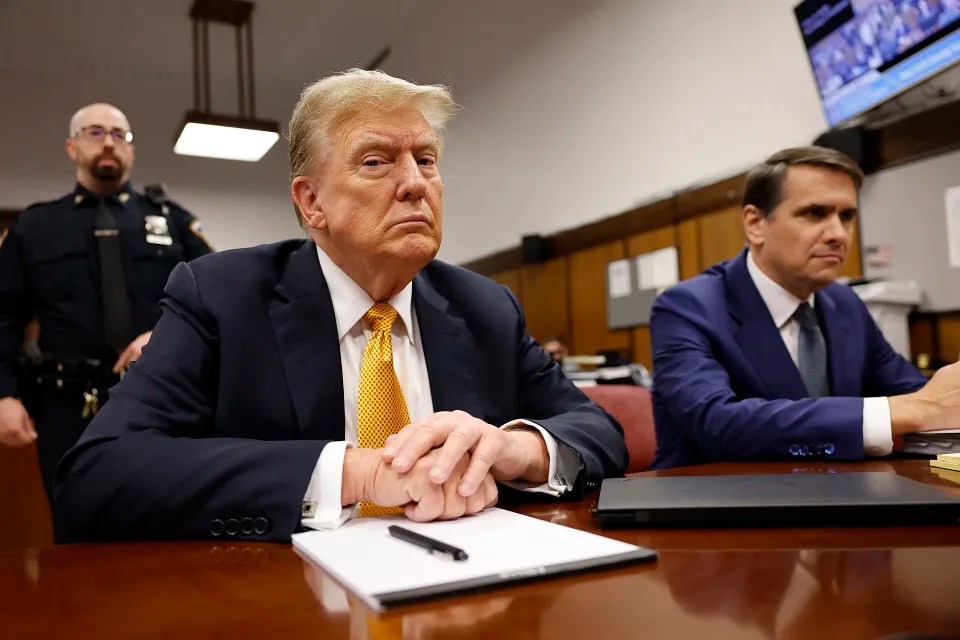
It’s still the morning in Washington DC, where Donald Trump spent the night.
The US president had returned to the capital from a midterm election rally in Phoenix, Arizona.
We’re now waiting for his reaction to Iran announcing the closure of the Strait of Hormuz after briefly reopening it to commercial traffic yesterday.
The president celebrated the reopening with a string of social media posts yesterday, claiming, among other things, that Iran “has agreed to never close” the waterway again.
Strait of Hormuz closure: How we got here – and is there actually a military solution?
The tug-of-war over Iran’s de-facto closure of the Strait of Hormuz has entered its next phase after Iran has said it reversed the brief reopening of the key shipping lane.
Here is how the blockade in the strait evolved and where things may go from here…
What’s the situation in the Strait of Hormuz?
The strait has been declared closed again after Iran briefly allowed traffic in the waterway to resume following an announcement yesterday.
A spokesperson said this was because the US refused to lift its blockade of vessels entering or exiting Iranian ports, which started this week.
Previously, some transit through the shipping lane was possible, with Iran sometimes charging tolls for passage. But levels remained far below the pre-war daily average of over 100.
Its effective control of the strait gives the Iranian regime leverage over the global economy, particularly through energy prices.
The disruption has severely impacted global economies, sending energy prices soaring and risking higher inflation.
Donald Trump has made reopening the waterway a priority and lashed out at allies for not sending military ships to help restore shipping flows.
How did we get here?
2 March: After the US attacks Iran on 28 February, the Revolutionary Guard warns it will set ships on fire that try to pass the strait, effectively closing it.
Mid-March: More than a dozen tankers and cargo ships are reportedly hit by projectiles near the strait.
16 March: European NATO countries reject Trump’s call for the alliance to help reopen the strait after the president warned it would face a “very bad future” if they fail to support US efforts.
26 March: Trump sets a 10-day deadline for Iran to reopen the strait, which he subsequently extends before announcing a ceasefire on 8 April.
8 April: The US receives a 10-point peace plan from Iran, which demands complete Iranian control over the strait, including the right to charge tolls.
13 April: The US blocks the Strait of Hormuz for vessels entering and exiting Iranian ports after a first round of negotiations with Iran fails.
17 April: Iran’s foreign minister said the strait is open to commercial traffic again to coincide with a ceasefire in Lebanon. Trump says the US blockade will stay in place.
Could Strait of Hormuz actually be reopened militarily?
Trump has repeatedly threatened to force the strait open with military means, calling on Europe to help with such operations.
The UK and France said yesterday they would lead a defensive multinational military mission to ensure freedom of navigation – but only in case of a lasting ceasefire. A planning meeting in London is scheduled for next week.
Securing the waterway is possible with hostilities ongoing but would be expensive and intensive, a military analyst Michael Clarke said.
He said earlier in the war that it would require a “gun line of air defence destroyers all the way along facing the Iranian coast” and air power to take out Iranian projectiles.
Moreover, a convoy of defensive ships “that can zip around” and watch for launches would be needed, he added.
That’s because Iran doesn’t actually need to fully close the strait – just to maintain enough of a threat to put off vessels and shipping insurance companies.
 Meziesblog
Leave a comment