The 2026 World Cup is well underway across the United States, Canada, and Mexico.
For the first time in history, the tournament is co‑hosted by three nations, and it is also the first to feature 48 teams. Running from June 11 to July 19 across 16 host cities, this “North American World Cup” has already delivered a wealth of drama – from stunning debuts by debutants to goal‑heavy performances, from a collective Asian surge to off‑pitch controversies.
Expansion Pays Off: Newcomers Are No Pushovers
The biggest pre‑tournament question was whether expanding to 48 teams would dilute quality. Just five days in, the answer is clear.
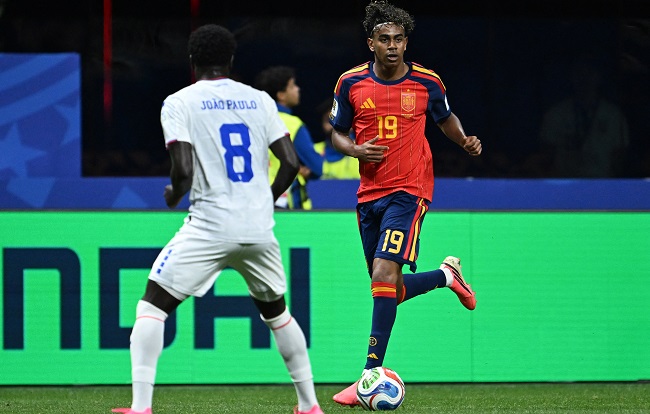
Four World Cup debutants – Curaçao, Cape Verde, Jordan, and Uzbekistan – have proven they are not mere “filler.” The most jaw‑dropping result came in Atlanta: European champions Spain were held 0‑0 by first‑timers Cape Verde. The 40‑year‑old Cape Verdean goalkeeper Vozinha made multiple saves to deny Spain’s attacks. Coach Bubista said emotionally afterward: “This means everything to our country.” Spain coach Luis de la Fuente was blunt: “That’s football – there are no weak opponents here.”
Curaçao’s story is equally moving. The tiny island nation of about 150,000 people scored its first‑ever World Cup goal through Juninho Bacuna against Germany, briefly levelling the score at 1‑1 before losing 7‑1. That moment, however, became an eternal memory. Veteran coach Dick Advocaat shed tears when the national anthem played – a dream come true.
FIFA data shows the first eight matches averaged over 63,000 spectators per game, threatening the total attendance record of 3.5 million set at USA 1994. FIFA President Gianni Infantino said the tournament has “exceeded expectations.”
Goal Galore: 19 Goals in One Day – A 62‑Year Record
If the debutants impressed with grit, the traditional powerhouses delivered attacking fireworks.
Matchday 4 produced 19 goals – the highest single‑day tally at a World Cup since 1962. Germany thrashed Curaçao 7‑1, surpassing the previous tournament high set by the USA (4‑1 vs Paraguay). Felix Nmecha’s sixth‑minute strike became the fastest goal of the tournament so far. Kai Havertz scored twice, tying for the Golden Boot lead with the USA’s Folarin Balogun and Sweden’s Yasin Ayari.
Sweden also ran riot, beating Tunisia 5‑1, with Sporting CP striker Viktor Gyökeres contributing a goal and an assist.
Japan produced a thrilling comeback, twice coming from behind to draw 2‑2 with the Netherlands. Daichi Kamada’s late equaliser at AT&T Stadium was hailed as “one of the most exciting matches of the tournament.”
Asian Power Surge: Unbeaten Start
One of the most notable trends is the collective strength of Asian teams.
As of June 16, all Asian sides remain unbeaten after their opening fixtures. South Korea beat the Czech Republic 2‑1, Saudi Arabia held two‑time champions Uruguay 1‑1, Qatar drew Switzerland 1‑1, Australia defeated Turkey 2‑0, Japan drew the Netherlands 2‑2, and Iran drew New Zealand 2‑2.
Saudi Arabia’s performance against Uruguay was particularly impressive – they took the lead through Al‑Amri in the 41st minute, and only an 80th‑minute equaliser from Araujo rescued a point for Uruguay. Saudi goalkeeper Al‑Owais made several crucial saves.
In contrast, South American teams have stumbled – none have won their opening match. Brazil were held 1‑1 by Morocco, Ecuador lost 0‑1 to Ivory Coast, and Paraguay were thumped 4‑1 by the USA.
Controversies and Off‑Pitch Drama
Off the field, news has been just as lively.
UEFA President Aleksander Čeferin faced a storm of criticism after reportedly saying that expansion would produce many “totally uninteresting” matches. Thirteen national associations – including Cape Verde, Curaçao, and Uzbekistan – issued a joint statement “firmly rejecting” that characterisation. “For our countries, there are no unimportant World Cup matches,” the statement read.
Travel chaos also made headlines: Uruguay’s flight from Mexico to the US was delayed due to “airline licensing errors,” prompting a FIFA statement to explain the situation. In addition, UK viewers of ITV complained about picture quality issues during the Netherlands‑Japan broadcast.
Looking Ahead: The Best Is Yet to Come
The final is set for July 19 at MetLife Stadium in New Jersey. There has already been debate about whether Dallas would have been a better host for the final.
The race for the Golden Ball is also heating up – Kylian Mbappé, Harry Kane, and Lamine Yamal are among the favourites. Lionel Messi, the 2022 winner, remains a major storyline as he likely plays in his last World Cup.
Less than a week in, the 2026 World Cup has already proven that expansion has not diluted excitement – rather, it has given more dreams a stage. As the 13‑nation statement put it: “Football does not belong exclusively to a handful of countries; its power lies in its universality.” This North American festival of football has only just begun.
Leave a Reply